Showing posts with label Clarendon Code. Show all posts

Tuesday, 3 June 2014

The Conventicle Acts and their devilish malice

The Conventicle Act of 1593 (or Religion Act 1592) stated that anyone over 16 who failed to attend the Parish Church or persuaded others to do the same should. It is the law that was used to put John Bunyan in prison in 1660.
A fresh Conventicle Act was passed in 1664 (part of the Clarendon Code as it was later called). This act forbade religious assemblies of more than five people outside the auspices of the State Church. In his diary the previous September Samuel Pepys quotes his cousin, a barrister and MP, speaking of "too devilish a severe act against conventicles; so beyond all moderation, that he is afeard it will ruin all".
In 1670 a second conventicles act, "An Act to prevent and suppress Seditious Conventicles" was passed legislating fines for attending or facilitating conventicles. This is the act that Andrew Marvell referred to as "the quintessence of arbitrary malice" (in a letter to William Popple).

Monday, 1 October 2007

Five Mile Act 1665

The Five Mile Act or Oxford Act, is an Act of Parliament passed in 1665 with the long title "An Act for restraining Non-Conformists from inhabiting in Corporations". It was one of the English penal laws that sought to enforce conformity to the established Church of England. It forbade clergymen from living within five miles (8 km) of a parish from which they had been banned, unless they swore an oath never to resist the king, or attempt to alter the government of Church or State.

Conventicle Act 1664

The Conventicle Act of 1664 was an Act of parliament under Charles II that forbade religious assemblies of more than five people outside the auspices of the Church of England. This law was part of the programme of Edward Hyde, 1st Earl of Clarendon, to discourage nonconformity and to strengthen the position of the Established Church. These prohibitions led many, such as the Covenanters, to vacate their parishes rather than submit to the new Episcopal authorities. Just as the ministers left so too did the congregations, following their old pastors to sermons on the hillside. From small beginnings these field assemblies - or conventicles - were to grow into major problems of public order for the government.
Other statutes that were part of Clarendon's programme include:
the Quaker Act of 1662, which required people to swear an oath of allegiance to the king.
A second conventicle act was passed in 1670.
The operation of these laws at least as far as Protestants were concerned was mitigated somewhat by Charles II's Royal Declaration of indulgence in 1672, which suspended the execution of penal laws and allowed a certain number of non-conformist chapels to be staffed and constructed, with the pastors subject to royal approval.
The Conventicle Act and Five Mile Acts were repealed in 1689.

Corporation Act 1661

The Corporation Act of 1661 is an Act of Parliament (13 Cha. II. St. 2 c. 1). It belongs to the general category of test acts, designed for the express purpose of restricting public offices in England to members of the Church of England.
Though commonly spoken of as one of the "Penal Laws", and enumerated by Butler in his Historical Account of the Laws against the Roman Catholics of England, it was not directly aimed against them, but against the Presbyterians. It was passed in December 1661, the year after the Restoration, by Charles II. Parliament was at that time entirely reactionary. The Cavavliers were in power, and they aimed at nothing short of restoring England to its state before the time of the Commonwealth. It required all the prudence of the Earl of Clarendon, the Lord Chancellor, to restrain them. The Corporation Act represents the limit to which he was prepared to go in endeavouring to restrict the power of the Presbyterians. They were influentially represented in the government of cities and boroughs throughout the country, and this act was designed to dispossess them.
The Act provided that no person could be legally elected to any office relating to the government of a city or corporation, unless he had within the previous 12 months received the sacrament of the Lord's Supper according to the rites of the Church of England. He was also commanded to take the Oaths of Allegiance adn Supremacy, to swear belief in the Doctrine of Passive Obedience, and to renounce the Covenant (ie Solemn League and Covenant).
In default of these requisites the election was to be void. A somewhat similar act passed 12 years later, known as the Test Act, prescribed for all officers, civil and military, further stringent conditions, including a declaration against transubstantiation.
These two acts operated very prejudicially on Catholics, forming an important part of the general Penal Code which kept them, like nonconformists, out of public life. In later times the number who qualified for civil and military posts in accordance with their provisions was very small, and an Act of Indemnity used to be passed annually, to relieve those who had not done so from the penalties incurred.
The Corporation Act remained nominally in force throughout the 18th Century. It was eventually repealed in 1828.

Act of Uniformity 1662

The Act of Uniformity was an Act of the English Parliament, passed, in the time of Charles II, in 1662. It required the use of all the rites and ceremonies in the Book of Common Prayer in Church of England services. It also required episcopal ordination for all for all ministers (ie by recognised bishops). As a result, nearly 2,000 clergymen left the established church in what became known as the Great Ejection.
The Test and Corporation Acts, which lasted until 1828, excluded all nonconformists from holding civil or military office. They were also prevented from being awarded degrees by the universities of Oxford and Cambridge.
The Act of Uniformity was an act of Parliament, prescribing the form of public prayers, administration of sacraments and other rites of the Established Church of England. Its provisions were modified by the Act of Uniformity Amendment Act of 1872.
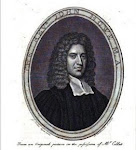
The 1662 act re-introduced episcopal rule back into the Church of England after the Puritans had abolished many features of the Church during the Civil Wars. The Act of Uniformity itself is only one of four crucial pieces of legislation, known as the Clarendon Code, after Edward Hyde, the Earl of Clarendon (pictured).

Clarendon Code

The Clarendon Code gets its name from Edward Hyde, Earl of Clarendon, Charles II's Lord Chancellor. The code included four crucial pieces of legislation. These were:
1. The Corporation Act of 1661 - This first of the four statutes which made up the Clarendon Code required all municipal officials to take Anglican communion and formally reject the Solemne League and Covenant of 1643. The effect of this act was to exclude nonconformists from public office.
2. The Act of Uniformity of 1662 - This second statute made use of the Book of Common Prayer compulsory in religious service. Upwards of 2000 clergy refused to comply with this act, and were forced to resign their livings.
3. The Conventicle Act of 1664 - This act forbade conventicles (a meeting for unauthorised worship) of more than 5 people who were not members of the same household. The purpose was to prevent dissenting religious groups from meeting.
4. The Five Mile Act of 1665 - This final act of the Clarendon Code was aimed at Nonconformist ministers, who were forbidden from coming within five miles of incorporated towns or the place of their former livings. They were also forbidden to teach in schools. This act was not rescinded until 1812.