Showing posts with label Coggeshall. Show all posts

Tuesday, 14 February 2023

Robert Gouge, Coggeshall

From the annals of Coggeshall
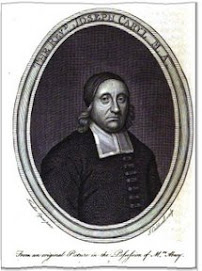
Robert Gouge became pastor of the church in Coggeshall after the death of Mr Sames. During the interval Mr Lowry preached. Mr Gouge was born at Chelmsford and sent by Lord Fitzwalter to Christ's College, Cambridge, where he had for his tutor the celebrated Henry More. On leaving the University he went to Maldon, where he preached and taught a school. From thence he removed to Ipswich, where he is spoken of as pastor of a congregational church, August 17, 1658.* He was silenced in 1662 and came to Coggeshall about the year 1674.
"1675, May 26.—The notes of ye sermon preached at the funerall of old Mr William Cox by Mr. Gouge."
Text - Gen. v. 24. ... I hope our dear friend whom God hath taken away in these respects did walk with God. He was, but is not. God hath taken him. Alas ! you lament the death of the man; will you desire to live the life of the man? an humble, mortified, friendly, fruitful life as he did? I see a treasure withdrawn, and the stock is lessened. Did not I see a corner-stone falling out of the building? You children of a good father, take heed how you carry it, take heed of taking your liberty. Methinks there is a gap made now: I pray God, let his spirit fall down and make up the breach; for the family, the town, the church, have a great loss, I am a stranger among you, and in part a stranger to you. God hath taken away many candles, many lights from us. I am afraid God is provoked by us. Remember pride does not eat out the heart of religion and the love of your souls to God, and therefore think of it, and the Lord grant we may make a good use of this solemn stroke of God, superadded to the strokes of former days."  "1675, July 17.—Funeral Sermon of Nicholas Merrills, by Mr. Gouge."**
"1676, May 16.—Funeral Sermon, John Bowyer's second wife."
"1678, Oct. 29. Old Widow Sach."
"1679, Nov. 12. Old Nurse Newton."
"1679, Nov. 6. Wife of Thomas Brewster. "
"1680, Jan. 27. Daughter of Mr Samuel Richardson, servant of Mrs. Cox."
The old church book contains the following allusion to Mr Gouge; but it was not written till the year 1775:
"Mr Sammes shared the same fate as the 2000. By this very solemn providence the people became scattered as sheep without a shepherd: for many of them could not sit down to his successor as he maintained both another faith and another order. But the Lord, who is the watchful keeper of his people, sent them a gatherer of the dispersed remnant, in the person of the Rev R Gouge. As now they were cast out of and become dissenters from the established church, and so could not meet where they formerly did, they hired a barn in East Street, which they converted into a meeting-house."
This house, situated on the north side of the street, now belongs to Mr F Hills. It was then the property of Isaac Hubbard, who was a deacon of the congregational church.*** This good man died in 1687. Mr Gouge shortly afterwards published a little volume entitled "The Faith of Dying Jacob, or God's Presence with his Church notwithstanding the Death of his Eminent Servants: being several sermons from Gen. xlviii. 21, occasioned by the death of Mr Isaac Hubbard, with the memorials of his life and death, and advice to his eon. London. 1688."
"Epistle Dedicatoby to the Church of Christ at Great Cogshall in Essex."
"You are a people whom the Lord hath honoured with many successive able Pastors, Mr Obadiah Sedgwick, Dr Owen, Mr Sams: All which Lights the Lord hath taken up into his upper Chamber, after their shine upon Earth to shine in Heaven; after their Labours with men, to take their rest in the Bosom of their God and Saviour. You are a people whom the Lord hath preserved marvellously in the stormy, cloudy and dark daies that scattered many others. You have had but a few drops of those tempestuous showers that drowned others. A garden inclosed, a spring shut up, a fountain sealed have you been: Your bow yet abideth in strength, though I am well aware how the Archers of Hell and Earth have shot at you. You have seen the goings of God in your Sanctuary, and every one of you may speak of his glory. The Lord hath much thinned your glory and comfort, by the decease of many Principal Members, though after the fall of the leaf, you have had sweet after-springs and budding stems, that you remain as green Olive-trees in the house of your God: So let his spiritual glory remain fresh upon you. You have continued in a close adherence to the Lord, and his Worship, not mixing with the world, and thereby have lost little: in your keeping the word of his patience, he hath kept you from the hour of temptation that hath tryed the Earth, when greater damage hath attached others in their neutral, treacherous compliances. The Pillar of Cloud and fire, hath given you a safe conduct to this present break-day of the Glory of God, and the Jubile of rest and liberty, universally extended in this Nation from its Bondage, and where is the fury of the Oppressor? The Lord cause this springing glory to shine to a perfect day, and prevent new darkening Clouds. For above the space of fourteen years, the Lord hath placed me, unworthy me, among you: And to the praise of his glorious name, you have seen the workings of his blessed Spirit in your confirmation, and others conversion: In 'which years, through the various tryals Divine Providence hath exercised me with, and the many personal infirmities that have attended me, you have born up in your Christian ingenuous respects to me, as also in your assistance, according to your abilities, to my civil expences, wherein I have yearly spent the whole revenue of my little Own that I had in this world, which had not been, but for the failure of some other hand, of what was at first proffered at my coming to you; though the disturbing exigences of late times, conduced much to that failure. This indeed in some fits of exigence, hath proved some little uneasie temptation to me, to think of some other supply: Which at present I wave in duty to God, and true love to you. The last blow the Lord gave us, was that deep oue, by the decease of our dear and honoured Brother Mr. Hubbard, which becomes the occasion of this small book. He was a good Copy, I hope many will write after him, and not let that goodly picture drop out of their hearts or lives: He gave you good conduct in all your affairs, and prospered, for the Lord was 'with him: 'Twas amongst his very last words, the Lord hath the residue of Spirits, let us pray that that living, flowing, renewing Spirit may flourish among us, with the encrease of Gifts and Grace. By reason of my many occasions, some months are pass'd since this Christian deceased; but I remember Vespasian's Motto on his coin, sat cito si sat bene. 'Tis soon enough, if well enough. I design not many words to you, 'twill be better, that what concerns the Glory of God and our mutual comfort, be expressed in our continued fellowship."
"So, finally Brethren, Farewell, be perfect, be of good comfort, be of one mind, Live in Peace, and the God of love and peace shall be with you.
"Yours to serve in the Gospel of Christ,
"R. Gouge."
Of Mr. Hubbard he says:— "He was never so unchristian as to make all anti-christian who differed from him, as if none could get to heaven but went in his congregational path. God's eternal truth was dearer to him than liberty or life. His card, pole-star, canon he walked by, was the word of God. Wheresoever he separated from others it was because they first separated from truth. His conversation was in Heaven. The solitudes and arbours of holy retreated meditations he found to be gates that let in the inward world, Heaven's suburbs and sunlight. At home his conversation was pious and profitable. In the church: he cared for the things thereof with singular prudence and exemplariness, as a sound, able Christian, and almost a Divine. He was eyes to the blind, and feet to the lame. He was charitable and tender-hearted. He was contented, meek and humble. Death met him nigh at home, whose imperious necessity he had prevented by the daily resignation of himself to Heaven's commission. In the last year of his life he was much solacing his soul in the foreviews of future glory, much reading that piece of his ancient reverend Pastor, Dr Owen, about the Glory of Christ. Thus having finished his course upon earth, having oft fetched his God down to him, he was taken up to his God."
Mr Gouge resided at the upper end of Stoneham Street. He had some relatives here, one of whom was named Samuel Gouge, a lawyer. He had also a son, named Thomas Gouge, who was born at Ipswich in 1662, and became pastor at Amsterdam: on returning to England, was pastor of the Independent Church at the Three Cranes, near Thames Street, and died 8th January, 1700.
Dr Watts says that the three greatest preachers in his younger time, were Mr John Howe, Mr Stennet and Mr Thomas Gouge, whose strength lay in the illustration of scripture; and dedicates one of his Lyric poems to his memory. Mr Gouge outlived his son, and died in a ripe old age at Coggeshall, where he was buried October 16, 1705.****

* Letter from Samuel Petts, of Sandcroft, to Slater, at St. Katherine, near Tower Hill. Peck's Desid. cur. ii. 505.
** 1704, Dec. 28.—Died Mrs. Merrills, formerly wife of the worthy Mr Dodd - Bufton.
*** The Manor Rental shows that Mr Hubbard owned this place. He lived on the site of the Mechanics' Institute, Church Street. An old manuscript, including a statement of Mr Hubbard's effects, and of the subsequent building of the present Chapel, has - "Gave Mr Gouge a pair of spectacles with silver bands" and "There were some old boards that came from the old meeting-house that were carried to the new meeting-house."
"1681, Oct. 18 Mr Isaac Hubbard brought home his third wife."
"1684, Oct. 30 - Old Mrs Smith, Mr Hubbard's sister, was buried. "
"1687, Dec. 6.—Mr. Isaac Hubbard was buried."—Bufton.
**** "1680 Apl 27 Mr Thomas Gouge was married to a rich gentlewoman of Chelmsford
1689 Oct 31 Mr Thomas Gouge brought home his second wife from London
1689 May 19 Mr Samuel Gouge a lawyer was buried Bufton
1693 June 6 Child of Mr Thomas Gouge Reg Bap
1709 May 18 Mrs Gouge Reg Bur

Wednesday, 10 March 2021

Thomas Browning, Rothwell

From The Annals of Coggeshall
Thomas Browning (c 1634-1685) was born of pious parents at Coggeshall, about the year 1634, and was sent to Oxford at sixteen years of age. Here he "chose the worst companions and despised the best instructions; and after some years left, and became tutor in Col. Sydenham's family. There was so much religion here that he quickly grew weary of it and left, and chose rather to embrace a vain and uncertain course of life." On attending Westminster Abbey, he was greatly impressed by the sermons of Mr John Howe, the pastor; and afterwards of Mr Thomas Weld of New England and Mr Pinchback, assistant of Dr. Thomas Manton. About this time Mr Sames met with him in London, and induced his parents, whom he had estranged by his former life, to invite him and his wife to reside with them at Coggeshall.
He became a member of the church, and was at length encouraged by Mr Sames to devote himself to the ministry, and preached his first sermon on Matt. i. 20 in his pulpit in the Parish Church. Going with Mr Sames to a commencement at Cambridge, they met with Mr Beverly of Rothwell, who was seeking a minister for the adjoining parish of Desborough; and Mr Browning, after preaching there, was invited to become pastor in 1657. Here he continued faithfully discharging his duties for five years.
In all his work he followed the advice once given him by Dr. Owen, " Study things, acceptable words in course will follow." He was ejected among the two thousand, preaching his farewell sermon on 2 Cor. xiii. 14. The people of Desborough and Rothwell gathered together to form one congregation under his ministry, at Rothwell, where he had licence to preach in 1672, and continued during the rest of his life.
"Some soldiers came one Lord's-day, April, 1682, to break up a meeting, and to take Mr Browning of Rothwell. The constable advised them to be well-advised in what they did, 'for,' said he, 'when Sir was alive, he eagerly prosecuted these meetings, and engaged 8 soldiers of the country troop therein, whereof myself was one. Sir himself is dead; 6 of the soldiers are dead; some of them were hanged, and some of them broke their necks; and I myself fell off my horse and broke my collarbone in the act of prosecuting them, and it cost me 30s. to be cured. It hath given me such warnings, that for my part I am resolved I will never intermeddle with them more.' This story he repeated several times that day, which shews how readily conscience, when a little awakened, construes the Divine Providences to be acts of judgment and admonition."*
Mr Browning was on one occasion arrested and imprisoned in Northampton Gaol; from which place he wrote the following with other letters to his church:
"My dear Brethren and Beloved,
"I salute you in the Lord, and make mention of you to him with joy, counting it my most happy lot, next interest in His love, to have so great a share in yours We have peace in the midst of trouble, and quiet in the day of war; because 'this man is our peace even while the Assyrian is in the land.' God has been a little sanctuary to us in our scatterings, and has over-ruled that which was designed for our ruin to our help. O my brethren! methinks I am with you, weeping with you, joying with you, praying with you, and hearing with you. It is true fellowship my soul has with you at a distance. I long after you much in the Lord, yet rejoicingly stay his good pleasure. I would not come out a moment before his time. I would not take a step without his direction. I am wonderfully well; better and better. The cup of afflictions for the Gospel is sweeter the deeper: a stronger cordial the nearer the bottom — I mean death itself. O the joy unspeakable the glorious and dying martyrs of Jesus have had! How full freight have been their souls in their passage to their port! I tell you, if you knew what Christ's prisoners, some of them, enjoyed in their gaols, you would not fear their condition, but long for it. And I am persuaded, could their enemies conceive of their comfort, in mere vexation of heart they would stay their persecutions. 'Therefore, my brethren, my joy and crown, stand fast in the Lord.' Rejoice greatly to run your race: fear not their fear: sit loose from the world: allot yourselves this portion which God has allotted you, through many tribulations to enter into the kingdom of heaven. Come the worst is death, and that is the, best of all ... My brethren, do not budge. Keep your ground: the scripture is your law: God is your king. Your principles are sober, your practices are peaceable. Your obedience to superiors known in those things wherein your obedience is required. If men have nothing against you but in the matters of your God, rejoice and triumph in all your persecutions. . . . I exhort you all to walk in the faith, fear, love and joy of the Lord. Study your mutual edification. Fear nothing of events till they come: only fear offending God with a neglect of your duty. There is no shadow like the shadow of God's wings; therefore keep close to God. Ps. Ivii. 1."
"T. B."
Reference to his death is made in the church-book of Rothwell:
"Mr Thomas Browning, pastor of this church, was gathered to his Father's house in peace, in an awfully persecuting day, May 9, 1685, having served his Lord in this house with much pains and many tears, with much presence and success, about 23 years."
He was buried in Rothwell churchyard, and was succeeded by Mr Richard Davis.**

* Mr Beverly says in his Diary—"1658, May 13. Pretty cheerful till Brother Browning's return from Essex, who told me the sad news (among some other more refreshing) that there was some discord in the New England churches: Mr Stone turned classical. O what a fountain of tears broke my heart forthwith out into, to conceive that Satan should infest those precious churches which the Lord had hitherto so gloriously carried as on eagle's wings."
** Monuments of Mercy, or some of the distinguished favours of Christ to the Congregational Church at Rowel, as handed down in the ministry of Mr John Beverley, and Mr Thomas Browning, remembered. By Matthew Mayrice. London, printed for B. Hett, at the Bible and Crown in the Poultry, near Cheapside, 1729.
Palmer says "His tomb yet remains with a Latin inscription. The late Mr Moses Gregson, who married a descendant of his, communicated to the Editor some extracts from his Diary, which discover an ardent piety."

Wednesday, 31 October 2018

Matthew Ellistone, Coggeshall

Dale again
Matthew Ellistone was probably a native of this town, where the family had long resided. He lived here in 1646, and on the 3rd of September in that year was appointed by an ordinance of the Lords to Stamford Rivers, in the stead of Dr John Meredith, who had been deprived the 6th of May, 1643. On his ejection, he returned to Coggeshall and lived at the Grange, where he had licence to hold a meeting for worship in 1672. He was a Presbyterian.
"The notes of the sermon which was intended to have been preached by Mr. Elliston, at the Burial of old John Picknet at Kelvedon, Sept. 6, 1675. But he being then hindered, he preached it the Sunday after, being the 12th September, 1675.
"Text—Phil. i. 15. You find the Apostle in a straite at the penning of this text; and I was in a straite; straites of time as to my sermon and meditations: and some of you know I was in a straite when it was intended to be delivered, by reason of an unkind and unchristian opposition. That which was then hindered is by relations desired to be the discourse of the day. — Bufton's MSS.
In 1677 he is mentioned as Matthew Ellistone of Little Coggeshall, clerk, in connection with Isaac Ellistone of the same place, probably his brother, and lived there until his death.
"The notes of the sermon preached at the funeral of my cousin, Isaac Ellistone's wife, by Mr. Burwell, Nov. 13, 1674."
"The notes, etc. of my cousin, Mr. Isaac Elliston, hy Mr. Burwell, April 3, 1678."
"1678, 5th Oct. — My cousin Sam.Sparhawke's wife was buried. She was old Mr. Burwell's daughter, Minister."— [Probably Mr. Jeremy Bubwell, ejected at Hertford.] — Bufton's MSS.
"1693, May 3.— Buried Matthew Ellistone." — Markshall Reg

Thomas Lowrey, Coggeshall

The Woolpack Inn, Coggeshall


Dale also writes about Thomas Lowrey

Thomas Lowry was a Scotchman. He succeeded Mr. Meighen, who was sequestered at Great Braxted, and afterwards went to Harborough in Leicestershire, (inducted Feb. 24, 1649,) and received a moiety of Whitworth rectory to supplement his salary, which was very small. He declined to be lecturer at Maldon, to which he had been appointed June 12, 1649. On his ejection, he came to reside at Coggeshall.* He preached in his own house.
An extract has been given from his funeral sermon for Mr Sames. He preached another at the funeral of Mrs Brockwell, at the close of which he said:—
"Now this woman whose funeral we solemnize was in my apprehension a pious, prudent, profitable, sober and peaceable woman. If she was not so good, and so pious and prudent as she did show for, you that are without a fault throw the first stone at her. Though her life might be somewhat obscure and reserved, yet I cannot but think 'the root of the matter' was in her. Then whatsoever things are honest, and lovely, and of good report, that were in her, let us do, and the God of peace shall be with us."
His own funeral sermon was preached by Mr. Gouge, April 2, 1681 :—

Text — Psalm xci. 16. I have read concerning a king that in the bequeathments of his will he made a deed of gift of all from the heavens to the centre of the earth. Such is the riches of God and the infiniteness of his love, that unto his servants he gives all from the centre of the earth to the centre of the heavens; he gives them what is sufficient upon earth, and what is saving in heaven, he gives them throne blessings and foot-stool blessings; and so you find the largeness of God's heart to his people, both, in upper and nether springs, in eternal and temporal distributions of love, an assurance of which we have in these words, 'With long life will I satisfy him, and shew him my salvation.' Observe, First, Life is one of the primest flowers that grows in nature's garden. Secondly, It is God that is the fountain and spring of life. Thirdly, Length of life, and satisfaction with it, is a further blessing which God bestows upon his godly people ....
Although the departure of our reverend friend and brother ought to be matter of greater sorrow than I see among you; yet God honoured him with a double crown, a crown of long life on earth, and I question not but with a crown of salvation in heaven .... 
God did satisfy him with life, by the life of grace and taking him up into his love; and God did afford him a competency of outward things to the last. This is life, when a man has his name written among the living in Jerusalem. Let churches be reviled and contemned, yet they are the Jerusalem of God; and to be enrolled a true member in a true church is a glory next to the glory of heaven. Thus our friend in his last sickness, upon some discourse of his hopes, gave that for one ground among many others, 'Lord, I have loved the habitation of thy house and the place where thine honour dwelleth.' This servant of God was one that laboured much among you; but what is there of his labours to be seen? You have had able ministers among you; there has been much seed sown among you; but whore is the harvest? If ever you would honour any minister, honour him by receiving his labours into your hearts and lives. God hath ' watered' you with wine, yea, with the blood of many of his servants; but if this blood be found amongst an unprofitable people, it will be dreadful for you at last. "Ye that remain, children of the deceased servant of God, remember his counsels and example, and do not wound him now he is dead. Let it not be his reproach afterwards, that any of you should prove a wicked son or an ungodly daughter ..... So let us live, that God may satisfy us with long life for evermore." — Bufton's MSS.

* "1661, May 28.— Obadiah, Sonne of Tho. and Bridgett Lowrye, vicarii. 
"1662, Sep. 28.— Robert, Sonne of Thos. Lowrye, vicarii."— Reg. Bap.

John Sames, Coggeshall


Dale continues his annals by talking about John Sames one of the ejected ministers, already mentioned by Dale earlier on. He quotes Palmer in a footnote saying of Sames
After the loss of his living he and some of his people went to Church, but others of them not being satisfied to do so, and the minister at the same time reproaching them in public for not being present in time of divine service, he desisted and set up a separate meeting, and died pastor of a gathered church there. He was a man of good learning and valuable ministerial abilities, but melancholy to an excess.
With that footnote he adds
1656, July 2.— (Born) Deborah, daughter of John and Anne Sames, vicar. "
1672, Dec. 16.— (Buried) Mr. John Sames."—Par. Reg.
1689, Nov. 29.— I first heard old Mrs. Sames was lately dead."— Bufton's Diary.

Dale continues
Most of those who formed the congregational church of which he was previously pastor left the Parish Church, and met together elsewhere, as circumstances permitted, and were ministered to by Mr Sames, Mr Lowry, [more on him later] and others. He died soon after the Indulgence was granted, and his funeral sermon was preached by Mr Lowry.
"The notes of ye sermon preached at ye funerall of Mr John Sames, by Mr. Lourey, Dec. 16,1672. "Text — Isaiah lvii. 1-2. We have been burying the greatest riches of the town, the jewel of the town; but we do not know whether ever we shall outlive the following storm of judgments, to regain such a pearl again. It is the great sin of a people, that when the righteous are removed by death they think they have done their last duty; but their last duty is to sit down and consider their loss, and what will be the sad consequences of such a dispensation We must not be troubled upon the personal account of this man, for he is gone to rest and peace, from all the troubles of this world. Death to him is gain. . . So that we are not to lay to heart his loss, but our own loss. Such as sat under his ministry and were refreshed by his doctrine, should mourn and lay it to heart; and the town should lay it to heart; for he was the salt as it were of the town, and the light of the town. He shined among you in his doctrine and conversation. Some men's death is but a cipher, and a hundred ciphers signify nothing; but the death of some is as a figure, and a figure of 1 and three ciphers stand for a thousand. He was a messenger of a thousand, and ought to be laid to heart more than the death of a hundred or thousand wicked persons. . . . . . Some men are not at all affected with such a dispensation as this. They may persecute the righteous when they are alive; but when they die, they lay them in their graves, and hide them in the dust, and forget them, and their hearts are hardened it may be against their widows or children. A righteous man is excellent; but they are willing to have him buried out of sight. They do not see that a righteous minister in a place is the greatest advantage: nor foresee that such a hedge or fence is taken away that the judgment of God may take hold of them.
"But yet there are gracious souls that do see the feet of the righteous servants of God to be beautiful: they open their hearts and their doors to them: they see God in such messengers, and when they are removed they see that it is an irreparable loss, except God make it up. God will take care of such a poor flock, though they be a flock of slaughter. And though their shepherd is gone, yet God will provide them another. Is there no more in the world? Yes: but you must go to God for one by prayer. Those that are sorrowful to see so many congregations without a soul-saving ministry, the Lord has made a promise to comfort them; as in the third of Zephany, 12-17 Now doubtless this friend which we have been burying was a righteous man. I could not only judge him to be righteous, but eminently righteous. He had a rich propriety in God and Christ, and he had a gospel spirit in his prayers and preaching. He was spiritual in his worship and spiritual in his conversation, and he had that wisdom from above that made him pure and peaceable, gentle and easy to be intreated: his wisdom did not carry him forth to strife, envy or contention. Again, he was of a plain spirit; he had a plain honest heart. And verily he was profitable to old, to young, to this company and that company, and he was communicative of any good he had. He did not handle the word of God in craftiness. He was patient: and of a free and public spirit. He was tender-hearted to his people, and to all; and he had a spirit of government in his family, and walked conscientiously. How careful was he! He ordered his family, and therefore was the more fit to order the church.
"Therefore our loss is great, now such a righteous man is taken away. You that are sinners have a great loss. He warned you of Hell, and of being drowned in the world. You that were his church have a great loss. He carried you in his warm bosom. Christ make it up to you. You young mm have had a great loss. He was kind to young men, and tender of their souls. The Lord make up our loss. And let us all endeavour to be righteous men and women; and then God will either take us from a day of trouble, or hide us in a day of trouble. And the Lord grant that we may be truly affected and humbled under this dispensation." — Bufton's MSS.

Coggeshall, Essex

St Peter ad vincula, Coggeshall, Essex
In his 19th century  Annals of Coggeshall the Congregationalist minister Bryan Dale has a chapter on Nonconformity which begins with a section on Ejected Ministers. He introduces it saying

Whenever laws were ordained contrary to conscience and the word of God, Nonconformity became a necessity for those who would obey God rather than man. It existed accordingly where the least scope was allowed for freedom of thought; and every attempt to bring the laws of the state into harmony with the individual conscience, and to silence its voice, alike failed.
During the twenty years which preceded 1662 there were placed in the parish churches men, of whom the least that can be said is that they were faithful pastors and able preachers. All of them were ultra-protestant in doctrine; many were in favor of Presbyterianism or a modified Episcopacy; and many were Independents. Charles II. was restored under most solemn engagements "that no man should be molested for his religion;" but as soon as the Restoration was effected all these were put aside.
First of all (1660) three hundred ministers were ejected from their livings to make room for the restoration of such as had been sequestered, and without regard to the character or competency of the latter. Then all the objections urged against the re-establishment of unmodified Episcopal authority and the Book of Common Prayer, were overruled, and an Act was passed, which required each minister who had not been ordained by Episcopal hands to be re-ordained, and to declare publicly his unfeigned assent and consent to all and everything contained in the Book of Common Prayer, as now set forth,* etc.; and on neglect or refusal pronouncing him ipso facto deprived of all his spiritual promotions. Unable, without disregarding the supreme claims of conscience, to comply with such requirements, above two thousand ministers** ceased to minister in the Established Church, from Bartholomew Day, 24th August, 1662. Another shade was thus added to the previous darkness of this day,*** by the privation and suffering into which these men were driven. The Conventicle Act was afterwards passed, forbidding more than five persons besides the family to meet for religious worship, under severest penalties. About this time the plague visited this country, and carried off great numbers of people in this neighbourhood. It does not appear to have been severe in this town, if it prevailed at all. At Braintree, on the contrary, 600 persons died within a short period; and in the vestry of that parish a memorial on parchment, containing the names of charitable contributors towards the distress, mentions
"The Inhabitants of Coggeshall — £35."
Several of the ejected ministers ventured into vacated pulpits, to preach to the excited people. The Five-Mile Act, however, forbade them to come within five miles of any place where they had previously ministered, or of any borough or corporate town. Great numbers of Nonconformists were fined and imprisoned; but meetings were secretly held. When the Conventicle Act was revived in 1669, enquiries were sent to every parish concerning such meetings; and the returns, partial and imperfect, are preserved at Lambeth.
"Coggeshall. Hard to be suppressed. (Ministers) Mr. Sammes. Mr. Lowry."
The next entry is:—
"Wethersfield. Mr. Cole, now in Chelmsford Goal."
In 1672 Charles II issued his Declaration of Indulgence, and above 3,000 licences for religious worship were taken out.
"License to John Sammes, to be a congregational teacher in the house of John Croe at Coggeshall.—1st May 1672."
"License to Thomas Lowry, to be a congregational teacher in his house at Coggeshall, in Essex."
"The house of Thomas Lowry in Coggeshall to be a Meeting House."
"The house of Matthew Ellistone at the Grange in Little Coggeshall to Matthew Ellistone.—13th May."
"William Grove, in his house at Coggeshall, licensed to he a congregational teacher.—May, 1672."
"Thomas Millaway, of Coggeshall, Essex, licensed to be a general congregational teacher.—22nd July, 1672."
The Nonconformists in this place were too numerous to meet in one spot. The Test and Corporation Acts immediately followed the Indulgence; afterwards came other persecutions. It does not appear, however, that in this town, beyond having their assemblies broken up, the Nonconformists suffered greatly; for the magistrates, and others upon whom the execution of the laws devolved, were themselves of the same mind as the offenders. The attempt of James II to bring back the country to Roman Catholicism, led to the Glorious Revolution of 1688, and the Act of Toleration: but the Act of Uniformity and other laws against Nonconformists were still continued.

* The alterations made were of the following nature:— The Book of Bell and the Dragon inserted in the Calendar — the words "rebellion and schism" in the Litany —" Priest" and "Deacon" substituted for "Minister" — Absolution ordered to be pronounced by the priest alone — kneeling at the Lord's supper — Charles styled "our most religious King." The Nonconformists, many of whom were in favor of a Liturgy, had many objections to the prescribed forms. Among other things they said, "We cannot in faith say that every child that is baptized is regenerated by God's holy spirit." "The words of the burial service cannot in truth be said of persons living and dying in open and notorious sins. These words may harden the wicked and are inconsistent with the largest rational charity."
** William Rastrick, in a MS. Index, (date 1734) in a library at Lynn, gives 2257 names.
*** The massacre of 10,000 French Protestants in 1572.