(Lord’s day). Slept till 7 o’clock, which I have not done a very great while, but it was my weariness last night that caused it. So rose and to my office [see pic] till church time, writing down my yesterday’s observations, and so to church, where I all alone, and found Will Griffin and Thomas Hewett got into the pew next to our backs, where our maids sit, but when I come, they went out; so forward some people are to outrun themselves. Here we had a lazy, dull sermon. So home to dinner, where my brother Tom came to me, and both before and after dinner he and I walked all alone in the garden, talking about his late journey and his mistress, and for what he tells me it is like to do well. He being gone, I to church again, where Mr Mills, making a sermon upon confession, he did endeavour to pull down auricular confession, but did set it up by his bad arguments against it, and advising people to come to him to confess their sins when they had any weight upon their consciences, as much as is possible, which did vex me to hear. So home, and after an hour’s being in my office alone, looking over the plates and globes, I walked to my uncle Wight's, the truth is, in hopes to have seen and been acquainted with the pretty lady that came along with them to dinner the other day to Mr Rawlinson, but she is gone away. But here I staid supper, and much company there was; among others, Dr Burnett, Mr Cole the lawyer, Mr Rawlinson, and Mr Sutton, a brother of my aunt’s, that I never saw before. Among other things they tell me that there hath been a disturbance in a church in Friday Street; a great many young people knotting together and crying out “Porridge” [derogatory nickname for the Book of Common Prayer] often and seditiously in the church, and took the Common Prayer Book, they say, away; and, some say, did tear it; but it is a thing which appears to me very ominous. I pray God avert it. After supper home and to bed.
Showing posts with label Samuel Pepys. Show all posts
Tuesday, 2 October 2007
Pepys' Diary 24/08
(Lord’s day). Slept till 7 o’clock, which I have not done a very great while, but it was my weariness last night that caused it. So rose and to my office [see pic] till church time, writing down my yesterday’s observations, and so to church, where I all alone, and found Will Griffin and Thomas Hewett got into the pew next to our backs, where our maids sit, but when I come, they went out; so forward some people are to outrun themselves. Here we had a lazy, dull sermon. So home to dinner, where my brother Tom came to me, and both before and after dinner he and I walked all alone in the garden, talking about his late journey and his mistress, and for what he tells me it is like to do well. He being gone, I to church again, where Mr Mills, making a sermon upon confession, he did endeavour to pull down auricular confession, but did set it up by his bad arguments against it, and advising people to come to him to confess their sins when they had any weight upon their consciences, as much as is possible, which did vex me to hear. So home, and after an hour’s being in my office alone, looking over the plates and globes, I walked to my uncle Wight's, the truth is, in hopes to have seen and been acquainted with the pretty lady that came along with them to dinner the other day to Mr Rawlinson, but she is gone away. But here I staid supper, and much company there was; among others, Dr Burnett, Mr Cole the lawyer, Mr Rawlinson, and Mr Sutton, a brother of my aunt’s, that I never saw before. Among other things they tell me that there hath been a disturbance in a church in Friday Street; a great many young people knotting together and crying out “Porridge” [derogatory nickname for the Book of Common Prayer] often and seditiously in the church, and took the Common Prayer Book, they say, away; and, some say, did tear it; but it is a thing which appears to me very ominous. I pray God avert it. After supper home and to bed.
Pepys' Diary 17/08
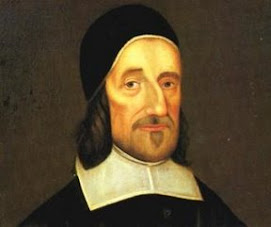
(Lord’s day). Up very early, this being the last Sunday that the Presbyterians are to preach, unless they read the new Common Prayer and renounce the Covenant, and so I had a mind to hear Dr Bates's farewell sermon, [Dr William Bates, eminent Puritan divine. He took part in the Savoy Conference. His collected writings (1700) fill a large folio volume. The Dissenters called him silver-tongued Bates. Calamy affirmed that if Bates would have conformed to the Established Church he might have been raised to any bishopric in the kingdom. He died in 1699, aged 74] and walked thither, calling first at my brother's, where I found that he is come home after being a week abroad with Dr Pepys, nobody knows where, nor I but by chance, that he was gone, which troubles me. So I called only at the door, but did not ask for him, but went to Madam Turner's to know whether she went to church, and to tell her that I would dine with her; and so walked to St Dunstan's, where, it not being seven o’clock yet, the doors were not open; and so I went and walked an hour in the Temple-garden, reading my vows, which it is a great content to me to see how I am a changed man in all respects for the better, since I took them, which the God of Heaven continue to me, and make me thankful for. At eight o’clock I went, and crowded in at a back door among others, the church being half-full almost before any doors were open publicly; which is the first time that I have done so these many years since I used to go with my father and mother, and so got into the gallery, beside the pulpit, and heard very well.
His text was, “Now the God of Peace—;” the last Hebrews, and the 20th verse: he making a very good sermon, and very little reflections in it to any thing of the times. Besides the sermon, I was very well pleased with the sight of a fine lady that I have often seen walk in Gray's Inn Walks, and it was my chance to meet her again at the door going out, and very pretty and sprightly she is, and I believe the same that my wife and I some years since did meet at Temple Bar gate and have sometimes spoke of. So to Madam Turner’s, and dined with her. She had heard Parson Herring take his leave [John Herring (d c 1672). Presbyterian Vicar of St Bride, Fleet Street c 1656-62. Excluded for non-conformity. Possibly a minister in Coventry c 1648-50]; tho’ he, by reading so much of the Common Prayer as he did, hath cast himself out of the good opinion of both sides.
After dinner to St Dunstan’s again; and the church quite crowded before I came, which was just at one o’clock; but I got into the gallery again, but stood in a crowd and did exceedingly sweat all the time. He pursued his text again very well; and only at the conclusion told us, after this manner: “I do believe that many of you do expect that I should say something to you in reference to the time, this being the last time that possibly I may appear here. You know it is not my manner to speak any thing in the pulpit that is extraneous to my text and business; yet this I shall say, that it is not my opinion, fashion, or humour that keeps me from complying with what is required of us; but something which, after much prayer, discourse, and study yet remains unsatisfied, and commands me herein. Wherefore, if it is my unhappiness not to receive such an illumination as should direct me to do otherwise, I know no reason why men should not pardon me in this world, and am confident that God will pardon me for it in the next.” And so he concluded.
Parson Herring read a psalm and chapters before sermon; and one was the chapter in the Acts, where the story of Ananias and Sapphira is. And after he had done, says he, “This is just the case of England at present. God he bids us to preach, and men bid us not to preach; and if we do, we are to be imprisoned and further punished. All that I can say to it is, that I beg your prayers, and the prayers of all good Christians, for us.” This was all the exposition he made of the chapter in these very words, and no more. I was much pleased with Dr Bates’s manner of bringing in the Lord’s Prayer after his own; thus, “In whose comprehensive words we sum up all our imperfect desires; saying, ‘Our Father,’” &c.
Church being done and it raining I took a hackney coach and so home, being all in a sweat and fearful of getting cold. To my study at my office, and thither came Mr Moore to me and walked till it was quite dark. Then I wrote a letter to my Lord Privy Seal as from my Lord for Mr._ to be sworn directly by deputy to my Lord, he denying to swear him as deputy together with me. So that I am now clear of it, and the profit is now come to be so little that I am not displeased at my getting off so well. He being gone I to my study and read, and so to eat a bit of bread and cheese and so to bed.
I hear most of the Presbyters took their leaves to-day, and that the City is much dissatisfied with it. I pray God keep peace among us, and make the Bishops careful of bringing in good men in their rooms, or else all will fly a-pieces; for bad ones will not [go] down with the City.
Pepys' Diary 10/08
Sunday 10 August 1662
(Lord’s day). Being to dine at my brother's, I walked to St Dunstan's, the church being now finished; and here I heard Dr Bates, who made a most eloquent sermon; and I am sorry I have hitherto had so low an opinion of the man, for I have not heard a neater sermon a great while, and more to my content. So to Tom’s, where Dr Fairebrother, newly come from Cambridge, met me, and Dr Thomas Pepys. I framed myself as pleasant as I could, but my mind was another way. Hither came my uncle Fenner, hearing that I was here, and spoke to me about Pegg Kite's business of her portion, which her husband demands, but I will have nothing to do with it. I believe he has no mind to part with the money out of his hands, but let him do what he will with it. He told me the new service-book (which is now lately come forth) was laid upon their deske at St Sepulchre's for Mr Gouge to read [Thomas Gouge (1605-1681), eminent Presbyterian minister, son of William Gouge DD (lecturer at and afterwards Rector of St Anne’s, Blackfriars). Thomas was vicar of St Sepulchre from 1638 until ejected in 1662]; but he laid it aside, and would not meddle with it: and I perceive the Presbyters do all prepare to give over all against Bartholomew-tide. Mr Herring, being lately turned out at St Bride's, did read the psalm to the people while they sung at Dr Bates’s, which methought is a strange turn. After dinner to St Bride’s, and there heard one Carpenter, an old man, [Richard Carpenter (d c 1670), an Anglican, formerly an Independent and three times joined the Roman church. Author of A new play call’d the pragmatical Jesuit new leven’d (c 1669). ‘A fantastical man that changed his mind with his clothes, and that for his juggles and tricks in matters of religion…was esteemed a theological mountebank” {Wood}] who, they say, hath been a Jesuit priest, and is come over to us; but he preaches very well. So home with Mrs Turner, and there hear that Mr Calamy hath taken his farewell this day of his people, and that others will do so the next Sunday. Mr Turner the draper, I hear, is knighted, made Alderman, and pricked for Sheriffe, with Sir Thomas Bluddel, for the next year, by the King, and so are called with great honour the King’s Sheriffes. Thence walked home, meeting Mr Moore by the way, and he home with me and walked till it was dark in the garden, and so good night, and I to my closet in my office to perfect my Journall and to read my solemn vows, and so to bed.
Subscribe to:
Posts (Atom)