Showing posts with label Iain Murray. Show all posts

Monday, 21 August 2023

The Passing of Black Bartholomew (3/3)


EVEN though Farewell Sermons had been preached in many parishes on Sunday, August 17, there was a widespread feeling of uncertainty throughout the nation with regard to the direction and character of coming events. Something of this uncertainty can be detected in the words of some of the sermons that were preached on that day. We find, for example, Thomas Watson saying to his people in his morning sermon, “I will not promise that I shall still preach among you, nor will I say that I shall not, I desire to be guided by the silver thread of God’s Word, and of God’s providence.” But, on the other hand, speaking on the same day in another London church, Thomas Lye said, “It is most probable, beloved, whatever others may think, but in my opinion (God may work wonders) neither you nor I shall ever see the faces of, or have a word more to speak to one another till the day of judgment.” The variation between these two statements does not mean that Lye was more resolute than Watson in his decision not to subscribe to the Act of Uniformity, on that point they were both equally firm; but there lies behind the words of the preachers a differing degree of un­certainty whether or not the Act would actually be enforced against them.

They were not without grounds for hopefulness, for although the Act had been passed by Parliament, the King could still exercise his clemency in an Act of Indulgence by which at least some of those who failed to conform might be allowed by the royal prerogative to retain their churches. For Clarendon, the King’s minister, had just promised such a favour to Manton, Bates, Calamy and other Puritans, provided they petitioned the King for it. This news would doubtless be circulated and discussed amongst the London ministers and word of it was carried to the country. The diary of John Angier, the Lancashire Puritan, carries this entry in the week preceding Bartholomew’s Day: “August 20 was a day of general seeking God in reference to the state of the Church; that very day several ministers were before some of the Council and received encouragement to go on in the ministry. A letter read to them from the King to the Bishops that no man should be troubled for Non­conformity at least till his cause was heard before the Council. The news came to Manchester by Saturday post and was that night dispersed by messengers sent to several places. By means hereof many ministers that intended not to preach fell to their work, which caused great joy in many congregations.” Similarly, Henry New­come of Manchester writes in his diary on Bartholomew’s Eve, “I received a letter from Mr. Ashurst which gave us an account that past all expectation there was some indulgence to be hoped for in some cases.”

Clarendon’s promise was not merely a device to ease the tension in the nation till Bartholomew’s Day was passed. [1] He and the King had also grounds for uncertainty. They were not sure what the political repercussions of a wholesale ejection of the Puritans might be; the number of the nonconforming clergy was still unknown, although it was evident they would include some of the most eminent names in the land; and there was the fear lest the powerful Presbyterian party might make common cause with the Indepen­dents and thus, in Clarendon’s words, “give a great shock to the present settlement.” Charles, however, was also busy with other affairs. The previous May he had married Catherine of Braganza, and Saturday, August 23, was the day appointed for her public arrival and welcome at Whitehall. Amidst a brilliant regatta of barges and boats, the King and his Roman Catholic Queen sailed down the river from Hampton Court; “music floated from bands on deck, and thundering peals roared from pieces of ordnance on shore”. “I was spectator,” wrote John Evelyn in his diary, “of the most magnificent triumph that ever floated on the Thames.” But there were many in London that day that had no heart for the festivities. Far removed in thought from the colour and pageantry of the Queen’s arrival, a great company of silent and mourning believers was gathered in the parish of St. Austin’s for the burial of Simeon Ashe. Ashe had long been one of the popular Puritan leaders and “he went seasonably to heaven,” says Calamy, “at the very time when he was cast out of the Church. He was bury’d the very even of Bartholomew-Day.” The historian’s grandfather, the veteran Edmund Calamy of St. Mary Aldermanbury, was naturally the preacher on such an occasion, and that day he preached a sermon that was to be spoken of and read over for many years to come. His text was Isaiah 57:1, “The righteous perisheth, and no man layeth it to heart, and merciful men are taken away, none considering that the righteous are taken away from the evil to come.” The sermon is one of the finest examples of Puritan preach­ing, and though it does not strictly belong to the Farewell Sermons it is not surprising that it was given a place in the volume that was shortly to bear that title. Though Calamy packs his exposition with doctrines, he so blends his teaching with illustration, and his reproofs with exhortations, that he was in no danger of losing the attention of his hearers. Take the following example: ...

Sunday, 20 August 2023

The Last Summer (2/3)


THOUGH many of the Puritan ministers were far removed from the intrigues and disputations going on in London, they were never­theless deeply concerned in their outcome and throughout the land they waited for word from the capital. For many months before the Act of Uniformity was published rumours were circulating, and even amidst the peaceful beauties of far-off Flintshire we can hear their echoes in the diaries of Philip Henry. “Great expectations,” he writes in July 1661, “about a severe Act about imposing the Common prayer and Ceremonies passed both houses of Parliament but not signed by the King.” Again, “News from London of speedy severity intended against the Nonconformists. The Lord can yet, if he will, break the snare. If not, welcome the will of God.”

Although news of an Act of Uniformity had thus been heard of well in advance, it was not, as has already been said, until May 1662 that its terms were made known. Three months only were given the Puritans for deliberation and that in spite of the fact that the revised Prayer Book to which they must give unfeigned assent was not to be ready for publication till August 6–only three weeks before St. Bartholomew’s Day. In an age in which books had to be despatched and circulated in a manner far different from what we are accustomed to today, this meant that in certain parts of the country such as Lancashire, ministers could not obtain copies before August 22, and in some cases not even then. We hear of one ejected minister who was subsequently to complain that he was silenced for not declaring his consent to a Book which he never saw or could see.

The shortness of the interval allowed to the Puritans before the Act was enforced also hindered the assembling of any national Conference to formulate a joint decision. It is true, of course, that much correspondence circulated in these three months of trial and anxiety, and those who could do so met together for mutual con­sultation, but, in general, it was in the quietness of their own homes that they arrived by prayer and thought at the individual decisions they were to make. The diary of Oliver Heywood, the faithful minister of Coley in Yorkshire, gives us a glimpse of what was being felt within men’s hearts all over the land. After noting the threats he had already received from ecclesiastical authorities, Heywood goes on to encourage himself in the thought that he was not alone in these trials: “Hitherto God hath helped: and now I am but in the same predicament with the rest of my brethren in the ministry since the passing of this fatal act of uniformity, which we are waiting for the execution of, which commenceth from the 24th of August, which if not prevented will strike dead most of the godly ministers in England.” Heywood was in no doubt whether or not he should comply with the Act: “the conditions are too hard to be accepted. Woe be to us, if we preach not the gospel! but a double woe to us, if we enervate the gospel by legal ceremonies …. Our work is dear to us; but God is dearer, and we must not do the least evil to obtain the greatest good. There are worldly advantages enough to sway us to conformity, if conscience did not answer all the pleas of flesh and blood. The bargain will be too hard to provide a livelihood by making shipwreck of faith and a good conscience. God can advance his work without our sinful shifts, and rear up monuments to his glory without our complying pre­varications: suffering may benefit the gospel as much as service, when God calls to it.” ....

A Gathering Storm: Build-Up to the Great Ejection (1/3)


We are coming up to August 24 and the Banner of Truth has posted three timely articles by Iain Murray on their website. The first can be accessed here. It begins

On 24 August 1662, the English Parliament passed an Act designed to exclude and ‘utterly disable’ a group of religious ministers within the Established (i.e. Anglican) Church. The immediate effect of the Act of Uniformity of 1662 was the forced departure of over hundreds of gospel ministers from the churches they served. Moreover, it represented the beginning of a wave of persecution aimed at completely silencing these already-deprived Christian leaders. In the following article, Iain H. Murray explains the build-up to what would become known as the Great Ejection, or ‘Black Bartholomew’s Day’.

ON August 30, 1658, Oliver Cromwell, at the age of 59, lay dying in the Palace of Whitehall. Outside a great storm was blowing across the red tiles and ancient spires of London’s roof-tops, such as had not been remembered for a hundred years, but within the soul of the Lord Protector of England there was peace: “The Lord hath filled me,” he murmured, “with as much assurance of His pardon and His love as my soul can hold …. I am more than a conqueror through Christ that strengtheneth me.” Four days later the greatest soldier and statesman of the age had fought his last battle and entered the land “where the wicked cease from troubling and the weary are at rest.”

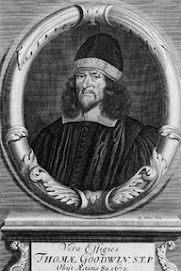
Cromwell had embodied in his own person the two great principles which had inspired the nation sixteen years before to rise against the absolutism of the Stuart monarchy–the right of the people to freedom from oppression and the duty of preserving Protestantism from error and spiritual tyranny. As long as Cromwell was alive he struggled for a settlement that would enable these two principles to exist harmoniously together. But if the constitutional difficulties that had arisen since the Civil Wars made the problem too great for Cromwell, it was certainly beyond the abilities of those to whose charge he left the nation. As long as the greater part of a nation remains unregenerate, political freedom may not lead to the advancement of the Gospel, and Cromwell, being forced by the course of events–as he interpreted them–to an unhappy choice between the two, chose the latter. The Protector’s death resulted in a political crisis which made the choice yet more difficult, and the Puritans, as a body, were divided in their reaction to it. The Independents, such as John Owen and Thomas Goodwin who had been closest to Cromwell, believed that the spiritual gains that had been made since the Long Parliament had broken the power with which the Bishops had cramped the nation’s religious life could best be preserved by a Commonwealth. But as the years of Crom­well’s Protectorate had already shown, such a form of government would have to rely, for a time at least, upon the army for its strength, as it would never be chosen by the general consent of the people, and what would then become of the political freedom which the Commons had fought to preserve? It was thus clear to the majority that the country could find no security against anarchy or military dictatorship save in the old constitutional government based upon a Monarchy and a free Parliament. This had, in fact, long been the conviction of the largest of the Puritan parties–the Presbyterians. Though they had resisted the absolutism of Charles I they had never been against monarchy as such, and after the turmoil that followed the death of Cromwell they were more convinced than ever of the political necessity of recalling Charles Stuart to his father’s throne. But if Charles returned what would become of the spiritual freedom which they cherished? They had not forgotten how monarchy and episcopacy had been combined since the Church settlement of Queen Elizabeth against the more thorough­going Protestantism of Puritanism. It is not surprising therefore that while the Presbyterians saw the need of restoring the monarchy they were conscious of the possibility that such a political settlement might lead to a spiritual defeat.

Charles was not ignorant of their fears and of his need to calm them. He knew that the co-operation of the strongest Puritan party, the Presbyterians, would be needed to accomplish a Restoration and that a full disclosure of his aims would be disastrous to his interests. Thus he carefully avoided any suggestions that his return would mean an Anglican triumph; his agents were busy in England creating an impression that the Presbyterians could expect a Church settlement comprehensive enough to satisfy their convictions; testimonies to his loyalty to Protestantism were secured from French Reformed ministers; and by the famous Declaration of Breda in April 1660 he promised “a liberty to tender consciences and that no man shall be disquieted or called in question for differences of opinion in matter of religion which do not disturb the peace of the kingdom.” In such ways a general impression was given to the Presbyterians that Charles’s return would not be spiritually disastrous. The impression was deepened when a delegation of Presbyterian ministers was cordially received by Charles at The Hague and given, says Richard Baxter, “encouraging promises of peace” which “raised some of them to high expectations.” ....

Thursday, 29 November 2012

Commemoration 1962 7 Reasons

 In 1962 under the heading THE COMMEMORATION OF 1662 Iain Murray used the pages of the Banner of Truth magazine to call for commemoration of the then ter-centenary of 1662 by giving seven arguments why the events of that year should be remembered

By the Act of Uniformity which came into force three hundred years ago an the 24th of August, 1662, 2,000 Puritan ministers were ejected from the national church. The following are some of the reasons why this event deserves to be remembered:
1. Because it was the greatest single blow ever struck at Christianity in England and a turning-point in our spiritual history. "An action without precedent, the like to which the Reformed Church, nay the Christian World, never saw before" (Edmund Calamy). "An injury I In the cause of true religion in England which will probably never be repaired ... a more impolitic deed never disfigured the annals of a Protestant Church" ( J C Ryle). The ministers who were ejected themselves regarded it as "the greatest turn there ever was in England" (Thomas Lye); "This fatal Day that deserves to be wrote in Black Letters in England's Calendar" (Matthew Mead).
2. The issues which 1662 raises are the concern of all Christians and are not merely a matter of denominational or party controversy. The principle which was at stake then was whether there is any spiritual authority in church or state that can require us to practise or condone anything which is not found in the Word of God. It was for refusing to acknowledge the existence of any such authority that the 2,000 were ejected.
3.The lesson of 1662 is directly relevant to contemporary discussions for it teaches us that the true cause of all religious disunity is the addition of man's teaching to the Scriptures. "It hath been the design of Satan," declared one ejected minister, "and the work of the corrupt hearts of men in all ages, to be making additions to the Commands of Christ and to be mingling men's inventions with the institutions of Christ in matters of worship."
4. The national sin in 1662 was contempt of the Gospel and disobedience to God's Word. It was an attempt to silence the truth, but it resulted in national catastrophes - in 1665 more than 100,000 of London's population were swept into the grave by plague (4,000 in one night), the next year the city was burned to ashes, and, worst of all God's gift of a true Gospel ministry was replaced by a spiritual famine with eternal consequences to the souls of men. Surely could never less afford to ignore the meaning of 1662 than at the present time! Cf. Matt. xi. 21-24.
5. The ejected Puritans stood against worldliness in the Church and compromise with Rome. These are both critical issues today. In September 1662, Charles II wrote to the Pope of the "greatly longed for union of his three Kingdoms of England, Scotland and Ireland with the Apostolic Roman See"; the same kind of thing will be said in September 1962, only the land is now spiritually (compared with three hundred years ago when 2,000 of the ministers of England lost all in order that posterity might be left a faithful witness to New Testament principles.
6. The history of 1662 gives us guidance concerning the true basis of Evangelical Unity. Men whose views on some points differed considerably stood together on what they held to be essentials. We need a like unity today.
7. In our comfortable age we need to recall what Christians once suffered for the Gospel in this country. We need reminding of what faithfulness to the truth meant when the Conventicle Act was in force; when ruinous fines, imprisonment, transportation and exile attended the hidden meetings of persecuted believers; when 5,000 died from the sufferings they endured; when so many Christians were ill in Bristol that children continued the services alone; when the streets of Taunton flowed in blood; and when religion- as Bunyan found during his 12 long years in Bedford jail - walked not "in golden slippers in the sunshine and with applause" but in contempt, and hazarded all for God. Such facts need to be heard like a trumpet blast in the year 1962! They will teach us that the Church can receive more injury from the sunshine of prosperity than she ever received from the storms of persecution.

Tuesday, 2 October 2007

No Sunday like it

In 1662 a storm broke. A Parliamentary Act, first passed back in 1549, was resurrected and reconstituted - the Act of Uniformity. It required all ministers in the Church of England give ‘unfeigned assent and consent to everything contained in the Book of Common Prayer, [and] re-ordination for those not episcopally ordained.’ It also demanded a renunciation of the Solemn League and Covenant (a 1643 religious alliance between England and Scotland — accepted by the English Parliament — which guaranteed the maintenance of the reformed Church of Scotland and promised to reform the churches of England and Ireland according to the Scriptures). Knowing that the Puritans would not submit to such terms, the Authorities framed the Act to secure their expulsion.
The Act was ratified by Charles II and every pastor was given an ultimatum requiring him to conform or else be expelled. The deadline was the 24th of August 1662. Thus on that fateful day- 'Black Bartholomew’s Day' — more than 2000 ministers were ejected from their churches for refusing to comply. By this one decree, the vast majority of England’s evangelical preachers were immediately silenced. The action was no sudden whim on the part of the King but a deliberately and carefully contrived plot by the Establishment to rid the land once and for all of the greatest preachers the nation had ever known.
Most of those who refused to comply preached their ‘farewell’ sermon to their congregation on the Sunday before the ‘Great Ejection.’ What a day it must have been. In the 19th Century John Stoughton wrote in his Religion in England Vol 3 (p 267)
‘No Sunday in England ever resembled exactly that which fell on the 17th of August, 1662, one week before the feast of St Bartholomew. There have been "mourning, lamentation, and woe," in particular parish churches when death, persecution, or some other cause has broken pastoral ties, and severed from loving congregations their spiritual guides; but for many hundreds of ministers on the same day to be uttering farewells is an unparalleled circumstance. In after years, Puritan fathers and mothers related to their children the story of assembled crowds, of aisles, standing-places and stairs, filled to suffocation, of people clinging to open windows like swarms of bees, of overflowing throngs in churchyards and streets, of deep silence or stifled sobs, as the flock gazed on the shepherd - "sorrowing most of all that they should see his face no more."
The effect was devastating. It was said that - as a result of the enforcement of the Act - 'religion in the Church of England was almost extinguished and in many of her parishes the lamp of God went out.' Another historian said: ‘After we had cast out so much faith, and zeal, and holiness, after we had in this manner almost cast out the doctrine of Christ crucified from the pale of our church; we had to travel through a century of coldness and dreariness, and barrenness, of Arminianism and Pelagianism, of Arianism and latent Socinianism, all which were found compatible with outward conformity.’
However, the Act of Uniformity did not stop the ejected men from continuing to preach and teach. They began meeting with their congregations in homes and barns or wherever worship could be conducted and the Word of God expounded. This gave rise to the the Conventicle Act (1664). The Conventicle Act forced the congregations into the countryside. They met deep in the woods and began gathering during the night to worship and hear the Scriptures expounded. The Authorities were infuriated, and so, in 1665 passed the Five Mile Act. This forbade and made illegal any religious meetings held by Nonconformist ministers within five miles of any town or village. (This effectively prevented most poor village people - with no means of transport - from attending any form of worship other than in their local Church of England). Moreover, it stated that no Nonconformist preacher or teacher could live within five miles of a town or village and, further, he was debarred from teaching in any school - virtually the only occupation open to a deprived minister in those days. Breach of these Acts could be punishable by a fine, imprisonment, deportation or even death. It was also possible that all one’s belongings could be confiscated. Although these laws could not be strictly enforced, they nevertheless led to appalling persecution and suffering among the Dissenters.
Iain Murray writes
“By almost every method which men knew, an attempt was thus made to shut the mouth of Nonconformists, and for continuing to claim the liberty to speak not a few of the Nonconformists lost their lives ... There could be few more scathing reproofs for modern English Christianity than for us really to attend to the words of these men who gave up livings, homes, liberties, goods and sometimes lives rather than surrender any part of the teaching of the Word of God. Their highest ambition was to be able to say with William Tyndale, “I call God to record against the day we shall appear before our Lord Jesus, to give a reckoning of our doings, that I never altered one syllable of God’s Word against my conscience, nor would this day, if all that is in the earth, whether it be pleasure, honour, or riches, might be given me.””
Drawn chiefly from some work on Bunyan by John Dunn here.