Monday, 21 April 2008

Stoughton's Heroes 02

The feast of St Bartholomew, August 24th, 1662, was the day fixed for the execution of the Act. In anticipating the day, there were some who were mainly anxious about retaining their livings, and were little scrupulous respecting their submission to the conditions imposed. Their consciences had been so exercised already in the matter of conformity, that they had become amazingly supple. Some of these compliant personages had been Prelatists under Charles, Presbyterians under the Parliament, Independents under Cromwell, and were therefore now prepared to take another bend in their ecclesiastical coarse, and become once more zealous Episcopalians, and advocates for the Book of Common Prayer. But others, who had not attained to such marvellous flexibility of mind, took into their grave consideration the newly-enacted terms of conformity. Some men, who had a conscience, did not think that oaths could be so lightly abjured, and their moral obligation so easily annulled, as this new law took for granted; and though quite prepared to swear allegiance to the Crown, they could not go so far as to subscribe to the doctrine of unqualified passive obedience. But subscription to the revised Book of Common Prayer constituted with many the chief difficulty. As to the exact contents of it, some of the ministers could not be informed previously to the time of their being required to give to it their unfeigned assent and consent; inasmuch as it was not issued from the press till a very short time before the 24th of August, and men living in remote parts of the country could not obtain the volume by that day. But, of course, the ministers were acquainted with its contents in general. Baptismal regeneration, the practice of having godfathers and godmothers, using the sign of the cross, kneeling at the Lord's Supper, the belief of a threefold order in the ministry, the burial-service, confirmation, and the reading of the Apocrypha in churches, were all still sanctioned in the Prayer-Book; and these points, which had from the beginning been opposed by the Puritans, remained as strongly objectionable as ever. Exceptions were also taken against several of the canons. Thus far almost all who belonged to the Puritan class were agreed, but the strict Presbyterians and Independents obviously had additional and yet graver objections to the new Establishment.
The parsonages in many parts of England, as the corn was ripening in the summer of 1662, must have been the scenes of some memorable struggles between conscience and care, faith and feeling. Good men were reduced to a sad dilemma. The alternative was not the parish-church or the conventicle, tithe or voluntary contribution, but preaching as a Conformist or silence - a legalized income or beggary. To render the hardship the more severe, the terms of conformity were imposed before Michaelmas, when the payment of the year's tithes would be due, and therefore the ejected ministers would lose a twelvemonth's income. They were men - they were husbands - they were fathers; they had their quiet studies, and they saw their families in comfort - their wives sitting in the snug parlour of the rectory - their children sporting in the garden or over the glebe. To leave these tranquil homes, to exchange them for abject poverty, - here was a trial of faith, more easily talked of than thoroughly realised. It were ridiculous to look on these individuals as obstinate fanatics, - they had heads and hearts, and both were at work in this trying season. They thought deeply on the matter, weighed it carefully, looked at it on all sides, prayed over it, conversed about it. Perhaps the reader sees one of them in his study revolving the whole subject, examining the Prayer-Book, pondering its objectionable sentences, and writing down his reasons for dissent. Perchance a wife and a mother, who is honouring this volume by her perusal, may with all the vividness of a woman's imagination picture to herself the country rector, and the beloved companion of his cares, sitting at eventide by the window, round which the honeysuckle and the rose are entwining their buds and shedding their fragrance, first looking at the garden which she has cultivated with her own hands, and the church peeping above the trees where he has laboured for many a year, and then gazing on
each other with tears as they discuss the point, "We must conform, or leave all this next August." Nor did the ministers neglect to correspond with one another on the question: the sluggish post was anxiously waited for by many a worthy, as he expected from some clerical brother a folio sheet of closely-written answers to a similar amount of matter in the form of query and objection. After mature deliberation the Nonconformist adopted his resolve, sometimes with a solemnity which rendered all subsequent hesitation impossible. A copy of a written resolution by Mr Samuel Birch, of Hampton, Oxfordshire, addressed in the most solemn manner to the Deity, is preserved by Calamy. "I am at thy footstool," says this confessor; "I may not do evil that good may come, - I may not do this great sin against my God and the dictates of my conscience. I therefore surrender myself, my soul, my ministry, my people, my place, my wife and children, and whatsoever else is herein concerned, into thy hand from whom I received them. Lord, have mercy upon me, and assist me for ever to keep faith and a good conscience." One good man braced himself up for the crisis, by preaching to his people for several successive Sabbaths from the words of Paul to the suffering Hebrews: "Ye took joyfully the spoiling of your goods, knowing in yourselves that ye have in heaven a better and an enduring substance." Another, who had a wife and 10 children, fortified himself by reflecting on that consolatory passage in our Lord's Sermon on the Mount, where lie bids his followers take no thought for the morrow, and chides their distrust in Providence by an appeal to the birds of the air and the lilies of the field ; and when this excellent individual was asked how he would maintain his large family, he replied, "They must live on the sixth chapter of Matthew."

Stoughton's Heroes 01

The Chapter on Black Bartholomew in John Stoughton's 1850 book Spiritual Heroes or Sketches of the Puritans begins thus

CROMWELL was gone: his son, unable to bear the heavy load which his father had sustained, was soon oppressed with the difficulties of his position, and abdicated the Protectorship. By treachery and intrigue the Restoration was accomplished: and after years of war and suffering for the sake of liberty, the people were seen prostrate at the feet of Charles II; asking no guarantees against the revival of despotism, but rather craving forgiveness for the victories they had won. The Royalist party, recovering from their depression, knew no bounds to their joy, as they welcomed another sovereign of the Stuart line. In a state of perfect delirium they celebrated his accession to his father's throne. Bonfires blazed in many a market-place and on many a hill, - the streets at night shone with illuminations, - windows were decorated with tapestry and garlands, - the May-poles were set up in the cross ways, - rumps of beef were roasted for the populace, and loaves of bread were thrown from the tops of market-houses. The bells rang till the steeples rocked, and crowds shouted till the very earth shook. The Royalist, on his knees, drank to the health of his Prince; and the swaggering Cavalier once more boldly sang his favourite lay, "The King shall enjoy his own again."

"No Bishop, no King," was the motto of James; and his grandson, so far adopting the sentiment as to regard Episcopacy as a bulwark to the throne, early restored the prelates to their office and rank. Mr Pepys, in his curious and inquisitive rambles, went down to Westminster on the 4th October, 1660, to see how the crochet and lawn looked after long disuse, and on his return home wrote down in his Journal, "Saw the Bishops all in their habits in Henry VII's Chapel; but, at their going out, how people did most of them look upon them as strange creatures, and few with any kind of love or respect."

The altered state of things foreboded evil enough to all classes of Nonconformists; and however some might be buoyed up with hopes of "liberty to tender consciences," the worst fears of others were completely realised. The Presbyterians had been active in the restoration of the King. They had attended him with acclamations through the city towards Westminster; and good old Mr Arthur Jackson had presented the gay monarch with a richly-bound Bible, which Charles promised should be the rule of his actions. They had also received the royal assurance that respect should be paid to their conscientious scruples; and they soothed themselves with the hope of retaining their benefices by some compromise with their adversaries. They sought a revision of the Liturgy, and some other alterations in ecclesiastical matters; in consequence of which a conference on the subject was appointed by the King to take place at the Savoy Palace, between 21 Anglican divines and as many of the Presbyterian order. "It broke up," says Burnet, "without doing any good. It did rather hurt, and heightened the sharpness that was then on people's minds to such a degree that it needed no addition to raise it higher. The Presbyterians laid their complaints before the King. But little regard was had to them; and now all the concern that seemed to employ the Bishops' thoughts was, not only to make no alteration on their own account, but to make the terms of conformity much stricter than they had been before the war."

Before the Savoy Conference terminated, the two Houses of Convocation assembled. The ruling party, having resolved to disregard the conscientious scruples of their brethren, proceeded to take measures for the full enforcement of their own ecclesiastical system. They decided that Episcopal ordination was indispensably necessary, and that all who would not submit to that right should be compelled to relinquish their benefices. They revised the Book of Common Prayer, and introduced a number of alterations, some of which seemed to be intended only for the purpose of exasperating the Puritans. It was known that they objected to saints' days, - the Bishops increased the number. It was known that they disliked the Apocryphal lessons, - the Bishops therefore added another, containing the story of Bel and the Dragon. Parliament at length confirmed the work of the Convocation, and passed the memorable Act of Uniformity. This law enjoined on all clergymen to profess their unfeigned assent and consent to everything contained in the Book of Common Prayer; to repudiate the Solemn League and Covenant, and acknowledge that the oath taken to maintain it involved no moral obligation; and further, to declare that it was unlawful under any pretence whatever to take up arms against the King.

Farewell Sermons


Where can we find the farewell sermons? David Appleby highlights
1. The 77 printed sermons by 50 men mentioned elsewhere
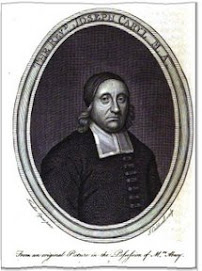
2. The 8 sermons by Moseley preacher Joseph Cooper amalgamated and printed together
3. The valedictory addresses written of in various contemporary diaries and other similar accounts
4. Five sermons in manuscript form. The same hand transcribed sermons by Thomas Ford, Lewis Stucley and Thomas Powel delivered in Exeter. These are preserved in the Rawlinson MS at the Bodleian.
5. Two sermons by Matthew Newcomen given at Dedham that can be found in Dr Williams' Library. The latter was published though in revised form.
The overwhelming majority of printed sermons appeared 1662-1664. At least 19 pamphlets of various sizes circulated (from one or two sermons to Richard Fairclough's 14 sermon series). Compilations soon began to appear as well, first by London men then from elsewhere. At least 16 compilations appeared August 1662-March 1663 some containing as many as 42 sermons. There was at least one translation - into Dutch.
A unique and anonymous East Midlands collection England's Remembrancer was published in 1663. Calamy revealed their names in 1713. Unlike other publications, it contained only farewell sermons.
We must remember that, all told, this is still only a small fraction of the hundreds of farewell sermons preached at the time.

Geographical distribution

Elsewhere we have given Thomas Coleman's list. David Appleby comments that "religious dissent was everywhere in evidence". He notes that Richard Greaves found Presbyterians to be strongly represented in Northumberland, Lancashire, Cheshire, Devon, Somerset (esp Bristol) and Carmarthen (South West Wales), while Congregationalists proliferated in south and central Wales, the Midlands, Essex, Suffolk and Lancashire. A G Matthews' thought that the concentration of nonconformist ministers was highest in the west country, followed by Essex, Suffolk and Lancashire, with a fairly even distribution elsewhere. This West Country predominance is noticeable in the printed literature (London also, unsurprisingly, dominates). The phenomenon was found in every county facilitated by various efficient networks.

Saturday, 12 April 2008

Their youthfulness

Appleby tells us that by the mid-17th Century the average clergyman began ministering in his mid-twenties and commonly went on for another 30 years. Seaver says that in 1640-1662 the average age of incumbents rose to 42. Appleby says that the average age at the Ejection of those listed in Calamy Revisited (where the data is available) was 41.9. The average from those who published farewell sermons is 39.6. Ten Midlands authors featured in England's Remembrancer were on average as low as 32.7. The point then is that far from being past their prime, those ejected in 1662 were younger than average.
Even the older ones could be very energetic. Appleby cites Richard Fairclough (41) who habitually rose at 3 am to squeeze in all the various things he did in a week. This factor should be borne in mind when we consider how it was that these men (unlike the elderly bishops recently restored) went on preaching for decades after 1662.

Friday, 11 April 2008

Educated men

Though not all university men, the ejected men of 1662 were well educated and trained in rhetoric often using Latin, Greek and even Hebrew to get the message across. Non-university men like Richard Baxter and John Oldfield were clearly well read, which was a Puritan tradition. David Appleby makes the point that 'Far from being inferior, the ejected ministers of 1662 were at the very least the intellectual equals of the confomrist clergy.' They were educated not just in their college days but after through household seminaries run by experienced ministers. From the time of Elizabeth godly conferences had been a feature of the scene. Those such as the one at Dedham had become famous. They have been compared to modern professional associations.

Thursday, 10 April 2008

University men

On page 20 of his book on 1662 David Appleby says that despite statements by W F Mitchell in 1932 saying that those who were ejected were generally poorly educated some 85% were university graduates. Most had gone to Cambridge, especially those who had farewell sermons printed. At least 87 attended Emmanuel College, 'a hotbed of Puritanism'. He suggests that the tutors would have encouraged friendships and that Ralph Venning, George Swinnock and John Whitlock (all of whom graduated from Emmanuel in 1646) would have known each other from their teenage years being part of a larger group in other colleges. Luke Cranwell, Henry Newcombe, John Barrett, Robert Seddon and Oliver Heywood all graduated from Cambridge that same year.
Fewer had studied at oxford but just four colleges - Exeter, Magdalen, New Inn Hall and Wadham produced 111 between them. The writers went to Wadham (Robert Atkins, Thomas Lye, Thomas Manton) and Exeter (Joseph Caryl, John Galpin, George Newton).

Sunday, 16 December 2007

Victorian Silks


I was in someone's home recently and I saw an attractive Victorian silk like these ones. These examples are found at the bottom of this web page here.

Wednesday, 14 November 2007

Thomas Coleman List

This list is taken from an appendix in Thomas Coleman's book on the Great Ejection

APPENDIX: THE NUMBER OF MINISTERS EJECTED FROM THE DIFFERENT COUNTIES OF ENGLAND, ETC
London, Westminster and the Borough of Southwark 113
University of Oxford 35
University of Cambridge 45
Bedfordshire 16
Berkshire 23
Buckinghamshire 33
Cambridgeshire 18
Cheshire 44
Cornwall 41
Cumberland 27
Derbyshire 39
Devonshire 137
Dorsetshire 54
Durham 18
Essex 127
Gloucestershire 52
Hampshire 58
Herefordshire 17
Hertfordshire 32
Huntingdonshire 8
Kent 78
Lancashire 81
Leicestershire 42
Lincolnshire 51
Middlesex 32
Northamptonshire 48
Northumberland 38
Nottinghamshire 30
Oxfordshire 23
Rutlandshire 6
Shropshire 43
Somersetshire 99
Staffordshire 49
Suffolk 94
Surrey 28
Sussex 76
Warwickshire 40
Westmoreland 5
Wiltshire 56
Worcestershire 37
Yorkshire 126
North Wales 14
South Wales 64
Ministers omitted 36

Tuesday, 6 November 2007

New Book

A new academic book on our subject has recently appeared. The book is called Black Bartholomew's Day: Preaching, Polemic and Restoration Nonconformity and is by David J Appleby and has a Manchester University Press imprint. David Appleby lectures in early modern history at Nottingham University. See more here.
We have not seen the book but I have found this blurb elsewhere on the internet.
"A substantial contribution to the study of the farewell sermons, Restoration Nonconformity and the 1660s." Prof John Spurr, University of Wales, Swansea
It explores the religious, political and cultural implications of a collision of highly-charged polemic prompted by the mass ejection of Puritan ministers from the Church of England in 1662. It is the first in-depth study of this heated exchange, focusing on the departing ministers' farewell sermons. Many of these valedictions, delivered by hundreds of dissenting preachers in the weeks before Bartholomew's Day, would be illegally printed and widely distributed, provoking a furious response from government officials, magistrates and bishops. Black Bartholomew's Day re-interprets the political significance of ostensibly moderate Puritan clergy, arguing that their preaching posed a credible threat to the restored political order
The book approaches the texts, their authors and audiences from a number of angles: investigating the preachers' need to reconcile political loyalty with religious integrity; considering nonconformist and conformist sermons in terms of performance and rhetorical content and revealing how political comment could be surreptitiously broadcast. It demonstrates how the nonconformist message was affected by the process of scribal and printed circulation, discussing authorship, reception, marketing and censorship. In exploring the polemical responses to the farewell sermons, he argues that individuals within the Restoration establishment exploited the texts to pursue an anti-Puritan agenda which served to further their personal careers. Finally, an epilogue charts how the farewell sermons have been regularly repackaged over subsequent centuries.
The book is aimed at readers interested in historicism, religion, nonconformity, print culture and the political potential of preaching in Restoration England.
Contents
Acknowledgements
Conventions
Abbreviations
Introduction
1. The context of Restoration nonconformity
2. Preaching, audience and authority
3. Scripture, historicism and the critique of authority
4. The public circulation of the Bartholomean texts
5. Polemical responses to Bartholomean preaching
6. Epilogue
7. Conclusion
Bibliography
Index

ISBN: 0719075610
ISBN-13: 9780719075612
Publisher: Manchester University Press
Format: Hardcover
Language: English
Dimensions (cm): 23.495 x 15.875
Pages: 272