Saturday, 20 February 2010

Article list

I found this list of Journal articles and other things at the Unitarian Historical Society's website.
Bolam, C. Gordon 'The Ejection of 1662 and its consequences for the Presbyterians in England' Hibbert Journal 60:3 (April 1962) 184-195

Bolam, C. G. and Goring, Jeremy 'Presbyterians in separation: the cataclysm'
Bolam, C. G. and others The English Presbyterians: from Elizabethan puritanism to modern Unitarianism (London, George Allen and Unwin Ltd, 1968) pp.73-92

Caplan, N. 'The numerical strength of nonconformity 1669-76; Sussex' TUHS 13:1 (1963) 13-18

Goring, Jeremy 'Some neglected aspects of the Great Ejection of 1662' TUHS 13:1 (1963)1-8

Kenworthy, Fred 'From authority to freedom in church life: the Act of Uniformity and Unitarian dissent' TUHS 12:4 (1962) 141-154

Montgomery, R. M. 'An old pamphlet [about the Conventicle Act is Suffolk, 1670]' TUHS 2:2 (1920) 33-42

Nuttall, Geoffrey; Thomas, Roger; Whitehorn, R. D.: Short, Harry Lismer The Beginnings of Nonconformity (London, James Clarke and Co, 1964) [The Hibbert Lectures]

Short, Harry Lismer 'The great ejection and its consequences' Commemorating the 'Great Ejection' 1662-1962 (Midland Union of Unitarian and Free Christian Churches, 1962) pp.18-26

Thomas, Roger 'Presbyterians, Congregationals and the Test and Corporation Acts' TUHS 11:4 (1958) 117-127

Thomas, Roger 'A 1686 indulgence and its licences' TUHS 12:1 (1959) 41-42

Thomas, Roger 'Comprehension and indulgence' in Geoffrey Nuttall and Owen Chadwick From uniformity to unity 1662-1962 (London, SPCK, 1962) pp.

Thomas, Roger 'The rise of the reconcilers' Bolam, C.G. and others The English Presbyterians: from Elizabethan puritanism to modern Unitarianism London, George Allen and Unwin Ltd, 1968) pp.46-72

Turner, G. Lyon Original records of early Nonconformity under persecution and indulgence 3 volumes (London, T. Fisher Unwin, 1911)

Wykes, David L. 'Religious Dissent and the penal laws: an explanation of business success?' History 75 (1990)

Wykes, David L. 'James II's religious indulgence of 1687 and the early organisation of Dissenters: the building of the first nonconformist meeting house in Birmingham' Midland History 16 (1991) 86-102 (covers most of England, not just Birmingham)

Wykes, David L. '"To let the memory of these men dye is injurious to posterity": Edmund Calamy's Account of the Ejected ministers' in Swanson, R. N. ed The Church retrospective (Boydell Press for The Ecclesiastical History Society, 1997) [Studies in Church History 33]

Thursday, 18 February 2010

Appleby Book Honoured

I found this piece of news here

David J. Appleby's Black Bartholomew's Day has been awarded the Richard L. Greaves Award by the International John Bunyan Society. The Richard L. Greaves Award is an award that is presented triennially to an outstanding book on the history, literature, thought, practices, and legacy of English Protestantism to 1700. The award is not limited to studies of Bunyan, and can be conferred on authors who are not members of the IJBS.
This is only the second time the award has been given, the first recipient being Isabel Hofmeyr of Princeton University.
Although the book has but one mention of Bunyan, the committee agreed that the book's contribution to dissenting studies was 'exceptional'.To find out more about the International John Bunyan Society follow this link: http://www.arts.ualberta.ca/~dgay/Bunyan.htm

Richard Morton

In 1904 a William Osler began an article in a medical journal on the 17th century medical man Richard Morton thus:

August 22, 1662 - Black Bartholomew's Day, as it has been called - brought sadness and sorrow to many English homes. The enforcement of the Act of Uniformity called for subscription to the Thirty-nine Articles, and enforced the use by all clergymen of the Book of Common Prayer. Among those ejected for refusal to subscribe - 2,ooo in number, it is said - was a young man, aged twenty-five, the Vicar of Kinver, in Staffordshire, Richard Morton by name. The son of a physician, born in 1637, he had been educated at Oxford, where he took the B.A. in 1656-57, became chaplain to his College and took the M.A. in 1659, and in the same year was appointed to the vicarage of Kinver. From the days of St. Luke there have been many instances of what has been called the angelical conjunction of physic and divinity. In the seventeenth century many men could sign after their names, as did Robert Lovell in his History of Animals and Minerals (1661), Philotheologiatronomos. Following Linacre's example, clerical orders have been taken as a rule by the physician late in life, but Morton, ejected from his living, turned his attention to medicine at a comparatively early age. From Baxter's account, he evidently was a loss to the church. He speaks of him as "a man of great gravity, calmness, sound principles, of no faction, an excellent preacher, of an upright life."
It is not known where Morton studied medicine. On the nomination of the Prince of Orange he was created an M.D. of Oxford in 1670. He settled in London, became a Candidate of the Royal College of Physicians in 1675, and a Fellow in 1679. He practised in Grey Friar's Court, Newgate Street, and had an unusual measure of success. He became physician-in-ordinary to the King, and enjoyed the confidence both of the profession and of the public. He seems to have been an intimate friend of Sydenham and a strong supporter of his new way in physic. He died in 1698.
His most important work is the Phthisiologia, 1689, of which there were six or seven subsequent editions in the succeeding century. Two English translations appeared, one in 1694, and the other in 1720.
His Pyretologia appeared in 1692, and is chiefly of value today as giving one of the most systematic and thorough accounts of the malarial fevers of that date.
The rest of the article can be found here.

Thomas Watson

By 1662 Thomas Watson for 20 years had been Pastor of St. Stephens Church, Walbrook, London. The Sunday of "The great ejection" he preached the following words to his church.
"Now, I welcome the cross of Christ, welcome reproach, welcome poverty or whatever shall befall me. This morning I had a flock and you had a Pastor; but now, behold a Pastor without a flock and a flock without a Shepherd! This morning I had a house, now I have none. This morning I had a living, now I have none. ‘The Lord giveth the Lord taketh away, blessed be the name of the Lord!'"
Watson continued "This doctrine that I have preached to you is:
1. That Jesus Christ, who came into the world to save sinners, by His death, came also to sanctify them and to purge them from their sins.
2. That those who believe on the Lord Jesus Christ, must be careful to maintain good works and to live a godly life (Titus 3:8).
3. That faith in Christ is not such a slight, easy and empty thing as this mistaken world imagines, but it demands conformity of the whole man, heart and life to the Person of Christ.
4. That whosever believes not in Christ; whosever is short of true and sincere faith and godliness cannot be saved.
This is the sum of my doctrine! This is the eternal truth of God! I hereby embark my whole soul and life, desiring to be found in Christ Jesus, for Christ is All and in All" (Colossians 3:11).

Tuesday, 9 February 2010

Nice summary

A nice summary written in Wales by John Legg can be found here. It says
Christians must often define themselves by what they oppose, for example as Protestants or Nonconformists. What did they not conform to? The short answer is, ‘the Anglican church’, but there is more to it than just a dislike of formal worship or of the Establishment. We must look at their origins in the seventeenth-century.

Separatists
When James VI of Scotland became James I of England in 1603, he adopted the motto, ‘No bishop, no king’ and set about imposing conformity on the church. Many of his subjects, however, continued to meet together to worship God in a scriptural way. One such Separatist congregation was at Scrooby in Nottinghamshire. In 1608 persecution forced them to emigrate to Leyden in Holland, but after a peaceful few years they decided to go to America. Elder William Bradford later described their departure from Leyden: ‘they knew they were Pilgrims, and … lifted up their eyes to the heavens, their dearest country’. Ever since they have been known as ‘the Pilgrim Fathers’. After many difficulties, they set sail from Plymouth in the Mayflower. After a horrific voyage, they finally landed (in the wrong place!) and endured a cruel winter, fever, fires, accidents and the arrival of ungodly settlers. Within six months half of the original party (and half of the Mayflower’s crew) had died, but by prayer and the providential help of friendly Indians, they survived. The rest of the Leyden congregation arrived in 1630 and the settlement reached three hundred.
Not conforming to the Prayer Book
When Charles I succeeded to the throne, he and William Laud, his Archbishop of Canterbury, determined to impose conformity to the Book of Common Prayer. When Laud tried to extend the rule of bishops and the Prayer Book to Scotland, he ran into trouble. One doughty Scottish woman, named Jenny Geddes, resisted the public reading of the Prayer Book with the memorable action of throwing her stool at the Dean’s head and the equally memorable words, ‘Will ye dare read that book in my lug [ear]?’. By 1640 the number of colonists in America, eager to establish Bible-based churches, reached twenty-thousand and nonconformity was well established. Laud’s unwise policies contributed to Parliament’s resistance to the king and thus to the Civil War.
Oliver Cromwell
The coming of the Commonwealth and Protectorate under Oliver Cromwell brought relief to the Nonconformists of various shades. Although many Church of England ministers were removed from their parishes, they were only the inefficient, incompetent or immoral ones. During this period the Westminster Assembly met, in a failed attempt to unite England and Scotland in a Reformed alliance. The Assembly did, however, write the Westminster Confession and the Larger and Shorter Catechisms, perhaps the finest theological statements ever produced. Most of the members of the Assembly were Presbyterians; others were convinced Anglicans; five were Congregationalists or Independents. They argued against some of the Presbyterian ideas and became known as the Dissenting Brethren.
The Bedford Baptists
The Particular (Calvinistic) Baptists were emerging as a distinct group. By 1644, they had seven congregations in England. One famous Baptist church was established in Bedford in 1650 with twelve members under the leadership of John Gifford. From 1653, when the Anglican vicar was deposed, this Baptist church, now with twenty-five members, met in the parish church, as did many other new independent congregations. One of these members was a newly converted tinker called John Bunyan. Gifford died two years later, but fairly soon, Bunyan began preaching and in 1656 was set aside to preach both in the congregation and more widely. He was not actually pastor, but continued to support himself by his ‘tinkering’. By this time the congregation at the Bedford Meeting had grown to around ninety members. In 1660, however, all this came to an end.
The Restoration
When Oliver Cromwell died in 1658 and was succeeded by his son, Richard, the politicians, who still hankered after a king and a national church, ‘restored’ the monarchy, with dire consequences. Charles II made conciliatory noises, but the new parliament insisted on restoring all forms and ceremonies of the church. The clergy who had been removed during the Commonwealth returned, including the vicar of Bedford, so that the Baptist congregation had to leave the parish church. The Presbyterians had high hopes of being included in the established church, but Bishop Sheldon of London was determined that there should be no compromise. He and his supporters wanted to get rid of all the Puritans, and this they did.
Not conforming to the Act of Uniformity, 1662
They drafted a bill strictly to make it impossible for even the least dogmatic of the Puritans to accept it with a clear conscience. The Act of Uniformity, passed in May 1662, gave all ministers of the Church of England until 24 August, St. Bartholomew’s Day, to conform to its demands. They had to affirm the supremacy of the monarch in all things ecclesiastical and spiritual, and that they gave ‘unfeigned assent’ to everything in the Book of Common Prayer. The timing was deliberately such as to deprive any who did not conform of a whole year’s income.
The Great Ejection
Nearly two thousand ministers (a hundred and thirty in Wales), including some who had withdrawn earlier, refused to conform. Most were Presbyterians or Independents, but there were also nineteen Baptists, of whom eleven were Welsh. The Bishop of London was disappointed that so many actually did conform. If he had thought so many would conform, he ‘would have made the Act stricter’! The ejection included not only ministers, but also lecturers and even schoolmasters, so that many of them were deprived of any means of livelihood.
What, then, did they object to? There were many important details in the Prayer Book that they found objectionable, such as the use of the sign of the cross in baptism and the wearing of the surplice. More importantly they refused ‘to pronounce all baptised persons regenerated by the Holy Ghost’; they regarded it as sinful to give the communion elements to the unfit, to pronounce a general and absolute absolution, and to declare anyone they buried ‘our dear brother here departed’. All these, of course, arose from the basic error that everyone in the parish was a Christian. More generally, they denied that anyone, king or pope, has the right to impose a liturgy on ministers.
The Clarendon Code
To back this up, Parliament introduced a set of penal acts aimed at destroying the many independent groups, Congregational or Baptist, which were still meeting. The First Conventicle Act banned the meeting together in a home of more than five people apart from the family members. In 1666 the Five Mile Act was introduced. This appears to have been specifically and spitefully aimed against certain godly ministers. When the Great Plague afflicted London in 1665 and the Anglican ministers fled to the country, the ejected ministers earned great credit by going back and looking after their flocks. The new act forbade them to go within five miles of any city, corporation or borough, or any parish where they had been minister or conducted unlawful conventicles. Immediately the king returned, the Bedfordshire magistrates ordered the restoration of the Prayer Book in public worship. Inevitably John Bunyan fell foul of the law and was imprisoned for twelve years. It was probably during this period that he began his great work, The Pilgrim’s Progress. Bunyan was only one of many Puritans who, in the providence of God, used their enforced silence to write.
Nonconformist restrictions
In 1672 Charles issued a Declaration of Indulgence, which allowed Nonconformists, including Bunyan, to apply for licences to preach and to establish meeting places where they could meet openly. However, Parliament was displeased and the Declaration in 1673 was replaced by the first Test Act which required all in public office to take communion at the Church of England. In this way Nonconformists were debarred from public office (and university) unless they were prepared to compromise their consciences. In other ways this was a time of relative quiet for the Nonconformists, but in 1681 new persecutions came on the Dissenters. In 1685, Charles’ son, an open Roman Catholic, became King James II. However, he went too far and the people rebelled. The ‘Glorious Revolution’ took place and William of Orange and Mary took the throne. Although the Protestant Dutchman did not do as much as the Nonconformists expected, he did introduce religious toleration for Protestants in an Act of 1689. Many disabilities remained for Nonconformists, but the worst was past.
In days when we tend to take our freedoms for granted, when we can attend university if we want, become members of Parliament and mayors if we so desire, attend the church of our choice without fear and, still preach the gospel without hindrance, we must remember the principles and struggles of our forefathers.

Friday, 9 January 2009

Farewell Sermons (audio)

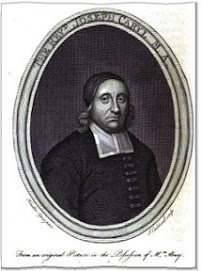
Two Farewell Sermons can be heard being read here. The sermons are those of Edmund Calamy and Joseph Caryl.

Wednesday, 23 April 2008

Stoughton's Heroes 06

In the year following that in which the Act of Uniformity was passed, another statute was made for the oppression of the Nonconformists. Under pretence of preventing riotous assemblies, such as had recently troubled the peace of Yorkshire and Westmoreland, in which a few of the Fifth Monarchy men were implicated, it was enacted that if more than five persons, besides the members of a family, met together for religious exercises, anywhere but in the churches of the Establishment, the offenders should in the first instance be fined five pounds, or be imprisoned three months; in the second, pay ten pounds or suffer imprisonment for six months; and in the third, forfeit a hundred pounds or be sent over the seas for seven years. The Act did not remain a dead letter in the statute-book. In many places it was carried out with extreme rigour. The Nonconformists were carefully watched: spies were set to discover where they worshipped, and inform the local authorities. Men calling themselves officers of justice were prompt in endeavouring to arrest the parties, and inflict the penalty. The records of the Church at Broadmead, Bristol, contain several notices of the operation of the Act. As the people met at one Mr Yeats's house, a baker, in Maryport Street, the house was beset by the mayor and several aldermen, who demanded entrance; but the door being kept close, they forced it open with iron bars: some of the worshippers escaped out the back of the premises; others were seized and sent to prison. "We were hunted by the Nimrods," observe these humble confessors, "and assaulted many u time by men, but saved by God." One day, on a week meeting, a guard of musketeers was sent to take them into custody; but, getting down into a cellar, they eluded their enemies' search. "Another time, at brother Ellin's, on a Lord's day, the mayor and aldermen, with officers, beset the house, and at last broke open the back door, and so came in; but in the meantime our brother having contrived, by a great cupboard, to hide a garret door, ho sent up most of the men out of the meeting into the said garret; and so we were concealed." The Nonconformists in country villages sometimes avoided detection by assembling in some manorial hall belonging to one of the richer brethren; and there, at the midnight hour, the ejected pastor gathered round him some of his scattered Mock, and refreshed their hearts by the sound of his familiar voice, but infinitely more by the truths he uttered. Thus, in the great hull at Hudscott, belonging to the family of the Rolles, near South Moulton, in Devonshire, did John Flavel address a crowded auditory. Supported by the hospitality, and screened by the influence, of the owner of the mansion, he there resided for some time; and amidst the plantations, gardens, and rural scenes which environed the spot, gathered the materials of his "Husbandry Spiritualized;" so that it is highly probable he furnished in his midnight exorcises many of those ingenious illustrations, so suited to the tastes and habits of his rustic flock, which are found in the popular work just mentioned. The recesses of the dark wood offered a still more secure, and in some seasons even a more grateful sanctuary; and beneath the shades of lofty pines, or overhanging elms, or round the gnarled trunks of oaks that had stood for ages, forming temples of God's own building, - the persecuted brotherhood assembled to hear the Word of God; and there, too, at times, without fear, and freely as the birds on the branches, would they lift up their voices to heaven, and chant the high praises of their Creator. So did a group of Christians at Andover meet in a sequestered dell, amidst a wide-spreading wood, four miles from the town, while the clear shining stars, or the pale moon, guided them to their retreat. The same little company afterwards assembled in a private dwelling-house, selecting the night as the season for worship. "It was when the eye of human observation was closed by sleep, that they ventured to the room; and having entered it, made fast the door and closed the window-shutter, and even extinguished the light of the candle, lest its glimmering might be discovered through a crevice, by some stray enemy from without. Here they often continued all night in prayer to God, until the ray of morning light, struggling down the chimney, announced the time to disperse. Thus they learnt that the darkness hideth not from God, but the night shineth as the day; and that the Father, who seeth in secret, shall reward us openly."
But the cleverest precautions sometimes failed. In many cases they were altogether neglected; and the worshippers exposed themselves to detection, from a consciousness that they were only obeying the laws of God, however their conduct might be regarded by the laws of men. It touched the heart of Mr Pepys, High Churchman as he was, to see these unoffending persons led through the streets as culprits. He writes in his Journal, under date 1664, "I saw several poor creatures carried by constables, for being at a conventicle. They go like lambs, without any resistance; and would to God they would either conform, or be more wise, and not be catched." Such were the consequences of the Restoration of Charles II. "Fiat justitia, ruat coelum," ('Let justice be done, even if Heaven falls') said a zealous Presbyterian Royalist, when conversing with a friend upon the question of bringing in his Majesty. "Ruit coelum," (the heavens are falling)remarked this friend, on meeting him one day after the Act of Uniformity was passed.

Stoughton's Heroes 05

Some, indeed, may look on them as fictions; but those who thoroughly believe the assurance of the Divine Redeemer, that if we seek first the kingdom of God and his righteousness, all needful things shall be added unto us, will readily allow the probability, the verisimilitude of such statements; nor can any fair suspicion be entertained respecting the veracity, the means of information, the good sense, and habits of careful inquiry possessed by the men who have related these incidents. If we believe (and who that reads the New Testament can disbelieve it?) that a special providence watches over those who strive to do God's will, and rest upon his promises, we shall be prepared to admit remarkable interpositions on behalf of men who signalized themselves by their religious integrity? Instead of there being an antecedent improbability against such facts, they are the very facts which Divine revelation stamps with a striking likelihood.
The pecuniary difficulties, however, in which the Act of Uniformity involved so many devoted men, were only the beginning of sorrows: their reputation, their personal liberty and their lives were soon in jeopardy. For these silenced ministers to preach to their late parishioners and friends, for them even to pray with a few devout spirits like themselves, was deemed a crime. Their words were often caught up, and with diabolical ingenuity construed into treason. If some quaint preacher spoke of the devil as a king who courts the soul, and speaks fair till he has obtained his throne, the metaphorical language was grossly perverted, and there were informers ready to declare that the good man said the King was like the Evil One. Treason, heresy, schism, were unscrupulously charged upon this proscribed class and the malicious were never at a loss for pretexts to compass their purposes. Ruffians were ready to execute the bidding of inhuman magistrates and informers, and would rush into the houses of ejected ministers while they were praying with their families, and, levelling a pistol at the back of the suppliant, command him in the King's name to rise and surrender himself. Dragged before prejudiced justices of the peace to answer charges equally vague and false, these Puritans were treated with a brutality which in the present day appears incredible. When, for example, one of these confessors was pleading his own cause, an alderman rose from the bench, tore off the satin cap worn by the accused and boxed his ears. The ejected ministers were sometimes conducted through the streets by constables after the manner of criminals and compelled to walk long distances to prison, till their feet were pierced through their worn-out shoes and stained with blood.
A memorable story is told of one of these worthies, illustrative of the inhumanity of his persecutors and of his own beautiful Christian spirit. Thomas Worts was Curate of Burningham in Norfolk. Being apprehended after his ejectment by a writ De excommunicato capiendo, he was brought from Burningham to Norwich Castle with his legs chained under the horse's belly. Entering that old wall-girt city through St Augustine's Gate, which with its square tower guarded one of the northern entrances, he was watched by a woman looking from a chamber window, who exclaimed in derision, as he passed close by her, "Worts, where's now your God?" "Turn," said the injured man, "to Micah vii 10: Then she that is mine enemy shall see it, and shame shall cover her which said unto me, "Where is the Lord thy God? Mine eye shall behold her: now shall she be trodden down as the mire of the streets.'" It is added, that the woman, touched by this allusion, ceased from her enmity and became a kind friend to the man whom she had insulted. Worts had a brother named Richard, who in like manner was apprehended and was imprisoned for seven years. Part of this time was spent in Norwich Castle, in a miserable cell containing six prisoners beside himself, with wickets looking into the felons' yard, which were constantly kept open, or the inmates would have been stifled with the fumes of the charcoal burnt in that cold damp place. "If his wife came to see one of the captives, he was called down to the door; and the keeper used to set his back against one side of the doorway, and his foot against the other, so as to prevent her entrance any farther." The plague was raging at the time; the filth and stench of the prison were alone enough to create a pestilence. The close confinement of the prisoners seriously affected their health; one was in imminent danger; and under these circumstances application was made for at least a temporary release - but in vain.

Stoughton's Heroes 04

"With steady zeal, each honest rustic ran:
Even children follow'd with endearing wile,
And pluck'd his gown to share the good man's smile :
His ready smile a parent's warmth exprest,
Their welfere pleased him, and their cares distrest;
To them his heart, his love, his griefs were given,—
But all his serious thoughts had rest in heaven:
As some tall cliff that lifts its awful form,
Swells from the vale, and midway leaves the storm;
Though round its breast the rolling clouds are spread,
Eternal sunshine settles on its head."

The 24th of August, perhaps, was the most trying day to the ejected ministers, for then as men of God they surrendered their spiritual charge; but the day when they left their homes, endeared by the domestic associations of past happy years, could not fail to affect them deeply, for then came their trial as husbands and fathers. No artist that I know of has painted the Nonconformist and his family leaving the parsonage, though it would form an interesting subject for his pencil; nor has any poet selected it as the theme for his muse: but the well-known lines in Goldsmith's Deserted Village may be accommodated to the incident, and will bring before us the picture with touching beauty.
"Good Heaven! what sorrows gloom'd that parting day,
That call'd them from their native walks away,
When the poor exiles, every pleasure past,
Hung round the bowers, and fondly look'd their last.
With loudest plaints the mother spoke her woes,
And blest the cot where every pleasure rose,
And kiss'd her thoughtless babes with many a tear,
And clasp'd them close, in sorrow doubly dear;
While her fond husband strove to lend relief,
In all the silent manliness of grief."
Upon the dissolution of the monasteries under Henry VIII and upon the deprivation of the Popish priests under Elizabeth, some provision was made for their necessities; and when any one of the Episcopal clergy, during the Commonwealth, was dismissed from his living, a fifth of his former income was reserved for his use: but no consideration of this kind was shown to the ministers who were ejected by the Act of Uniformity. Numbers of them were therefore reduced to perfect poverty. Some interesting facts have been preserved relative to their sufferings, and the remarkable interpositions of Providence in their behalf: but what a multitude of such facts, in the history of two thousand families or more, must have passed into oblivion!
Not long after the year 1662, Mr Grove, a gentleman of great opulence, whose seat was near Bird-bush, upon his wife's lying dangerously ill, sent to his parish minister to pray with her. When the messenger came, he was just gone out with the hounds, and sent word he would come when the hunt was over. Mr Grove expressing much resentment against the minister for choosing rather to follow his diversions than attend one of his flock in such circumstances, one of the servants took the liberty to say, 'Sir, our shepherd, if you will send for him, can pray very well: we have often heard him at prayer in the field.' Upon this he was immediately sent for; and Mr Grove asking him whether he ever did or could pray, the shepherd fixed his eyes upon him, and with peculiar seriousness in his countenance, replied, 'God forbid, Sir, I should live one day without prayer.' He was then desired to pray with the sick lady; which he did so pertinently to her case, with such fluency and fervour of devotion, as greatly to astonish the husband and all the family who were present. When they arose from their knees, the gentleman addressed him to this effect: 'Your language and manner discover you to be a very different person from what your appearance indicates. I conjure you to inform me who and what you are, and what were your views and situation in life before you came into my service.' Upon which he told him he was one of the ministers who had been lately ejected from the Church; and that having nothing of his own left, he was content for a livelihood to submit to the honest and peaceful employment of tending sheep. On hearing this, Mr Grove said, ' Then you shall be my shepherd,' and immediately erected a meeting-house on his own estate, in which Mr Ince (for that was the shepherd's name) preached and gathered a congregation of Dissenters."
After the ejectment of Mr Perkins, Vicar of Burley in Rutlandshire, he often travelled on the Lord's day several miles from home to preach, and got ten shillings for his day's service, which for a great while was the most that he had to support his family. He was often in straits. At one time a niece of his, whom he had brought up, going after her marriage to visit him, in the course of free conversation with her, he said, "Child, how much do you think I have to keep my family? — but a poor threepence." After which, she appearing affected, he with a great deal of cheerfulness cried out, "Fear not; God will provide;" and in a little time a gentleman's servant knocked at the door, who brought him a side of venison for a present, together with some wheat and malt. Mr Maurice, Rector of Shelton in Shropshire, was sometimes reduced to great straits, whilst he lived at Shrewsbury after his ejectment. Once, when he had been very thoughtful, and was engaged in prayer with his family, suiting some petitions to their necessitous case, a carrier knocked at the door, inquired for him, and delivered to him a handful of money untold, as a present from some friends, but would not tell who they were.
These are but specimens of the legendary tales handed down respecting the Bartholomew confessors.

Monday, 21 April 2008

Stoughton's Heroes 03

At length the feast of St. Bartholomew arrived. It was with an aching heart that many a one rose that morning. With what deep feeling must the pastor have prayed in his closet - the father in his family! That day dawned on them in plenty; it would close on them in pauperism. We are told of the immense congregations that assembled to hear the farewell discourses, and of the numbers who were melted into tears. The ejected ministers had to preach funeral sermons over their own ministry. Their official character now ceased. Henceforth their lips in public must be sealed, as with the touch of death. This gave unwonted force and pathos to their ministrations, and no one can wonder that the listening multitudes were melted into tears. Some of the sermons are preserved, and they are remarkable for the singleness of purpose which they display. The preacher evidently aims alone at the edification of his people on this last opportunity of addressing them. There is a striking absence in their discourses of everything like party feeling, of invectives against their enemies, of attempts to excite pity for themselves. Their personal allusions are few, simple, manly, and dignified. "I know," said the eminent Dr Bates in his farewell sermon, "I know you expect I should say something as to my Nonconformity: I shall only say thus much, - it is neither fancy, faction, nor humour that makes me not to comply, but merely for fear of offending God. And if after the best means used for my illumination, as prayer to God, discourse, or study, I am not able to be satisfied concerning the lawfulness of what is required, - if it be my unhappiness to be in error, surely men will have no reason to be angry with me in this world, and I hope God will pardon me in the next."
"Brethren," exclaims Mr Lye, " I could do very much for the love I bear to you, but I dare not sin. I know they will tell you this is pride and peevishness in us, that we are tender of our reputation, and would fain all be Bishops, and forty things more; but the Lord be witness between them and us in this. Beloved, I prefer my wife and children before a blast of air or people's talk. I am very sensible of what it is to be reduced to a morsel of bread. Let the God of heaven and earth do what He will with me, if I could have subscribed with a good conscience I would: I would do anything to keep myself in the work of God; but to sin against God, I dare not do it." In meeting the charge of disaffection to the Government, Mr Atkin observes, "Let him never be accounted a sound Christian that doth not fear God and honour the King. I beg that you will not interpret our Nonconformity to be an act of unpeaceableness and disloyalty. We will do anything for his Majesty but sin. We will hazard anything for him bnt our souls. We hope we could die for him, only we dare not be damned for him. We make no question, however we may be accounted of here, we shall be found loyal and obedient subjects at our appearance before God's tribunal."
Men who could thus talk and act, must have felt, as the feast of Bartholomew closed upon them, a conscious integrity, and a self-respect which compensated for their temporal losses. Some ministers, who had conformed, once met Mr Christopher Jackson, of Crossby on the Hill, in Westmoreland, an ejected brother, and taunted him with his threadbare coat. "If it be bare," he rejoined, "it has never been turned." And truly a man whose soul is clothed with an untorn conscience, though his attire be that of a beggar, may walk through the world with a more portly bearing and princely step than he whose ragged conscience is covered with the costliest robes! Some of the parishioners of these ministers wondered at their scruples."Ah! Mr. Heywood," said a countryman, addressing the Vicar of Ormskirk, "we would gladly have you preach still in the church." "Yes," said he, "I would as gladly preach as you can desire it, if I could do it with a safe conscience." "Oh, Sir," replied the man, "many now-a-days make a great gash in their consciences: cannot you make a little nick in yours?" And some of the very individuals who were in the first instance the loudest in condemning conformity, and in leading their brethren to the edge of the Rubicon, and persuading them to make the decisive plunge, when it came to the point to do the thing themselves, shrank back from the danger, and blamed the men whom they had before cheered on. "Never conform! never conform!" said the Rector of Burnham to Mr Clopton, who had the living of Reckondon, "Never conform, Sir!" - but when St Bartholomew's day came, this zealous adviser could not find it in his heart to sacrifice his tithes and his glebe. He then wrote to Mr Clopton, and told him to remember that Reckondon was a good living; but the minister, who had been at first less excited about the matter than his neighbour, wrote back word that "he hoped he should keep a good conscience." The men who, with integrity and uprightness, sacrificed their livings, secured for themselves a much better inheritance than the men who, on the principles of expediency, conformed and retained their benefices.