Showing posts with label Coleman. Show all posts

Thursday, 19 December 2013

Coleman Interposition 10

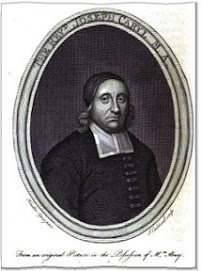
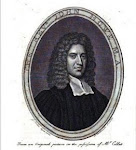
The Rev John Rogers, with Justice Cradock and his Granddaughter
It has frequently been found that circumstances that appear to be of a very trifling incidental nature lead to results of very great moment and value, and those results are sometimes brought to light in a remarkable manner. These things will be regarded by the reader as strikingly manifest in the following incidents which occurred in the life of Mr John Rogers, who was ejected from the living of Croglin in Cumberland.
Sir Richard Cradock, who was a violent hater and persecutor of the Dissenters, and who exerted himself to enforce all the severe laws then in being against them, happened to live near Mr Rogers, to whom he bore a particular enmity, and whom he wanted above all things to have in his power. Hearing that he was one day to preach some miles distant, he thought a fair opportunity offered for accomplishing his base design, and in order to it, directed two men to go as spies, and take down the names of all the hearers whom they knew, that they might appear as witnesses against them, and against Mr Rogers. The plan seemed to succeed to his wishes. These men brought him the names of several persons who were present at the meeting, and he summoned such of them as he had a particular spite against, together with Mr Rogers, to appear before him. Knowing the violence of the man, they came with trembling hearts, expecting to be treated with the utmost severity. "While they were waiting in the great hall, expecting to be called upon, a little girl about six or seven years of age, who was Sir Richard's granddaughter, happened to come into the hall. She looked at Mr Rogers, and was much taken with his venerable appearance.
He being naturally fond of children, took her upon his knee and caressed her, which occasioned her to have a great fondness for him. At length Sir Richard sent a servant to inform him and the rest, that one of the witnesses being taken ill and unable to attend, they must come again another day.
They accordingly came at the time appointed, and being convicted, the justice ordered their mittimus to be written, to send them all to prison. Mr Rogers expecting to see the little girl again, brought some sweetmeats with him to give her. As soon as she saw him, she came running to him, and appeared fonder of him than before. This child was a particular favourite of her grandfather, and had got such an ascendancy over him, that he could deny her nothing; and she possessed such a violent spirit, that she could bear no contradiction; so that she was indulged in everything she wanted. At one time, when she was contradicted, she ran a penknife into her arm, to the great danger of her life. This bad spirit, in the present instance, was overruled for good. Whilst she was sitting on Mr Rogers's knee, eating the sweetmeats, she looked earnestly at him, and asked, "What are you here for, sir?" He answered, "I believe your grandfather is going to send me and my friends to jail." "To jail," says she, "why, what have you done?" "Why, I did nothing hut preach at such a place, and they did nothing but hear me." "But," says she, "my grandpapa shan't send you to jail." "Ay, but, my dear," he replied, "I believe he is now making out our mittimus to send us all there." Upoii this, she ran up to the chamber where Sir Eichard was, and knocked with her head and heels till she got in, and said to him, " What are you going to do with my good old gentleman in the hall?" "That's nothing to you," said he, "get about your business." "But I won't," she said, "he tells me that you are going to send him and his friends to jail; and if you send them, I'll drown myself in the pond as soon as they are gone; I will, indeed," When he saw the child thus peremptory, it shook his resolution, and induced him to abandon his malicious design. Taking the mittimus in his hand, he went down into the hall, and thus addressed these good men: "I had made out your mittimus to send you all to jail, as you deserve, but at my grandchild's request, I drop the prosecution and set you all at liberty." They all bowed, and thanked his worship; but Mr  Rogers, going to the child, laid his hand upon her head, and lifting up his eyes to heaven, said, "God bless you, my dear child. May the blessing of that God whose cause you did now plead, though as yet you know him not, be upon you, in life, at death, and to all eternity." He and his friends then went away.
The above remarkable story was told by Mr Timothy Rogers, the son of the ejected minister, who had frequently heard his father relate it with great pleasure; and the celebrated Mr Thomas Bradbury once heard it from him when he was dining at the house of Mrs Tooley, an eminent Christian lady, in London, who was distinguished for her piety, and for her love to Christ and his people, whose house and table, like Lydia's, were always open to them.
"What follows is yet more remarkable, as containing a striking proof of the answer which was returned to good Mr Rogers's prayer for this child, and the blessing which descended upon her who had been the instrument of such a deliverance for these persecuted servants of God. Mrs Tooley had listened with uncommon attention to Mr Rogers's story, and when he had ended it, she asked him, "And are you that Mr Rogers's son?" He told her he was, upon which she said, "Well, as long as I have been acquainted with you, I never knew that before; and now I will tell you something whieh you do not know—I am the very girl your dear father blessed in the manner you have related, and it made an impression upon me which I could never forget." Upon this double discovery, Mr Rogers and Mrs Tooley found an additional tie of Christian affection, and then he and Mr. Bradbury expressed a desire to know how she, who had been brought up in an aversion to the Dissenters, and to serious religion, now discovered such an attachment to both. Upon which, Bhe cheerfully gave them the following narrative:—
After her grandfather's death, she became sole heiress to his estate, which was considerable. Being in the bloom of youth, and having none to control her, she ran into all the fashionable diversions of the age, without any restraint. But she confessed, that when the pleasurable scenes were over, she found a dissatisfaction both with them and herself, that always struck a damp to her heart, which she did not know how to get rid of any other way than by running the same round over and over again; but all was in vain. Having contracted some slight illness, she thought she would go to Bath, hearing that it was a place for pleasure as well as health. When she came thither, she was providentially led to consult an apothecary, who was a very worthy and religious man. When he inquired what ailed her, she answered, "Why, doctor, I don't ail much as to my body; but I have an uneasy mind, that I can't get rid of." "Truly, miss," said he, "I was so, until I met with a certain book, and that cured me." "Books," she said, " I get all the books I can lay my hands on; all the plays, novels, and romances I hear of; but, after I have read them, my uneasiness is the same." "That may be, miss," he replied, "and I don't wonder at it. But as to this book I speak of, I can say of it what I can say of no other I ever read, that I never tire in reading it, but can begin to read it again as if I had never read it before; and I always see something new in it." "Pray, doctor," says she, "what book is that?" "Nay, miss," said he, "that's a secret I don't tell every one." "But could not I get a sight of that book?" she inquired. "Yes," he said, "if you speak me fair, I can help you to a sight of it." "Pray then get it me, doctor, and I will give you anything you please." "Yes," said he, "if you will promise me one thing, I will bring it to you; and that is, that you will read it over carefully, and that if you should not see much in it at first, that you will give it a second reading." She promised faithfully that she would. After coming two or three times without it, to raise her curiosity, he at last took it out of his pocket and gave it her. The book was the New Testament. When she looked at it, she said, with a flirt, "Poh! I could get that at any time." "Why, miss," said he, "so you might; but remember, I have your solemn promise carefully to read it." "Well," she said, "though I never read it before, I'll give it a reading." Accordingly, she began to read it, and it soon attracted her attention. She saw something in it wherein she had a deep concern; but her mind now became ten times more uneasy than ever.
Not knowing what to do, she soon returned to London, resolved to try again what the diversions there would do to dissipate her gloom. But nothing of this kind answered her purpose. She lodged at the Court end of the town, where she had with her a female companion. One Saturday night she had a remarkable dream, which was, that she was in a place of worship, where she heard a sermon; but when she awoke, she could remember nothing but the text. This dream, however, made a deep impression upon her mind; and the idea she had of the place, and of the minister's person, was as strong as if she had been long acquainted with both. On the Lord's-day morning, she told her dream to her companion, and said that, after breakfast, she was resolved to go in quest of the place, though she should go from one end of London to the other.
They accordingly set out, and went into several churches as they passed along, but none of them answered to what she saw in her dream. About one o'clock she found herself in the heart of the City, where they dined, and then set out again in search of this place of worship. Being in the Poultry, about half an hour after two o'clock, they saw a great number of people going down the Old Jewry, and she determined to see where they went. She mingled with the company, and they conducted her to the meeting-house in the Old Jewry, where Mr Shower was then minister. As soon as she entered the door and surveyed the place, she turned to her companion and said, with some surprise, " This is the very place I saw in my dream." It was not long before she saw Mr Shower go up into the pulpit, and looking at him, with greater surprise, she said, "This is the very man I saw in my dream; and if every part of it hold true, he will take for his text Psalm 96:7, 'Return unto thy rest, O my soul, for the Lord hath dealt bountifully with thee.'" When he rose up to pray, she was all attention, and every sentence went to her heart. Having finished his prayer, he took that very passage which she had mentioned, for his text; and God was pleased to make the discourse founded upon it the means of her saving conversion. And thus she at last found, what she had so long sought elsewhere in vain—rest to her soul. And now she obtained that blessing from God, which pious Mr Rogers, so many years before, had so solemnly and fervently implored on her behalf.

Wednesday, 18 December 2013

Coleman Interposition 9

A Persecuting Magistrate Outwitted
The following circumstances, handed down by tradition, characteristic of the times, are related as having taken place when Mr Baxter was residing, for a time in the city of Coventry. Several of the ministers ejected by the Act of Uniformity, who resided in this city, united with Mr Baxter in establishing a lecture in a private house, on a neighbouring common, near the village of Berkswell. The time of worship was, generally, a very early hour. Mr Baxter left Coventry in the evening, intending to preach the lecture in the morning. The night being dark, he lost his way, and after wandering about a considerable time, he came to a gentleman's house, where he asked for direction. The servant who came to the door informed his master that a person of very respectable appearance had lost his way. The gentleman told the servant to invite him in. Mr Baxter readily complied, and met with a very hospitable reception. His conversation was such as to give his host an exalted idea of his good sense and extensive information.
The gentleman wishing to know the quality of his guest, said, after supper, "As most persons have some employment or profession in life, I have no doubt, sir, that you have yours." Mr Baxter replied with a smile, "Yes, sir, I am a man-catcher." "A man-catcher," said the gentleman, "are you? I am very glad to hear you say so, for you are the very person I want. I am a justice of the peace in this district, and am commissioned to secure the person of Dick Baxter, who is expected to preach at a conventicle in this neighbourhood, early to-morrow morning; you shall go with me, and, I doubt not, we shall easily apprehend the rogue."
Mr Baxter very prudently consented to accompany him. Accordingly the gentleman, on the following morning, took Mr Baxter in his carriage to the place where the meeting was to be held. When they arrived at the spot, they saw a considerable number of people hovering about, for, seeing the carriage of the justice, and, suspecting his intentions, they were afraid to enter the house. The justice, observing this, said to Mr Baxter, "I am afraid they have obtained some information of my design. Baxter has probably been apprised of it, and, therefore, will not fulfil his engagement, for you see the people will not go into the house. I think, if we extend our ride a little further, our departure may encourage them to assemble, and on our return we may fulfil our commission." "When they returned they found their efforts useless, for the people still appeared unwilling to assemble. The magistrate, thinking he should be disappointed of the object he had in view, observed to his companion, "that as the people were very much disaffected to the Government, he would be much obliged to him to address them on the subject of loyalty and good behaviour." Mr Baxter replied "that perhaps this would not be deemed sufficient, for as a religious service was the object for which they were met together, they would not be satisfied with advice of that nature; but if the magistrate would begin with prayer, he would then endeavour to say something to them." The gentleman replied, putting his hand to his pocket, "Indeed, sir, I have not got my Prayer-book with me, or I would readily comply with your proposal. However, I am persuaded that a person of your appearance and respectability would be able to pray with them as well as talk to them. I beg, therefore, that you will be so good as to begin with prayer."
This being agreed to, they alighted from the carriage, and entered the house, and the people, hesitating no longer, immediately followed them.
Mr Baxter then commenced the service by prayer, and prayed with that seriousness and fervour for which he was so eminent. The magistrate standing by was soon melted into tears. The good divine then preached in his accustomed lively and zealous manner. When he had concluded, he turned to the justice and said, "I am the very Dick Baxter of whom you are in pursuit. I am entirely at your disposal." The magistrate, however, had felt so much during the service, and saw things in so different a light, that he entirely laid aside all his enmity to the Nonconformists, and ever afterwards became their sincere friend and advocate, and it is believed also a decided Christian.

Coleman Interposition 7/8

Ingenious Contrivance
Mr Thomas Jollie, after his ejectment, preached in his own house. To avoid being informed against (for he was a man of prudence as well as zeal) he adopted the following contrivance:— There being in the common sitting-room a staircase with a door at the bottom, he stood to preach on the second step; the door was cut in two, and while the lower part was shut, the upper part, being fastened to the other by hinges, would fall back on brackets, so as to form a desk. To this was fixed a string, by which he could easily draw it up on intelligence being given of the approach of informers, by those who were appointed as sentinels to give notice; he then immediately went up-stairs, so that when the informers entered they could not prove that he had been preaching, though they found a number of persons in the room.
 
Providential Deliverance
Mr Henry Maurice, ejected from Stretton, in Shropshire, was often waylaid by his enemies in order to his apprehension, but was hid in "the hollow of God's hand." His house was once searched for him when he had been lately preaching, but his adversaries could not discover the door of the closet in which he was, adjoining to the room in which the meeting was held. Another time a constable came into the room where he was preaching, commanding him to desist, when he, with an undaunted courage, charged him, in the name of the great God, whose word he was preaching, to forbear molesting him, as he would answer it at the great day. The man hereupon sat down and trembled, heard him patiently till he concluded, and then departed. Mr Maurice was taken but once, and then he was bailed; and upon appearance made, was discharged by the favour of some gentlemen, who were justices of the peace, and his friends and relations. He was sometimes reduced to great straits whilst he lived at Shrewsbury, but was often surprisingly relieved. One time, when he had been very thoughtful, and was engaged in prayer with his family, suiting some petitions to their necessitous case, a carrier knocked at the door, inquired for him, and delivered to him a handful of money, untold, as a present from some friends; but would not tell who they were. The same person also, another time, brought him a bag of money very seasonably. His wife had an inheritance of £40 per annum, which she had a right to be possessed of soon after his leaving Stretton; but it was unjustly alienated for ten years. However, she was cheerful, industrious in many employments, and contented with the coarsest fare, being ambitious only, if possible, to have the sureties' obligations discharged; which, through the good providence of God concurring with frugal management, was done, and Mr Maurice had the satisfaction to live to see it, but died soon after.

Wednesday, 25 September 2013

Coleman Interposition 6

Another remarkable case
In the life of Oliver Heywood, ejected from Caley, in Yorkshire, the following interesting anecdotes are related. Dr. Fawcett, who published an account of Mr. Heywood, remarks, "The particular dates of these events I am not able to ascertain with exactness, but the facts have been so strongly, so invariably, and constantly affirmed, by persons of undoubted verity, some of whom I could name, and others who have been long dead, that I have not the least reason to doubt the truth of these facts."
Mr Heywood being reduced to great straits after the loss of his income, so that his children began to be impatient for want of food, called his servant, Martha, who would not desert the family in their distress, and said to her, "Martha, take a basket, and go to Halifax, call upon Mr N , a shopkeeper, and desire him to lend me five shillings. If he is kind enough to do it, buy such things as you know we most want. The Lord give you good speed; and in the meantime, we will offer up our requests to Him who "feedeth the young ravens when they cry." Martha went, but when she came to the house her heart failed her, and she passed by the door again and again without going in to tell her errand. Mr N , standing at the shop door, called her to him, and asked her if she was not Mr Heywood's servant. When she told him that she was, he said to her, "I am glad to see you, as some friends have given me five guineas for your master, and I was just thinking how I could send it." Upon this she burst into tears, and told him her errand. He was much affected with her story, and told her to come to him if the like necessity should return. Having procured the necessary provisions, she hastened back with them, when, upon her entering the house, the children eagerly examined the basket, and the father, hearing the servant's narrative, smiled, and said, "The Lord hath not forgotten to be gracious; his word is true from the beginning—they that seek the Lord shall not want any good thing."
Another anecdote related of Mr. Heywood is this: ""When the spirit of persecution was so hot against this good man that he was obliged to leave his family, he set off on horseback one winter's morning before it was light, like Abraham, not knowing whither he went, and without a farthing in his pocket. Having committed himself to the care of Providence, he determined at length to let his horse go which way he would. Having gone all day without refreshment, the horse, towards the evening, bent his course to a farmhouse a little out of the road. Mr. Heywood, calling at the door, a decent woman came, of whom he requested, after a suitable apology, that she would give him and his horse shelter for that night; telling her that he only wished for a little hay for his beast, and liberty for himself to sit by the fireside. Upon calling her husband they both kindly invited him in. The mistress soon prepared something for him to eat, at which he expressed his concern as he had no money to make them any recompense, but hoped God would reward them. They assured him that he was welcome, and begged him to make himself easy. After some time the master asked him what countryman he was. He answered that he was born in Lancashire, but had now a wife and children near Halifax. 'That is a town,' said the farmer, 'where I have been, and had some acquaintance.' After inquiring about several of them, he asked if he knew anything of one Mr Oliver Heywood, who had been a minister near Halifax, but was now, on some account, forbid to preach. To which he replied, 'There is a great deal of noise about that man; some speak well, and some very ill of him; for my own part, I can say very little in his favour.' 'I believe,' said the farmer, 'he is of that sect which is everywhere spoken against; but, pray, what makes you form such an indifferent opinion of him?' Mr Heywood answered, 'I know something of him, but as I do not choose to propagate an ill report of any one, let us talk, on some other subject.' After keeping the farmer and his wife some time in suspense, who were uneasy at what he had said, he at length told them that he was the poor outcast after whom they made such kind inquiries.
  "All was then surprise, joy, and thankfulness, that Providence had brought him under their roof. The master of the house then said to him, 'I have a few neighbours who love the gospel, if you will give us a word of exhortation, I will run and acquaint them. This is an obscure place, and as your coming hither is not known, I hope we shall have no interruption.' Mr Heywood consented, and a small congregation was gathered, to whom he preached with that fervour, affection, and enlargement, which the singular circumstances served to inspire. A small collection was then voluntarily made, to help the poor traveller on his way."

Tuesday, 3 September 2013

Coleman Interposition 5

Supplies sent in time of need
Mr Henry Erskine, who had been minister at Cornill, in Northumberland, suffered much after his ejectment, and had several remarkable interpositions on his behalf. He resided for a time at Dryburgh, where he and his family were often in great straits. Once in particular, when the "cruse of oil and the barrel of meal" were entirely spent, so that when they had supped at night, there remained neither bread, meal, flesh, nor money in the house. In the morning, the young children cried for their breakfast, and their father endeavoured to divert them, and at the same time did what he could to encourage himself and his wife to depend upon that Providence which "feeds the young ravens when they cry." While he was thus engaged, a countryman knocked hard at the door, and called for someone to help him off with his load. Being asked from whence he came, and what he would have, he told them he came from the Lady Reburn, with some provisions for Mr Erskine. They told him he must be mistaken, and that it was most likely to be for Mr Erskine, of Shirfield, in the same town. He replied "No, he knew what he said, he was sent to Mr Henry Erskine," and cried, "Come, help me off with my load, or else I will throw it down at the door." Whereupon they took the sack from him, and upon opening it, found it well filled with flesh and meal, which gave him no small encouragement to depend upon his bountiful benefactor, in future straits of a similar nature.
At another time, being at Edinburgh, he was so reduced, that he had but three half-pence in his pocket, when, as he was walking about the streets not knowing what course to steer, one came to him in a countryman's habit, and asked him if he was not Mr Henry Erskine. He told him he was, and inquired his business with him. The man replied, "I have a letter for you," which he accordingly delivered; and in it were enclosed seven Scotch ducatoons, with these words written, "Sir, receive this from a sympathizing friend. Farewell." But there was no name.
Mr Erskine being desirous to know his benefactor, invited the man to go into a house with him, hard by, and to have some refreshment with him. Having got him alone, he inquired of him with some earnestness, who it was that sent him. The honest man told him that secrecy was enjoined upon him, and, therefore, he desired to be excused from telling, for he could not betray his trust. Mr Erskine, however, continued to ask him some questions, as to what part of the country he came from, and that he might better be able to guess from what hand this seasonable relief came. Whereupon the man desired him to sit awhile while he went out of doors; but being got out, he returned no more, nor could Mr Erskine ever learn who his benefactor was.

Coleman Interposition 4

A whole family remarkably provided for
Mr  David Anderson was ejected from the living of Walton-upon-Thames. Being apprehensive of a return to Popery in this country, soon after his ejectment, he left England, and went with his wife and five children into Zealand, and settled at Middleburgh. Having no employment there, he soon consumed the little money he had, owed a year's rent for his house, and was reduced so low as to want bread. Such was his modesty, that he knew not how to make his case known in a strange country. In this condition, after he had been one morning at prayer with his family, his children asked for their breakfast; but having none, nor money to buy any, they all burst into tears. Just then, the bell rang. Mrs Anderson went to the door, in a mean and mournful habit. A person asked for the mistress, and on her telling him that she was Mrs A, gave her a paper, saying, "Here, a gentleman has sent you this paper, and will send you in some provision presently." On opening the paper, they found forty pieces of gold in it. The messenger went away without telling his name or whence he came. Soon after, came a countryman with a horseload of provisions of all kinds; but did not tell them, nor did they know to their dying day, who it was that so seasonably relieved them.
But Mr John Quick, from whose memoirs this account is taken, being, in the year 1681, pastor of the English church at Middleburgh, came accidentally to a knowledge of the whole matter. Being at the counting-house of one Mijn Heer de Koning, a magistrate of that city, he happened to mention this story. M. de Koning told him that he was the person that carried the gold from Mijn Heer de Hoste, a pious merchant of that place, with whom he was then an apprentice. He stated, that M. de Hoste, observing a grave English minister walk the streets frequently, with a dejected countenance, inquired privately into his circumstances, and apprehending he might be in want, sent him the gold and the provisions, saying, with great Christian tenderness, "God forbid. that any of Christ's ambassadors should be strangers and we not visit them, or in distress and we not assist them." But he expressly charged both his servants to conceal his name. This relief, beside present provision, enabled Mr Anderson to pay his debts. He could not help communicating this instance of the goodness of God to his friends and acquaintance in that city. This coming to the ear of M. de Hoste, he afterwards found a secret way of paying Mr Anderson's rent for him yearly, and of conveying to him besides, ten pounds every quarter, which he managed so, that he never could or did know his benefactor. M. de Koning kept the whole matter secret as long as his master lived, but thought himself at liberty to give this account of it after his death. Mr Anderson was, on the death of the minister, appointed to the charge of the English Church at Middleburgh, but he and his wife dying while their children were young, M. de Hoste took great notice of them, provided for their suitable training, and subsequent settlement in life. Thus did God remarkably appear on behalf of his servant, and those that descended from him.

Saturday, 24 August 2013

Coleman Interposition 3

A Pleasing Discovery
Mr Peter Ince, ejected from the rectory of Dunhead, in Wilts, after being silenced, clothed himself in the dress of a shepherd, and engaged himself in that capacity to a Mr Grove, that in this way he might obtain support for himself and his family. But not long after the year 1662, the wife of Mr Grove, who was a gentleman of great opulence, was taken dangerously ill, and Mr G sent for the parish minister to pray with her. When the messenger came, he was just going out with the hounds, and sent word that he would come when the hunt was over. Mr Grove expressed much resentment against the minister, for choosing rather to follow his diversion than attend his wife, under the circumstances in which she then lay, when one of the servants said, "Sir, our shepherd, if you will send for him, can pray, very well; we have often heard him at prayer in the field." Upon this he was immediately sent for, and Mr Grove asked him whether he ever did or could pray. The shepherd fixed his eyes upon him, and, with peculiar seriousness in his countenance, replied, "God forbid, sir, I should live one day without prayer." Hereupon he was desired to pray with the sick lady, which he did so pertinently to her case, with such fluency and fervency of devotion, as greatly to astonish the husband and all the family that were present. When they arose from their knees, Mr Grove said, "Your language and manner discover you to be a very different person from what your present appearance indicates. I conjure you to inform me who and what you are, and what were your views and situation in life before you came into my service." Whereupon he told him that he was one of the ministers that had been lately ejected from the Church, and that having nothing of his own left, he was content, for a livelihood, to submit to the honest and peaceful employment of tending sheep. Upon hearing this, Mr Grove said, "Then you shall be my shepherd" and immediately erected a meeting-house on his own estate, in which Mr Ince preached, and gathered a congregation of Dissenters. He is said to have been a good scholar, well skilled in the languages, especially in the Hebrew, and a good practical preacher. He had an admirable gift in prayer, and would, in days of special prayer, pour forth his soul with such spirituality, variety, fluency, and affection, that he was called praying Ince.

Coleman Interposition 2

Comfort under a First Imprisonment
October, 1663, Mr Henry, Mr Steele, and some other of their friends, were taken up and brought prisoners to Hanmer, under pretence of some plot said to be on foot against the Government, and there they were kept under confinement some days, on which Mr Henry writes, "It is sweet being in any condition with a clear conscience. The sting of death is sin, and so of imprisonment also. It is the first time I was ever a prisoner, but, perhaps, may not be the last. We felt no hardship, but we know not what we may."
They were, after some days, examined by the deputy-lieutenant, charged with they knew not what, and so dismissed, finding verbal security to be forthcoming whenever they should be called for. Mr Henry returned to his house with thanksgiving to God, and a hearty prayer for his enemies, that God would forgive them.
The very next day after they were released, a great man in the country, at whose instigation they were brought into that trouble, died, as was said, of a drunken surfeit; "so that a man shall say, verily, there is a God that judgeth in the earth."

Wednesday, 17 July 2013

Coleman Interposition 1

"There is a God that judgeth in the earth," and that ruleth over the affairs of men. The providential government of God, extending to the minutest concerns, and having a special regard to the interests of his servants, was a truth firmly believed and realized by the body of Nonconformist ministers. It was under a full conviction of this truth that they cast themselves on the care of God; and they trusted that he would superintend all their concerns.
They knew that in his consummate but inscrutable wisdom he did frequently call his servants to pass through scenes of self-denial, painful trial, and suffering in the path of duty. Yet they believed that he often interposed on their behalf; that he did impart special consolation in seasons of greatest trial; and that such a sacred, sanctifying influence was bestowed as made great good to arise out of seeming evil. He would "cause the wrath of man to praise him, and the remainder he would restrain."
In accordance with these views, we find a number of remarkable, well-authenticated facts, in the history of the two thousand confessors, which indicate divine interpositions in their favour, deliverances granted, supplies communicated, support and consolation afforded. There were scenes of darkness which the light of eternity only can dispel, yet there were others irradiated with a light from above, while the sufferers remained on earth.
We select a few instances of this nature, and bring them together in this part of our work, in order to render them more full and impressive than when they are found scattered in different places.
In the memoirs of the life of the eminent Philip Henry we are informed that there were many worthy, able ministers, in the part of the country where he resided, turned out both from work and subsistence, that had not such comfortable support for the life that now is as Mr. Henry himself had, for whom he was most affectionately concerned, and to whom he showed kindness. There were computed, within a few miles around him, so many ministers turned out to the wide world, stripped of all their maintenance, and exposed to continual hardships, as,« with their wives and children, having most of them numerous families, made up above a hundred that lived upon Providence, and though oft reduced to wants and straits, were not forsaken, but were enabled to "rejoice in the Lord, and to joy in the God of their salvation," notwithstanding; to whom the promise was fulfilled, "So shalt thou dwell in the land, and verily thou shalt be fed." Mr. Henry made the following observation not long before he died, that though many of the ejected ministers were brought very low, had many children, were greatly harassed by persecution, and their friends generally poor and unable to support them, yet, in all his acquaintance, he never knew, nor could remember to have heard, of any Nonconformist minister being in prison for debt.

Tuesday, 9 July 2013

Coleman Anecdote 21 Isaac Watts

We shall here present an instance to illustrate the painful operation of the laws against Nonconformists in the cases of some respectable laymen, who were engaged in the education of the young. In the town of Southampton there were two ministers ejected by the Act of Uniformity. One of them, Mr. Giles Say, became the pastor of a congregation of Nonconformists there. Under the Indulgence given by Charles II. his house was licensed for preaching; but after that Indulgence was withdrawn he was thrown, for exercising his ministry, into the common jail of the town. There was cast into the same prison with him, Mr. Isaac Watts, father of the celebrated Dr. Watts, the sweet singer of our Israel. He had become a deacon of the church that had been formed by Mr. Say, was evidently a man of vigorous intellect, considerable information, exalted piety, inflexible principle, every way worthy to be the parent and the father of the distinguished individual who inherited his name and perpetuated his virtues. He was master of a boarding-school in his native town, the repute of which was so well established and widely diffused, that pupils from America and the West Indies were committed to his care. The uncompromising integrity of his religious principles exposed him to much persecution, and he was compelled to occupy a cell in the common prison for the cause of Christ.
The first imprisonment took place during the infancy of his son Isaac, before he had begun to lisp in numbers; and tradition relates that the devoted wife and mother would visit the prison with her babe in her arms, and has sometimes placed herself on a stone in front of the cell in which her husband was confined to suckle her child, her beloved Isaac. When this son was about nine years of age, in the year 1683, Mr. Watts was again imprisoned, and driven afterwards into exile from his family. His son, in his memoranda:-
"My father persecuted, and imprisoned for Nonconformity six months, after that forced to leave his family, and live privately in London for two years." The trials of the parents made, as may be conceived, a deep impression upon the mind of the son; the adversities of his early years were remembered by him in after life, and doubtless here originated that ardent attachment to civil and religious liberty which marked his character, and "which led his .muse to hail its establishment with exultation when the dynasty of the tyrannical Stuarts was driven from the throne.
During the time that Mr. Watts was exiled from his family he wrote a long and most valuable letter of pious counsels to his children, which appears to have been done at the special request of his son Isaac. An extract or two shall be presented to the reader, to show the spirit of this devoted Nonconformist confessor :—
"My dear Children,—Though it hath pleased the only wise God to suffer the malice of ungodly men, the enemies of Jesus Christ, and my enemies for his sake, to break out so far against me as to remove me from you in my personal habitation, thereby at once bereaving me of that comfort which I might have hoped for in the enjoyment of my family in peace, and you of that education which my love as a father, and duty as a parent, required me to give; yet such are the longings of my soul for your good and prosperity, especially in spiritual concernments, that I remember you always with myself in my daily addresses to the throne of grace. ... I charge you frequently to read the Holy Scriptures, and that not as a task or burden laid on you, but get your hearts to delight in them. There are the only pleasant histories, which are certainly true and greatly profitable; there are abundance of precious promises made to sinners such as you are by nature; there are sweet invitations and counsels of God and Christ to come in and lay hold of them; there are the choice heavenly sayings and sermons of the Son of God, the blessed prophets and apostles." He directs them to consider their sinful and miserable state—to learn to know God according to the discoveries he hath made of himself—to remember him as their Creator and Benefactor—to know that, as they must worship God, so it must be in his own ways, according to the rules of his gospel. "Entertain not in your hearts any of the Popish doctrines of having more Mediators than one, viz., the Lord Jesus." "Do not entertain any hard thoughts of God and his ways, because his people are persecuted for them." "Lastly, I charge you to be dutiful and obedient to all your superiors, to your grandfather and both grandmothers, and all other relations and friends that are over you, but in an especial manner to your mother, to whose care and government God hath wholly committed you in my absence, who, as I am sure, dearly loves you, so she will command and direct you to her utmost ability, in all ways for. your good of soul and body." On these points he enlarges with some fullness and much affection.

Wednesday, 19 September 2012

Coleman Anecdote 20 Judge Jeffreys and Philip Henry

The conduct of Jeffreys to Philip Henry. 
Having presented several cases in which the conduct of the Chief Justice appears as little else than a compound of cruelty, injustice, and profaneness, it will be proper to record one instance in which he acted in a different manner, which shows some remaining influence of early education on such a mind as his.
Some time after the prosecution of Philip Henry, as related in a preceding page, Judge Jeffreys attended at the assizes for Flintshire, and it was remarked that he did not in private conversation appear to applaud what was done in this matter, as was expected. It was also said that he spoke with some respect of Mr. Henry, saying, "he knew him and his character well, and that he was a great friend of his mother's
" - Mrs. Jeffreys, of Acton, near Wrexham, a very pious, good woman - "and that sometimes, at his mother's request, Mr. Henry had examined him in his learning when he was a schoolboy, and had commended his proficiency." And it was much wondered at by many, that of all the times Sir George Jeffreys went that circuit, though it is well known what was his temper, and what the temper of those times, yet he never sought any occasion against Mr. Henry, nor took the occasions that were offered, nor countenanced any trouble that was intended him.
One particular circumstance may be recorded. There had been an agreement among several ministers to spend some time, either in secret or in their families, or both, between six and eight o'clock every Monday morning, in prayer, for the Church of God and for the land and nation, more fully and particularly than at other times, and to make that their special errand at a throne of grace, and to engage as many of their praying friends as ever they could to the observance of it. This had been communicated by Mr. Henry to.
 some of his friends in London, and he punctually observed it in his own practice. He also mentioned it to some of his acquaintances, who observed it in like manner.
It happened that Mr. Ambrose Lewis, a minister in Derbyshire, to whom he had communicated this, was so well pleased with it that he wrote a letter concerning it to a friend of his at a distance, which letter happened to fall into hands that perverted it, and made information upon it against the writer and receiver of the letter, who were bound over to the assizes; and great suspicions Sir George Jeffreys had that it was a branch of the Presbyterian plot, and rallied the parties accused severely.
At length it appeared, either by the letter or the confession of the parties, that they received the project from Mr. Henry, which it was greatly feared would bring him into trouble; but Sir George, to the admiration of many, let it fall, and never inquired further into it.
It appears that there are some men "whose ways so please the Lord, that he makes even their enemies to be at peace with them;" and there is nothing lost by trusting in God.

Tuesday, 17 April 2012

Coleman Anecdote 19 Mrs Gaunt

Mrs Gaunt
There is another female martyr that we cannot pass by, who died for her religion in the same period, and by the same guilty hands as Lady Alice. Mrs. Gaunt, who is called by Burnet an Anabaptist, was an inhabitant of London, where she spent all her time in acts of charity, visiting the poor and theprisoners in jails, without confining her attention to any religious profession. A person of her character was likely to become odious, and thus be singled out as a mark for the arrows of persecution, which thus flew thick around the most excellent in the nation. A rebel took refuge in her house, where she concealed him till she should find an opportunity of sending him out of the country, he, with unparalleled baseness, betrayed her to save his own life, which he learned would be the reward of the treacherous ingratitude. But, though theevidence was not sufficient for a legal conviction, she was condemned to be burnt. Penn, the quaker, who saw her die, says Bishop Burnet, told me, "she laid the straw about her to burn her speedily, and behaved herself in such a manner that all the spectators melted into tears." With amazing cheerfulness and firmness she said, "I exult that God has honoured me to be the first that is called to suffer by fire in this reign, and that my suffering is a martyrdom for that religion that is all love. Charity," said she, "is a part of my religion, as well as faith. My crime is at worst only thatof feeding an enemy, so I hope I shall have my reward from Him for whose sake I did this service, how unworthy soever the person was that made so ill a return for it." The rebel received a pardon as a recompense for his treachery, she was burned alive for her charity.

Monday, 16 April 2012

Coleman Anecdote 18 Alice Lisle

Alice Lisle, Her Trial and Execution
In Hampshire, John Hickes, a Nonconformist divine, and Richard Nelthorpe, a lawyer, who had been outlawed for his share in the Eye House Plot, had sought refuge at the house of Alice, widow of John Lisle. John Lisle had sat in the Long Parliament, and in the High Court of Justice; had been a Commissioner of the Great Seal, in the days of the Commonwealth; and had been created a Lord by Cromwell. The titles given by the Protector had not been recognised by any Government which had ruled England since the downfall of his house; but they appear to have been often used in conversation, even by Royalists. John Lisle's widow was, therefore, commonly known as the Lady Alice. She was related to many respectable, and to some noble families; and she was generally esteemed, even by the other gentry of her county, for it was well known to them that she had deeply regretted some violent acts in which her husband had borne a part; that she had shed bitter tears for Charles I; and that she protected and relieved many Cavaliers in their distress. The same womanly kindness which had led her to befriend the Royalists in their time of trouble, would not suffer her to refuse a meal and a hiding-place to the wretched men who now entreated her to protect them. She took them into her house; set meat and drink before them, and showed them where they might take rest. The next morning her dwelling was surrounded by soldiers. Strict search was made; Hickes was found concealed in a malt-house, and Nelthorpe in a chimney. If Lady Alice knew her guests to have been concerned in the insurrection in the west, she was undoubtedly guilty of what, in strictness, is a capital crime; "for the law of principal and accessory then was, and is to this day," remarks Macaulay, "in a state disgraceful to English jurisprudence." Odious as the law was, it was strained for the purpose of destroying Alice Lisle. She could not, according to the doctrine laid down by the highest authority, be convicted till after the conviction of the rebels whom she had harboured. She was, however, set to the bar before either Hickes or Nelthorpe had been tried. It was no easy matter in such a case to obtain a verdict for the Crown. The witnesses prevaricated. The jury, consisting of the principal gentlemen of Hampshire, shrank from the thought of sending a fellow-creature to the stake for conduct which seemed rather deserving of praise than of blame. Jeffreys was beside himself with fury. This was the first case of treason on the circuit, and there seemed to be a strong probability that his prey would escape him. He stormed, cursed, and swore, in language which no well-bred man would have used at a. race or a cock-fight. One witness, named Dunne, partly from concern for Lady Alice, and partly from fright at the threats and maledictions of the Chief Justice, entirely lost his head, and at last stood silent. "Oh how hard the truth is," said Jeffreys, "to come -out of a lying Presbyterian knave!" The witness, after a pause of some minutes, stammered a few unmeaning words. "Was there ever," exclaimed the judge, with an oath, "was there ever such a villain on the face of the -earth r1 Dost thou believe there is a God? Dost thou believe in hell fire? Of all the witnesses I ever met with, I never saw thy fellow." Still the poor man, scared out of his senses, remained mute. And again Jeffreys burst forth :— "I hope, gentlemen of the jury, that you take notice of the horrible carriage of this fellow. How can one help abhorring these men and their religion? A Turk is a saint to such a fellow as this. A Pagan would be ashamed of such villainy. O blessed Jesus! what a generation of vipers do we live among." "I cannot tell what to say, my lord," faltered Dunne. The judge again broke forth into a volley of oaths. "Was there ever," he cried, "such an impudent rascal? Hold a candle to him, that we may see his brazen face. You, gentlemen, that are counsel for the Crown, see that an information for perjury be preferred against this fellow." After the witnesses had been thus handled, the Lady Alice was called on for her defence. She began by saying, "That though she knew Hickes to be in trouble when she took him in, she did not know or suspect that he had been concerned in the rebellion. He was a divine, a man of peace. It had, therefore, never occurred to her that he could have borne arms against the Government; and she had supposed that he wished to conceal himself because warrants were out against him for field preaching." The Chief Justice began to storm. "There is not one of these lying, snivelling, canting Presbyterians, but, one way or another, have a hand in rebellion. Presbytery has all manner of villainy in it. Nothing but Presbytery could have made Dunne such a rogue. Show me a Presbyterian, and I'll show you a lying knave." He summed up in the same style, declaiming during an hour against Whigs and Dissenters, and reminding the jury that the prisoner's husband had borne a part in the death of Charles I., a fact which was not proved by any testimony, and which, if it had been proved, would have been utterly irrelevant to the issue. The jury retired, and remained long in consultation. The judge grew impatient. He could not conceive how, in so plain a case, they should ever have left the box. He sent a messenger to tell them, that if they did not instantly return, he would adjourn the court and lock them up all night. Thus put to the torture, they came, but came to say "that they doubted whether the charge had been made out." Jeffreys expostulated with them vehemently, and after another consultation, they gave a reluctant verdict of guilty. Our historians give different statements in reference to the conduct of the jury. Rapin says, " They found her not guilty three times." Burnet says, "They brought her in the second time not guilty, but, overcome with fear, they brought her in the third time guilty;" while Macaulay only gives the one statement of not guilty, or, "That they doubted whether the charge had been made out." On the following morning sentence was pronounced. Jeffreys gave directions that Alice Lisleshould be burned alive that afternoon! This excess of barbarity moved the pity and indignation of that class which was most devoted to the Crown. The clergy of Winchester Cathedral remonstrated with the Chief Justice, who, brutal as he was, was not mad enough to risk a quarrel on such a subject, with a body so much respected by the Tory party. He consented to put off the execution five days. During that time the friends of the prisoner besought James to show her mercy. Ladies of high rank interceded for her. Feversham, whose recent victory had increased his influence at Court, and who, it is said, had been bribed to take the compassionate side, spoke in her favour. Clarendon, the king's brother-in-law, pleaded her cause; but all was in vain. The utmost that could be obtained was, that her sentence should be commuted from burning to beheading. She was put to death on the scaffold in the market-place of Winchester, and she passed through it with serene courage. She was a woman of fine understanding, as well as exalted devotion and benevolence, and she behaved in the most heroic manner at the place of execution. The speech which, notwithstanding her advanced age, she delivered on the scaffold, is said to have commenced with a religious exordium, expressive of the patience and submission of her soul to the Divine will.

Tuesday, 27 March 2012

Coleman Anecdote 17b Baxter and Jeffreys

At the time of Baxter's trial and imprisonment, Matthew Henry was in London pursuing his studies .-at Gray's Inn. Whether he witnessed the public obloquy of his father's ancient and beloved friend does not appear; but he went to visit him in his prison, and in giving an account of this visit in a letter to his father, he says: "I found him in pretty comfortable circumstances, though a prisoner, in a private house near the prison, attended on by his own man and maid. He is in as good health as one can expect, and methinks looks better and speaks heartier than when I saw him last. The token you sent he would by no means be persuaded to accept of, and was almost angry when I pressed it from one outed (»'. e., cast out of the Church) as well as himself. He said he did not use to receive ; and I understand since his need is not great. We sat with him about an hour. . . . He gave us some good counsel to prepare for trials; and said the best preparation for them was a life of faith, and a constant course of self-denial. He thought it harder constantly to deny temptations to sensual lusts and pleasures, than to resist one single temptation to deny Christ for fear of suffering; the former requiring such constant watchfulness—however, after the former, the latter will be easier. He said, we who are young are apt to count upon great things, but we must not look for it; and much more to the same purpose. He said he thought dying by sickness usually much more painful and dreadful than dying a violent death: especially considering the extraordinary supports which those have who suffer for righteousness' sake." It is gratifying to find on record such a testimony to the comfort of the suffering saint in his confinement. I would now conduct our readers to another court, and lead them to behold another case, yet more affecting than that of Baxter, for here he will be called to see one of England's highly esteemed matrons, who had been connected with the Nonconformists, and who had now sheltered one of their ministers, called to stand before the same judge, and by him consigned to death.
Alice Lisle, Her Trial and Execution. In Hampshire, John Hickes, a Nonconformist divine, and Richard Nelthorpe, a lawyer, who had been outlawed for his share in the Eye House Plot, had sought refuge at the house of Alice, widow of John Lisle. John Lisle had sat in the Long Parliament, and in the High Court of Justice; had been a Commissioner of the Great Seal, in the days of the Commonwealth; and had been created a Lord by Cromwell. The titles given by the Protector had not been recognised by any Government which had ruled England since the downfall of his house; but they appear to have been often used in conversation, even by Royalists. John Lisle's widow was, therefore, commonly known as the Lady Alice. She was related to many respectable, and to some noble families; and she was generally esteemed, even by the other gentry of her county, for it was well known to them that she had deeply regretted some violent acts in which her husband had borne a part; that she had shed bitter tears for Charles I.; and that she protected and relieved many Cavaliers in their distress. The same womanly kindness which had led her to befriend the Royalists in their time of trouble, would not suffer her to refuse a meal and a hiding-place to the wretched men who now entreated her to protect them. She took them into her house; set meat and drink before them, and showed them where they might take rest. The next morning her dwelling was surrounded by soldiers. Strict search was made; Hickes was found concealed in a malt-house, and Nelthorpe in a chimney. If Lady Alice knew her guests to have been concerned in the insurrection in the west, she was undoubtedly guilty of what, in strictness, is a capital crime; "for the law of principal and accessory then was, |) and is to this day," remarks Macaulay, "in a state disgraceful to English jurisprudence." Odious as the law was, it was strained for the purpose of destroying Alice Lisle. She could not, according to the doctrine laid down by the highest authority, be convicted till after the conviction of the rebels whom she had harboured. She was, however, set to the bar before either Hickes or Nelthorpe had been tried. It was no easy matter in such a case to obtain a verdict for the Crown. The witnesses prevaricated. The jury, consisting of the principal gentlemen of Hampshire, shrank from the thought of sending a fellow-creature to the stake for conduct which seemed rather deserving of praise than of blame. Jeffreys was beside himself with fury. This was the first case of treason on the circuit, and there seemed to be a strong probability that his prey would escape him. He stormed, cursed, and swore, in language which no well-bred man would have used at a. race or a cock-fight. One witness, named Dunne, partly from concern for Lady Alice, and partly from fright at the threats and maledictions of the Chief Justice, entirely lost his head, and at last stood silent. "Oh how hard the truth is," said Jeffreys, "to come -out of a lying Presbyterian knave!" The witness, after a pause of some minutes, stammered a few unmeaning words.
"Was there ever," exclaimed the judge, with an oath, "was there ever such a villain on the face of the -earth r1 Dost thou believe there is a God? Dost thou believe in hell fire? Of all the witnesses I ever met with, I never saw thy fellow." Still the poor man, scared out of his senses, remained mute. And again Jeffreys burst forth :— "I hope, gentlemen of the jury, that you take notice of the horrible carriage of this fellow. How can one help abhorring these men and their religion? A Turk is a saint to such a fellow as this. A Pagan would be ashamed of such villainy. O blessed Jesus! what a generation of vipers do we live among." "I cannot tell what to say, my lord," faltered Dunne. The judge again broke forth into a volley of oaths. "Was there ever," he cried, "such an impudent rascal? Hold a candle to him, that we may see his brazen face. You, gentlemen, that are counsel for the Crown, see that an information for perjury be preferred against this fellow." After the witnesses had been thus handled, the Lady Alice was called on for her defence. She began by saying, "That though she knew Hickes to be in trouble when she took him in, she did not know or suspect that he had been concerned in the rebellion. He was a divine, a man of peace. It had, therefore, never occurred to her that he could have borne arms against the Government; and she had supposed that he wished to conceal himself because warrants were out against him for field preaching." The Chief Justice began to storm. "There is not one of these lying, snivelling, canting Presbyterians, but, one way or another, have a hand in rebellion. Presbytery has all manner of villainy in it. Nothing but Presbytery could have made Dunne such a rogue. Show me a Presbyterian, and I'll show you a lying knave." He summed up in the same style, declaiming during an hour against Whigs and Dissenters, and reminding the jury that the prisoner's husband had borne a part in the death of Charles I., a fact which was not proved by any testimony, and which, if it had been proved, would have been utterly irrelevant to the issue. The jury retired, and remained long in consultation. The judge grew impatient. He could not conceive how, in so plain a case, they should ever have left the box. He sent a messenger to tell them, that if they did not instantly return, he would adjourn the court and lock them up all night. Thus put to the torture, they came, but came to say "that they doubted whether the charge had been made out." Jeffreys expostulated with them vehemently, and after another consultation, they gave a reluctant verdict of guilty. Our historians give different statements in reference to the conduct of the jury. Rapin says, "They found her not guilty three times." Burnet says, "They brought her in the second time not guilty, but, overcome with fear, they brought her in the third time guilty;" while Macaulay only gives the one statement of not guilty, or, "That they doubted whether the charge had been made out." On the following morning sentence was pronounced. Jeffreys gave directions that Alice Lisle should be burned alive that afternoon! This excess of barbarity moved the pity and indignation of that class which was most devoted to the Crown. The clergy of Winchester Cathedral remonstrated with the Chief Justice, who, brutal as he was, was not mad enough to risk a quarrel on such a subject, with a body so much respected by the Tory party. He consented to put off the execution five days. During that time the friends of the prisoner besought James to show her mercy. Ladies of high rank interceded for her. Feversham, whose recent victory had increased his influence at Court, and who, it is said, had been bribed to take the compassionate side, spoke in her favour. Clarendon, the king's brother-in-law, pleaded her cause; but all was in vain. The utmost that could be obtained was, that her sentence should 'be commuted from burning to beheading. She was put to death on the scaffold in the market-place of Winchester, and she passed through it with serene courage. She was a woman of fine understanding, as well as exalted devotion and benevolence, and she behaved in the most heroic manner at the place of execution. The speech which, notwithstanding her advanced age, she delivered on the scaffold, is said to have commenced with a religious exordium, expressive of the patience and submission of her soul to the Divine will.

Coleman Anecdote 17a Baxter and Jeffreys

Baxter before Judge Jeffreys
The following remarkable scene—a scene which, in all its parts, tells most impressively to the honour of Baxter, and to the condemnation of Jeffreys—took place in the Court of King's Bench on May 30th, 1684. In a commentary on the New Testament, written by Baxter, he had complained with some bitterness of the persecutions which the Dissenters suffered; and the main charge was, that in some passages he had reflected on the prelates of the Church of England, and so was guilty of sedition. We will give our readers one of these passages, that they may judge of the nature of this charge. After explaining Matt. v. 19, he observes, "Are not those preachers and prelates, then, the least and basest that preach and tread down Christian love of all that dissent from any of their presumptions, and so preach down not the least but the great command?" "That men who, for not using the prayer-book," says Macaulay, "had been driven from their homes, stripped of their property, and locked up in dungeons, should' dare to utter a murmur, was then thought to be a high crime against the State and the Church." Roger Lestrange, the champion of the government and the oracle of the clergy, sounded the note of war in the "Observator." An information was filed; Baxter begged that he might be allowed some time to prepare for his defence. It was on the day on which Oates was pilloried in Palace Yard that the illustrious chief, the Puritan, oppressed by age and infirmity, came to Westminster Hall to make this request. Jeffreys burst into a storm of rage. "Not a minute," he cried, "to save his life. I can deal with saints as well as with sinners. There stands Oates on one side of the pillory, and if Baxter stood on the other, the two greatest rogues in the kingdom would stand together." "When the trial came on at Guildhall a crowd of those who loved and honoured Baxter filled the court. At his side stood Dr. William Bates, one of the most eminent Nonconformist divines. Two "Whig barristers of great note, Pollexfen and Wallop, appeared for the defence. Pollexfen had scarcely begun his address to the jury, when the Chief Justice broke forth, "Ah, Pollexfen! I know you well. I will set a mark upon you. You are a patron of the faction. This is an old rogue, a schismatical knave, a hypocritical villain. He hates the Liturgy. He would have nothing but long-winded cant without book." And then his lordship turned up his eyes, clasped his hands, and began to sing through his nose in imitation of what he supposed to be Baxter's style of praying, "Lord, we are thy people, thy peculiar people, thy dear people." Pollexfen gently reminded the court that his late Majesty had thought Baxter deserving of a bishopric. "And what ailed the old blockhead, then," cried Jeffreys, "that he did not take it?" His fury now rose almost to madness, he called Baxter a dog, and swore that it would be no more than justice to whip such a villain through the whole city.
Wallop interposed, but fared no better than his leader. "You are in all these dirty cases, Mr. Wallop," says the judge. "Gentlemen of the long robe ought to be ashamed to assist such factious knaves." The advocate made another attempt to obtain a hearing, but to no purpose. "If you do not know your duty," says Jeffreys, "I will teach you." Wallop sat down, and Baxter himself attempted to put in a word, but the Chief Justice drowned all expostulation in a burst of ribaldry and invective, mingled with scraps of Hudibras. "My lord," said the aged man, "I have been much blamed by Dissenters for speaking respectfully of bishops." "Baxter for bishops!" cried the judge, "that's a merry conceit indeed. I know what you mean by bishops—rascals like yourself; Kidderminster bishops, factious, snivelling Presbyterians." Again Baxter essayed to speak, and .again Jeffreys bellowed, "Richard, Richard, dost thou think we will let thee poison the court? Richard, thou art an old knave; thou hast written books enough to load a cart, and every book as full of sedition as an egg is full of meat. By the grace of God, I'll look after thee. I see a great many of your brotherhood waiting to see what will befall their mighty don." And then he continued, fixing his savage eye on Dr. Bates, "There's a doctor of the party at your elbow. But by the grace of God Almighty, I will crush you all."
Baxter held his peace, but one of the junior counsel for the defence made a last effort, and undertook to show that the words of which complaint was made would not bear the construction put on them by the information; with this view he began to read the context. In a moment he was roared down. "You shan't turn the court into a conventicle!" A noise of weeping was heard from some of those that surrounded Baxter. "Snivelling calves !" said the judge.
Witnesses to character were in attendance, and among them were several clergymen of the Established Church. But the Chief Justice would hear nothing. "Does your lordship think," said Baxter, "that any jury will convict a man on such a trial as this?" "I warrant you, Mr. Baxter," said Jeffreys; "don't trouble yourself about that." Jeffreys was right. The sheriffs were the tools of the Government; the juries were selected by the sheriffs from among the fiercest zealots of the Tory party, they conferred for a moment and returned a verdict of guilty.
"My lord," said Baxter, as he left the court, "there was once a Chief Justice who would have treated me very differently." He alluded to his learned and excellent friend Sir Matthew Hale. "There is not an honest man in England," answered Jeffreys, "but looks on thee as a knave."
The sentence was, for those times, it is observed, a lenient one. What passed in conference among the judges cannot be certainly known. It was believed among the Nonconformists, and is highly probable, that the Chief Justice was overruled by his three brethren. He proposed, it is said, that Baxter should be whipped through London at the cart's tail. The majority thought that an eminent divine, who a quarter of a century before had been offered a mitre, and was now in his seventieth year, would be sufficiently punished for a few sharp words with fine and imprisonment.
It is stated that Jeffreys thus summed up the matter to the jury: "'Tis notoriously known, that there has been a design to ruin the king and nation The old game has been renewed, and this has been the main incendiary. He's as modest now as can be, but the time was when no man was so ready at ' Bind your kings in chains, and your nobles in fetters of iron; and 'To your tents, O Israel.' Gentlemen, for God's sake, don't let us be gulled twice in an age."
He was sentenced to pay a fine of five hundred marks, and to lie in prison till it was paid, and bound to his good behaviour for seven years; and he continued in the court's prison in pain and languor for nearly two years; but at length the King changing his measures, he was pardoned. What a scene for a court of justice! and what a sentence after such a trial!

Friday, 14 October 2011

Coleman Anecdote 16 William Jenkyn

The next case we present is one, amongst many others, of imprisonment and death - painful confinement issuing in death. Mr William Jenkyn [1613-1685] was maternal grandson to John Rogers, the proto-martyr in the Marian persecution. In the great storm that prevailed against the Nonconformists in James II's reign, on September 2, 1684, when he, with Mr [Edward] Reynolds [1599-1676], Mr J[ohn] Flavel [1627-1691] and Mr [Thomas] Keeling, was spending a day in prayer, with many of his friends, in a place where they thought themselves out of danger, the soldiers broke in upon them in the midst of the exercise. All the ministers made their escape except Mr Jenkyn. Mr Flavel was so near that he heard the insolence of the officers and soldiers to Mr Jenkyn when they had taken him, and observes in his diary that Mr Jenkyn might have escaped as well as himself, had it not been for a piece of vanity in a lady, whose long train hindered his going down the stairs, Mr Jenkyn, out of his too great civility, having let her pass before him.
Being taken before two aldermen, Sir James Edwards and Sir James Smith, they treated him very roughly, well knowing that it would be acceptable in the highest places in the land. Upon his refusing the Oxford oath, they committed him to Newgate, rejecting his offer of £40 fine which the law empowered them to take, though it was urged that the air of Newgate would infallibly suffocate him. He petitioned the King for a release, which was backed by an assurance from his physician that his life was in danger from his close confinement; but no other answer could be obtained but this, "Jenkyn shall be a prisoner as long as he lives." This was most rigorously adhered to. He was not suffered to go to baptize his daughter's child, though a considerable sum was offered for his liberty to do it, with security for his return. The keepers were ordered not to let him pray with any visitants; even when his daughter came to ask his blessing, he was not allowed to pray with her. He soon began, through this confinement, to decline in health, but continued all along in the utmost joy and comfort of soul. He said to one of his friends, "What a vast difference there is between this and my first imprisonment (alluding to his having formerly been sent to the Tower for being concerned in [Christopher] Love's plot); then I was full of doubts and fears, of grief and anguish, and well I might, for going out of God's way and my calling to meddle with things that did not belong to me. But now, when I was found in the way of my duty in my Master's business, though I suffer even unto bonds, yet I am comforted beyond measure. The Lord sheds abroad his love sensibly in my heart: I feel it, I have assurance of it." Turning to some who were weeping by him, he said, "Why weep ye for me? Christ lives; He is my Friend, a Friend born for adversity; a Friend that never dies. "Weep not for me, but weep for yourselves and your children." He died in Newgate, January 19th, 1685, aged 72, having been a prisoner there four months, where, as he said a little before he died, "a man might be as effectually murdered as at Tyburn."
A nobleman, having heard of his happy release, said to the King, "May it please your Majesty, Jenkyn has got his liberty." Upon which he asked with eagerness, "Ay, who gave it him?" The nobleman replied, "A greater than your Majesty, the King of kings." With which the King appeared greatly struck, and remained silent.

Coleman Anecdote 15 Bristol

In the published records of the Broadmead church, in the city of Bristol, we see the spirit of their persecutors, the sufferings undergone, and the contrivances to which they resorted to elude their adversaries. "In the year 1664, at a week-day meeting, a guard of musketeers was sent to take them into custody; but having been apprised of their coming, and the darkness of the night proving favourable, they withdrew into an underground cellar, which had a communication with Baldwin Street, and so they escaped, and left their persecutors disappointed.
"Soon after, on a Lord's day, the mayor and aldermen, with their officers, broke open Mr [Thomas] Ellis's house at the back door, and came in. But while these housebreakers were effecting an entrance, Mr Ellis contrived to hide a garret door, by placing a large cupboard before it, and by that means sent away most of the men. Still, many necessarily remained behind, of whom the mayor and Sir John sent 31 to Bridewell for a month, preparatory to ultimate banishment.
"In November, 1665, a troop of horse were sent to the city to suppress the conventicles, and very abusive they were at all the meetings they could discover.
''The first Lord's day after the 10th of April, when the 'Conventicle Act' first came into operation, the informers were on the alert, and because the church could gain no information of their intended plan of proceeding, they closed their meeting-house door. The informers immediately fetched constables, broke open the door, went in, and took down the names of those whom they knew, who were in consequence brought before the magistrate and convicted. But persecution sharpened their invention. The next Lord's day they broke a large hole in a high wall, which enabled them to hear the preacher in the next house, without being present with him. Yet the bishop's informers went again, and not recognising such a nice distinction, took down the names, and some of them were again taken before the mayor and convicted.
"The scene was also enacted on the third Lord's day, and on the fourth the mayor went himself, with his officers and several of the aldermen; but finding these means to be utterly ineffectual, they resorted to another expedient. On the Saturday evening they raised the trained bands, some of whom, to prevent the church from meeting, nailed up the doors, and put locks upon them. Being thus ejected by force and power, they met in the public lanes and highways."
At another time, when all their ministers were removed - one dead, three imprisoned, and their deaths apprehended - the bishop's men and Helliar, a lawyer, being in hot pursuit and woefully successful, so that the extinction of the churches seemed almost inevitable, the members proved themselves men of the right stamp. They animated each other's hearts, and, notwithstanding all their discouragements, so far from forsaking the assembling of themselves together, they clung with greater tenacity to a privilege difficult of attainment, and exercised all their ingenuity to accomplish with impunity this one desire of their hearts.
When they could again meet in their place of worship, in order to disappoint spies who might be present as hearers, and yet not to exclude strangers who might attend without any evil design, they contrived that a curtain should be hung all across, the space behind it being so arranged as to accommodate the preacher and his confidential friends. Consequently, if there were spies present, they could not see the preacher so as to give any certain information against him; and lest any should intrude behind the curtain, some of the members were especially appointed to prevent all from this whom they did not know to be the friends of Christ and his cause. When the time was come for commencing this curtain was drawn close, and the stairs completely filled with female friends. Sentinels were also appointed without, who, on seeing the approach of the informers, passed the word with telegraphic despatch and secrecy; the preacher sat down, the curtain was undrawn, the whole room exposed to view, and the people began simultaneously to sing a psalm. To prevent confusion, the psalm which was to be sung on the entrance of the informers was previously annoiinced; and to avoid the inconvenience of reading it, all brought their Bibles and read for themselves. By these means when the mayor came he was disappointed, they were all singing, and whom to take up for preaching he could not tell. When the informers were gone] the singing ceased, the curtain was drawn, and the preacher resumed his discourse until they returned, which they sometimes did three times during one meeting. Then again the preacher retired, the curtain was drawn aside, and singing resumed as before. "This," they say, "was our constant practice in Olive's mayoralty, and we were in a good measure edified, and our enemies often disappointed." Laus Deo.
One of their ministers, Mr [Thomas] Hardcastle [1636-1678], ejected from a living in Yorkshire, had been imprisoned eight months in York Castle, from thence conveyed to Chester Castle, where he was detained a close prisoner fifteen months more. For preaching Christ in London he was again apprehended, and continued a prisoner six months. Twice also at Bristol did he pay this penalty for Christ and a good conscience, each imprisonment lasting six months; "still preaching," say the records, "as soon as ever he came forth, and so continued till his death."

Wednesday, 12 October 2011

Coleman Anecdote 14 Philip Henry

The name of Philip Henry (1631-1696) carries with it all that is pious, peaceful, and benevolent, yet towards him we find the spirit of bitter persecution arises. He was emphatically one of the "quiet of the land" acting with the greatest caution, anxious to avoid offence, though continually influenced by a spirit of supreme regard to God, and ready for every duty to which he believed his Master called him. Yet he was subject, with others with whom he was associated, to great oppression and trial, especially on the following occasion, the circumstances of which are particularly narrated in the memoirs of his life. At the beginning of the year 1681, a great drought prevailed in the land; it was generally apprehended that a famine would ensue. Many of the pious part of the people thought it was time to seek the Lord, who giveth rain in its season. In the neighbourhood in which Mr Henry resided, some desired to have a day set apart for fasting and prayer on this account. Suitable services were to be held at the house of a certain individual in Hodnet parish, Shropshire, June 14. Mr Henry, on being invited to attend and give his assistance, inquired how they stood with the neighbouring justices, and the reply was "well enough."
The drought continuing in extremity, some that had not been in the habit of attending such meetings were present, under the apprehension they had of a threatened judgment. Mr Edward Bury (1616-1700), of Bolas, well known by several useful books that he had published, prayed. Mr Henry prayed, and then preached on Psalm lxvi. 18 "If I regard iniquity in my heart, the Lord will not hear me." Hence the doctrine was, that iniquity regarded in the heart will certainly spoil the success of prayer. When he was in the midst of his sermon, closely applying this truth, Sir Thomas Vernon and Charles Mainwaring, Esq, two justices of the peace for Shropshire, with several others of their retinue, came suddenly upon them, disturbed them, set guards upon the house door, came in themselves, severely rallied all they knew, reflected upon the late honourable "House of Commons," and upon the vote they passedconcerning the unreasonableness of putting the laws in execution against Protestant Dissenters, as if in so voting they had gone beyond their sphere, as they did who took away the life of King Charles I. They diverted themselves with very abusive and unbecoming talk, swearing, and cursing, and reviling bitterly. On being told that the occasion of the meeting was to turn away the anger of God from us in the present drought, they showed their ignorance and impiety by answering that such meetings as these were the occasion of God's anger. "While they were thus entertaining themselves, their clerk took the names of those who were present, in all about one hundred and fifty, and so dismissed them for the present.
Mr Henry noted, in the account he kept of this event, that "the justices came to this good work from the alehouse at Prees Heath, about two miles off, to which, and to the bowling-green adjoining, they, with other justices, gentlemen, and clergymen of the neighbourhood, had long before obliged themselves to come every Tuesday during the summer under a penalty of twelve pence a time if they were absent, and there to spend the day in drinking and bowling, which was thought to be as much more to the dishonour of God and the scandal of the Christian profession as cursing, and swearing, and drunkenness are worse than praying, and singing psalms, and hearing the Word of God."
It is supposed the justices knew of the meeting before, and might have prevented it by the least intimation; but they were determined to take the opportunity of making sport for themselves, and giving trouble to their neighbours.
After the feat done, they returned to the alehouse, and made themselves and their companions merry with calling over the names they had taken, making their remarks as they saw cause, and recounting the particulars of the exploit.
There was one of the company whose wife happened to be present at the meeting, and her name was taken down among the rest, with which they upbraided him. But he answered, that "she had been better employed than he was; and if Mr Henry might be permitted to preach in the church, he would go a great many miles to hear him." Tor which saying he was forthwith expelled their company, and was never more to show his face at that bowling-green. To which he replied, "that if they had so ordered long ago, it would have been a great deal better for him and his family."
Two days after they met again at Hodnet, where, upon the oath of two witnesses, who, it was supposed, were sent on purpose to inform, they signed and sealed two records of conviction. By one record they convicted the master of the house and fined him £20, and £5 more as constable of the town for that year, and with him all the persons whose names they had taken down, and fined them 5s., and issued warrants accordingly.
By another record they convicted the two ministers, Mr Bury and Mr Henry. The Act makes it only punishable to preach and to teach in any such conventicles, and yet they fined Mr Bury £20, though he only prayed, and did not speak one word either in the way of preaching or teaching, not so much as, "Let us pray." However, they said praying was teaching, and right or wrong he must be fined; though his great piety, peaceableness, and usefulness, besides his deep poverty, might have pleaded for him against so palpable a piece of injustice. They took £7 off from him, and laid it upon others; and for the remaining £13, he being utterly unable to pay, they took from him by distress the bed which he lay upon, with blankets and rug; also another feather bed, nineteen pairs of sheets, most of them new, of which he could not prevail to have so much as one pair returned for him to lie in. Also books to the value of £5, besides brass and pewter. And though he was at this time perfectly innocent of that heinous crime of preaching and teaching with which he was charged, yet he had no way to right himself but by appealing to the justices themselves in quarter-sessions, who would be sure to confirm their own decrees. So the good man sat down with his loss, and "took joyfully the spoiling of his goods, knowing in himself that he had in heaven a better and a more enduring substance."
But Mr Henry being the greatest criminal, and having done the most mischief, must needs be animadverted upon accordingly, and therefore he was fined £40. It was much pressed upon him to pay the fine, which might prevent loss to himself, and trouble to the justices. But he was not willing to do it, partly because he would give no encouragement to such prosecutions, nor voluntarily reward the informers for what he thought they rather deserved punishment; and partly because he thought himself wronged in the doubling of the fine. Whereupon his goods were distrained upon and taken away. But their warrant not giving them authority to break open doors, nor their watchfulness getting them an opportunity toenter the house, they carried away about 33 cart-loads of goods out of doors - corn cut upon the ground, hay, coals, etc - which made a great noise in the country, and raised the indignation of many against the decrees which prescribed this grievous ness ; while Mr Henry bore it with his usual evenness and serenity of mind, not at all moved or disturbed by it. He did not boast of his sufferings, or make any great matter of them, but would often say, "Alas! this is nothing to what others suffer, nor to what we ourselves may suffer before we die." And yet he rejoiced and blest God, that it was not for debt or evil doing that his goods were carried away; and "while it is for well doing that we suffer," he said, " they cannot harm us."

Coleman Anecdote 13 Nathaniel Heywood

As a further illustration of the state of things, we may present a case from another part of the country. Mr N Heywood (1633-1677), ejected from Ormskirk, in Lancashire, where he had been a laborious and successful minister of the gospel, preached privately after his ejectment as he had opportunity - usually twice on Lord's-day, and sometimes repeatedly on week days, ordering his labours in several parts of the parish, both in the day and in the night. Nay, in times of great danger, he hath preached at one house the beginning of the night, and then gone two miles on foot over mosses, and preached towards morning to another company at another house. On the Lord's day, December 20,1674, there came three men while Mr Heywood was in prayer before sermon, and when he had ended, one of them came up to the pulpit and said, "Sir, you are our prisoner, come down and go along with us." Mr Heywood desired he might be suffered to preach, and promised then to submit. But the wretch held a pistol to his head, and with dreadful curses and threatenings ordered him down. However, persons of character espoused his cause, so that he was kept from prison and his goods from being distrained; but his spirit was overwhelmed with grief on account of his people, whom he loved as if they had been his children.

Tuesday, 23 August 2011

Coleman Anecdote 12 John Shuttlewood

There was also a Mr [John] Shuttlewood [d 1689], a friend and fellow-sufferer of Mr Clarke (see previous blog), who became the first pastor of the Independent Churches at Welford and Creaton, Northamptonshire. In the year 1668, when he was uniting with some others in singing a psalm, one Mr B, with thirty or forty horsemen, with swords drawn and pistols loaded, came and seized him with many that were worshipping with him. Several of both sexes were beaten and driven into the field and there dismissed upon promising to appear the next day before a justice of the peace. Mr Shuttlewood was conveyed to Leicester jail, where he was a prisoner for some months. After the "Conventicle Act" passed, he was again seized by one Charles Gibbons, a notorious persecutor and profane swearer, taken by him from one justice of the peace to another, and warrants were issued to distrain upon him for £20, upon the owner of the house where he preached for £20, and 5s a-piece on others. At another time his house was entered when he was conducting divine service; a warrant was obtained to distrain upon him for £40, when seven of his milch cows were taken and sold. He was obliged frequently to change his abode, sometimes in Leicestershire, sometimes in Northamptonshire, to escape from his foes. When he met his people at Welford, one of the number was appointed to watch, while the rest were engaged in worship, so that when the informers were seen to approach, notice might be given to Mr Shuttlewood and his hearers, who escaped by the window into the fields. Sometimes they met in the pastures that surrounded the house at Selby, amidst the darkness and the damps of night. These were days of trial, when the reality of religious principle was tested and its power appeared. The constitution of Mr. Shuttlewood was greatly injured by the sufferings he endured, and also by his preaching at unseasonable hours and in unsuitable places.
[This man appears to have opened an academy for training ministers - see Neale]