Showing posts with label Link. Show all posts

Thursday, 17 April 2025

MacArthur on the Great Ejection

Have you ever heard of a church that repented? Not individuals, but an entire church that collectively recognized its congregational transgressions and openly, genuinely repented, with biblical sorrow and brokenness.
Sadly, you probably have not.
For that matter, have you ever heard of a pastor who called his church to repent and threatened his congregation with divine judgment if they failed to do so?
It’s not likely. Pastors today seem to have a hard enough time calling individuals to repent, let alone calling the whole church to account for their corporate sins. In fact, if a pastor were so bold as to lead his own church to repent, he might not be the pastor for much longer. At minimum, he would face resistance and scorn from within the congregation. That inevitable backlash is likely strong enough to generate a kind of preemptive fear, keeping most church leaders from ever considering a call for corporate repentance.
On the other hand, if a pastor or church leader has the temerity to call for another church—rather than his own—to repent, he will almost certainly be accused of being critical, divisive, and overstepping his authority. He’ll face a chorus of voices telling him to mind his own business. Vilifying him, therefore, clears a path for the confronted church to sidestep his admonition altogether.
The fact is, churches rarely repent. Churches that start down a path of worldliness, disobedience, and apostasy typically move even further from orthodoxy over time. They almost never recover their original soundness. Rarely are they broken over their collective sins against the Lord. Rarely do they turn aside from corruption, immorality, and false doctrine. Rarely do they cry out from the depths of their hearts for forgiveness, cleansing, and restoration. Most never even consider it, because they have become comfortable with their condition.
In reality, calling the church to repent and reform can be very dangerous. Church history is replete with examples.

The Great Ejection
The name “Puritan” was devised as a term of derision and scorn. It was applied to a group of Anglican pastors in England in the sixteenth and seventeenth centuries who sought to purify the church of its remaining Roman Catholic influences and practices. These Puritan pastors repeatedly called for the churches of England to repent of their extensive carnality, heresy, and priestly corruption. But the Anglican Church would not repent. They could not deny the need for reformation, but they wanted a “middle way” rather than a thorough reformation.
Those who held the reins in the Anglican hierarchy remained impenitent—but not passive. They were determined to silence the voices calling them to repentance. For decades, the Puritans faced hostility and persecution from church leaders and political rulers alike. Many suffered and died for their faith, while many more endured imprisonment and torture for the sake of Christ. The persecution reached a crescendo in 1662, when the English Parliament issued the Act of Uniformity. The decree essentially outlawed anything other than strict Anglican doctrine and practice. That led to a monumental and tragic day in England’s spiritual history: August 24, 1662, commonly known as the Great Ejection. On that day, two thousand Puritan pastors were stripped of their ordination and permanently thrown out of their Anglican churches.
Those faithful Puritans understood that the Church of England had to repent and reform before the nation would ever turn to Christ. But rather than reject their wickedness and corruption, the impenitent leaders of the Church of England attempted to silence anyone calling for repentance and restoration.
Subsequent history reveals that the Great Ejection was no isolated event with temporary significance. The spiritual turmoil did not end once the Puritans were excommunicated and separated from their congregations. In fact, it’s safe to say that the Great Ejection was a spiritual disaster that serves as a clear and dark dividing line in England’s history, and which has implications to the present day.
One of those ejected ministers was Matthew Meade. Concerning the Great Ejection, he wrote, “This fatal day deserves to be written in black letters in England’s calendar.” [1] Iain Murray describes the spiritual fallout of that dark day:
After the silencing of the 2,000, we enter an age of rationalism, of coldness in the pulpit and indifference in the pew, an age in which scepticism and worldliness went far to reducing national religion to a mere parody of New Testament Christianity. [2]
J. B. Marsden saw the event as an invitation for the Lord’s judgment. He wrote,
If it be presumptuous to fix upon particular occurrences as proofs of God’s displeasure; yet none will deny that a long, unbroken, course of disasters indicates but too surely, whether to a nation or a church, that his favour is withdrawn. Within five years of the ejection of the two thousand nonconformists, London was twice laid waste. [3]
He wasn’t wrong. The Great Ejection occurred in the summer of 1662. In 1665, an epidemic of the bubonic plague struck London, killing more than 100,000 people, roughly one quarter of its population. The following year, a massive fire swept through London, incinerating more than 13,000 homes, nearly a hundred churches—including St. Paul’s Cathedral—and decimating most of the city. Many historians agreed with Marsden, viewing those disasters as divine retribution for England’s impenitence.
Still, those disasters don’t compare to the spiritual consequences of England’s apostasy. After citing the plague and the fire, Marsden continued, “Other calamities ensued, more lasting and far more terrible. Religion in the church of England was almost extinguished, and in many of her parishes the lamp of God went out.” [4]
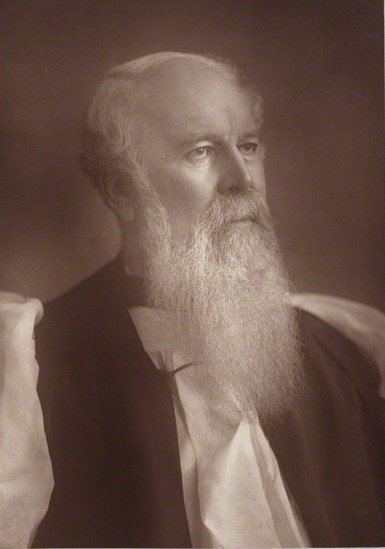
J. C. Ryle, who served as the bishop of Durham in the late 1800s, summed up the spiritual cost of the Anglican Church’s impenitence this way: “I believe [the Great Ejection] did an injury to the cause of true religion in England, which will probably never be repaired.” [5] Indeed, over the centuries that followed, England has succumbed to a culture of liberalism, overrun with cold, dead churches and awash in apostasy and spiritual darkness.
And despite the centuries of foul fruit that sprang from the Act of Uniformity and the Great Ejection, the Church of England failed to achieve its primary goal. The Puritans were scattered, but not silenced. Many of the men who were ejected from their churches went on to have influence that continues to this day. Spiritual stalwarts such as Richard Baxter, John Flavel, Thomas Brooks, and Thomas Watson were among those who lost their pulpits in 1662 but faithfully carried on as outlaw preachers. Along with many others, they continued to expose the corruption of the Anglican Church, calling for its repentance.

Monday, 21 August 2023

The Passing of Black Bartholomew (3/3)


EVEN though Farewell Sermons had been preached in many parishes on Sunday, August 17, there was a widespread feeling of uncertainty throughout the nation with regard to the direction and character of coming events. Something of this uncertainty can be detected in the words of some of the sermons that were preached on that day. We find, for example, Thomas Watson saying to his people in his morning sermon, “I will not promise that I shall still preach among you, nor will I say that I shall not, I desire to be guided by the silver thread of God’s Word, and of God’s providence.” But, on the other hand, speaking on the same day in another London church, Thomas Lye said, “It is most probable, beloved, whatever others may think, but in my opinion (God may work wonders) neither you nor I shall ever see the faces of, or have a word more to speak to one another till the day of judgment.” The variation between these two statements does not mean that Lye was more resolute than Watson in his decision not to subscribe to the Act of Uniformity, on that point they were both equally firm; but there lies behind the words of the preachers a differing degree of un­certainty whether or not the Act would actually be enforced against them.

They were not without grounds for hopefulness, for although the Act had been passed by Parliament, the King could still exercise his clemency in an Act of Indulgence by which at least some of those who failed to conform might be allowed by the royal prerogative to retain their churches. For Clarendon, the King’s minister, had just promised such a favour to Manton, Bates, Calamy and other Puritans, provided they petitioned the King for it. This news would doubtless be circulated and discussed amongst the London ministers and word of it was carried to the country. The diary of John Angier, the Lancashire Puritan, carries this entry in the week preceding Bartholomew’s Day: “August 20 was a day of general seeking God in reference to the state of the Church; that very day several ministers were before some of the Council and received encouragement to go on in the ministry. A letter read to them from the King to the Bishops that no man should be troubled for Non­conformity at least till his cause was heard before the Council. The news came to Manchester by Saturday post and was that night dispersed by messengers sent to several places. By means hereof many ministers that intended not to preach fell to their work, which caused great joy in many congregations.” Similarly, Henry New­come of Manchester writes in his diary on Bartholomew’s Eve, “I received a letter from Mr. Ashurst which gave us an account that past all expectation there was some indulgence to be hoped for in some cases.”

Clarendon’s promise was not merely a device to ease the tension in the nation till Bartholomew’s Day was passed. [1] He and the King had also grounds for uncertainty. They were not sure what the political repercussions of a wholesale ejection of the Puritans might be; the number of the nonconforming clergy was still unknown, although it was evident they would include some of the most eminent names in the land; and there was the fear lest the powerful Presbyterian party might make common cause with the Indepen­dents and thus, in Clarendon’s words, “give a great shock to the present settlement.” Charles, however, was also busy with other affairs. The previous May he had married Catherine of Braganza, and Saturday, August 23, was the day appointed for her public arrival and welcome at Whitehall. Amidst a brilliant regatta of barges and boats, the King and his Roman Catholic Queen sailed down the river from Hampton Court; “music floated from bands on deck, and thundering peals roared from pieces of ordnance on shore”. “I was spectator,” wrote John Evelyn in his diary, “of the most magnificent triumph that ever floated on the Thames.” But there were many in London that day that had no heart for the festivities. Far removed in thought from the colour and pageantry of the Queen’s arrival, a great company of silent and mourning believers was gathered in the parish of St. Austin’s for the burial of Simeon Ashe. Ashe had long been one of the popular Puritan leaders and “he went seasonably to heaven,” says Calamy, “at the very time when he was cast out of the Church. He was bury’d the very even of Bartholomew-Day.” The historian’s grandfather, the veteran Edmund Calamy of St. Mary Aldermanbury, was naturally the preacher on such an occasion, and that day he preached a sermon that was to be spoken of and read over for many years to come. His text was Isaiah 57:1, “The righteous perisheth, and no man layeth it to heart, and merciful men are taken away, none considering that the righteous are taken away from the evil to come.” The sermon is one of the finest examples of Puritan preach­ing, and though it does not strictly belong to the Farewell Sermons it is not surprising that it was given a place in the volume that was shortly to bear that title. Though Calamy packs his exposition with doctrines, he so blends his teaching with illustration, and his reproofs with exhortations, that he was in no danger of losing the attention of his hearers. Take the following example: ...

Sunday, 20 August 2023

The Last Summer (2/3)


THOUGH many of the Puritan ministers were far removed from the intrigues and disputations going on in London, they were never­theless deeply concerned in their outcome and throughout the land they waited for word from the capital. For many months before the Act of Uniformity was published rumours were circulating, and even amidst the peaceful beauties of far-off Flintshire we can hear their echoes in the diaries of Philip Henry. “Great expectations,” he writes in July 1661, “about a severe Act about imposing the Common prayer and Ceremonies passed both houses of Parliament but not signed by the King.” Again, “News from London of speedy severity intended against the Nonconformists. The Lord can yet, if he will, break the snare. If not, welcome the will of God.”

Although news of an Act of Uniformity had thus been heard of well in advance, it was not, as has already been said, until May 1662 that its terms were made known. Three months only were given the Puritans for deliberation and that in spite of the fact that the revised Prayer Book to which they must give unfeigned assent was not to be ready for publication till August 6–only three weeks before St. Bartholomew’s Day. In an age in which books had to be despatched and circulated in a manner far different from what we are accustomed to today, this meant that in certain parts of the country such as Lancashire, ministers could not obtain copies before August 22, and in some cases not even then. We hear of one ejected minister who was subsequently to complain that he was silenced for not declaring his consent to a Book which he never saw or could see.

The shortness of the interval allowed to the Puritans before the Act was enforced also hindered the assembling of any national Conference to formulate a joint decision. It is true, of course, that much correspondence circulated in these three months of trial and anxiety, and those who could do so met together for mutual con­sultation, but, in general, it was in the quietness of their own homes that they arrived by prayer and thought at the individual decisions they were to make. The diary of Oliver Heywood, the faithful minister of Coley in Yorkshire, gives us a glimpse of what was being felt within men’s hearts all over the land. After noting the threats he had already received from ecclesiastical authorities, Heywood goes on to encourage himself in the thought that he was not alone in these trials: “Hitherto God hath helped: and now I am but in the same predicament with the rest of my brethren in the ministry since the passing of this fatal act of uniformity, which we are waiting for the execution of, which commenceth from the 24th of August, which if not prevented will strike dead most of the godly ministers in England.” Heywood was in no doubt whether or not he should comply with the Act: “the conditions are too hard to be accepted. Woe be to us, if we preach not the gospel! but a double woe to us, if we enervate the gospel by legal ceremonies …. Our work is dear to us; but God is dearer, and we must not do the least evil to obtain the greatest good. There are worldly advantages enough to sway us to conformity, if conscience did not answer all the pleas of flesh and blood. The bargain will be too hard to provide a livelihood by making shipwreck of faith and a good conscience. God can advance his work without our sinful shifts, and rear up monuments to his glory without our complying pre­varications: suffering may benefit the gospel as much as service, when God calls to it.” ....

A Gathering Storm: Build-Up to the Great Ejection (1/3)


We are coming up to August 24 and the Banner of Truth has posted three timely articles by Iain Murray on their website. The first can be accessed here. It begins

On 24 August 1662, the English Parliament passed an Act designed to exclude and ‘utterly disable’ a group of religious ministers within the Established (i.e. Anglican) Church. The immediate effect of the Act of Uniformity of 1662 was the forced departure of over hundreds of gospel ministers from the churches they served. Moreover, it represented the beginning of a wave of persecution aimed at completely silencing these already-deprived Christian leaders. In the following article, Iain H. Murray explains the build-up to what would become known as the Great Ejection, or ‘Black Bartholomew’s Day’.

ON August 30, 1658, Oliver Cromwell, at the age of 59, lay dying in the Palace of Whitehall. Outside a great storm was blowing across the red tiles and ancient spires of London’s roof-tops, such as had not been remembered for a hundred years, but within the soul of the Lord Protector of England there was peace: “The Lord hath filled me,” he murmured, “with as much assurance of His pardon and His love as my soul can hold …. I am more than a conqueror through Christ that strengtheneth me.” Four days later the greatest soldier and statesman of the age had fought his last battle and entered the land “where the wicked cease from troubling and the weary are at rest.”

Cromwell had embodied in his own person the two great principles which had inspired the nation sixteen years before to rise against the absolutism of the Stuart monarchy–the right of the people to freedom from oppression and the duty of preserving Protestantism from error and spiritual tyranny. As long as Cromwell was alive he struggled for a settlement that would enable these two principles to exist harmoniously together. But if the constitutional difficulties that had arisen since the Civil Wars made the problem too great for Cromwell, it was certainly beyond the abilities of those to whose charge he left the nation. As long as the greater part of a nation remains unregenerate, political freedom may not lead to the advancement of the Gospel, and Cromwell, being forced by the course of events–as he interpreted them–to an unhappy choice between the two, chose the latter. The Protector’s death resulted in a political crisis which made the choice yet more difficult, and the Puritans, as a body, were divided in their reaction to it. The Independents, such as John Owen and Thomas Goodwin who had been closest to Cromwell, believed that the spiritual gains that had been made since the Long Parliament had broken the power with which the Bishops had cramped the nation’s religious life could best be preserved by a Commonwealth. But as the years of Crom­well’s Protectorate had already shown, such a form of government would have to rely, for a time at least, upon the army for its strength, as it would never be chosen by the general consent of the people, and what would then become of the political freedom which the Commons had fought to preserve? It was thus clear to the majority that the country could find no security against anarchy or military dictatorship save in the old constitutional government based upon a Monarchy and a free Parliament. This had, in fact, long been the conviction of the largest of the Puritan parties–the Presbyterians. Though they had resisted the absolutism of Charles I they had never been against monarchy as such, and after the turmoil that followed the death of Cromwell they were more convinced than ever of the political necessity of recalling Charles Stuart to his father’s throne. But if Charles returned what would become of the spiritual freedom which they cherished? They had not forgotten how monarchy and episcopacy had been combined since the Church settlement of Queen Elizabeth against the more thorough­going Protestantism of Puritanism. It is not surprising therefore that while the Presbyterians saw the need of restoring the monarchy they were conscious of the possibility that such a political settlement might lead to a spiritual defeat.

Charles was not ignorant of their fears and of his need to calm them. He knew that the co-operation of the strongest Puritan party, the Presbyterians, would be needed to accomplish a Restoration and that a full disclosure of his aims would be disastrous to his interests. Thus he carefully avoided any suggestions that his return would mean an Anglican triumph; his agents were busy in England creating an impression that the Presbyterians could expect a Church settlement comprehensive enough to satisfy their convictions; testimonies to his loyalty to Protestantism were secured from French Reformed ministers; and by the famous Declaration of Breda in April 1660 he promised “a liberty to tender consciences and that no man shall be disquieted or called in question for differences of opinion in matter of religion which do not disturb the peace of the kingdom.” In such ways a general impression was given to the Presbyterians that Charles’s return would not be spiritually disastrous. The impression was deepened when a delegation of Presbyterian ministers was cordially received by Charles at The Hague and given, says Richard Baxter, “encouraging promises of peace” which “raised some of them to high expectations.” ....

Thursday, 26 August 2021

Reading The Great Ejection Sermons


I can still remember as a teenager pulling my father’s copy of the 1962 Banner edition of Sermons of the Great Ejection off one of his study shelves and turning to Edmund Calamy’s sermon, ‘Trembling for the Ark of God.’ That sermon impacted me profoundly. But, before turning to the detail of this and other sermons, it will be helpful to explain the historical origin of the book.

These sermons were all preached in 1662, the year when 2,000 or so ministers were expelled from ministry in the Church of England by the Act of Uniformity, which required unswerving commitment to the Book of Common Prayer, episcopal ordination and rejection of the Solemn League and Covenant. This Act was designed to drive Puritan preachers from the national church, and achieved this aim on Black Bartholomew’s Day 1662. In the words of J. C. Ryle this represented ‘an injury to the cause of true religion in England which will probably never be repaired.’

However, at least one good came from the tragedy of the Great Ejection - the farewell sermons of Puritan preachers to their congregations. And this Puritan Paperback gives a selection of the best of these sermons, the parting pastoral counsel of some of the finest preachers and theologians England ever produced. After a helpful foreword from Iain Murray, each of the sermons is introduced with a brief biography of the preacher, some of whom will be well known to Banner readers (Thomas Brooks, Thomas Watson, Edmund Calamy) and others relatively unknow (John Collins, Thomas Lye, John Oldfield, John Whitlock). Some prayers have also been included, and the volumes concludes with the 1772 Nonconformist’s Catechism.

To give a flavour of the sermons, consider the first sermon in the volume, Edmund Calamy preaching on Eli trembling for the ark of God (1 Sam. 4:13). In many ways this is a model Puritan sermon. The context for the text is briefly expounded. A biblical theology of the ark and what it represents (fundamentally a visible sign of God’s gracious presence with his people) and what it typifies (Jesus Christ, the Church, and the ordinances of the church) is outlined. From this, Calamy proceeds to draw rich and varied spiritual lessons from the text. For example, believers are troubled when the ark (Christ, his church, the gospel) is in danger of being lost because 1) they love the ark; 2) they have a personal interest in the ark; 3) the damage that follows the ark being lost; 4) if the ark is lost it is because of our sin. This last point is so vital and so convicting. The ark is in danger, not first because of other’s sins, but because of our sins (e.g. Dan. 9:5-6): ‘Oh, beloved, it is for your sin and my sin that the ark of God is in danger.’

There is realism and a hope in Calamy’s application. He is well aware that ‘England has no letters patent of the gospel; the gospel is removable.’ Therefore, he wanted God’s people to have ‘an aching heart for the ark of God that was in danger.’ But he also wanted God’s people to have hope. As long as there was ‘an abundance of praying people’ Calamy argued the ark was safe, for ‘God will never forsake a praying people.’ There is clearly much more in Calamy’s sermon, all of it was needed in 1662, and all of it is needed today. So, take up this volume and read it.

Other sermons are of a uniformly high standard. Thomas Brooks’ ‘Pastor’s Legacies’ are wonderful; John Collins on ‘Contending for the faith’ is a much-needed word for today; Thomas Lyle beautiful covers the love of a pastor for his people and the congregation’s duty in return to ‘stand fast in the Lord’ (Phil. 4:1); Thomas Watson is as helpful as ever on the difference between the righteous and the wicked (Isa. 3:10-11) and how God’s promises stir up a pastor’s beloved people to holiness (2 Cor. 7:1); John Oldfield outlines how to respond to the sufferings of the godly (Psa. 69:6) and the final sermon of John Whitlock is a is a profound challenge to ‘remember, hold fast and repent’ (Rev. 3:3).

These are not antiquarian sermons. They breathe the spirit of the living word of God and will repay reading today, when, to return to Calamy’s sermon, there is as much need to tremble for the ark of God as there was in 1662.

Tuesday, 20 August 2019

A recent message on 1662


See here for the message delivered at the recent Steadfast Conference

Thursday, 31 March 2016

John Skinner

This plaque is found in the Old Baptist Chapel at Ryeford, Herefordshire. Put up in 1870, it memorialises the first pastor John Skinner who was ejected in 1662 from the parish church in the next village Weston Under Penyard. It includes this poem by Isaac Watts
 
Let Caesar's dues be ever paid
To Caesar and his throne;
But consciences and souls were made
To be the Lord's alone.

Despite its bold assertions, the idea that he was one of the ejected is refuted in an interesting article here from the Baptist Quarterly.

Tuesday, 22 September 2015

Owen on indulgence and tolerance

In a letter written to "a person of honour" in 1667, John Owen wrote as follows
... Do but open the prisons for the relief of those peaceable, honest, industrious, diligent men, who, some of them, have lain several years in durance, merely in the pursuit of excommunication, and there will be testimony enough given to this state of the controversy.
This being so, pray give me leave to present you with my hasty thoughts, both as to the reasonableness, conscience, and principles of pursuing that course of severity towards dissenters which I find so many concerned persons to plead for, and also of the way of their arguings and pleas.
... It seems, therefore, that we are some of the first who ever anywhere in the world, from the foundation of it, thought of ruining and destroying persons of THE SAME RELIGION with ourselves, merely upon the choice of some peculiar ways of worship in that religion; and it is but reasonable, as was observed, for men to look well to the grounds of what they do, when they act contrary to the principles of the law of nature, expressed in so many instances by the consent of mankind. And I fear all men do not aright consider what a secret influence into the enervating of political societies such intrenchments on the principles of natural light will assuredly have; for those things which spring up in the minds of men, without arguing or consideration from without, will insensibly prevail in them against all law and constitutions to the contrary. It is in vain to turn nature out of doors; it will return. ...
See the whole letter here.
 

Tuesday, 9 July 2013

Sermons on the Great Ejection

GoodBookStall Review:
The Act of Uniformity of 1662 prescribed that any minister in England who refused to conform to the Book of Common Prayer by 14th August 1662 would be ejected from the Church of England. Over 2,000 evangelical ministers left their livings rather than conform to what they saw as extra-Biblical rules and regulations. It was a sad day for the Church of England from which many think the Church never recovered.
This book is not the history of that tragic event but rather gives us an insight into the kind of men who were affected. The book consists of brief biographies and the last sermons by seven men who chose to leave their flock. At the end there is a fascinating catechism which gives us the Biblical reasons why so many felt compelled to resign. First published in 1662 and 1663 the text has been updated into modern English.
Here we see Puritan preaching at is best: Biblical exposition, lively illustrations and pastoral application. Not surprisingly there is a great deal of parting counsel which could be summed up by the phrase "Stand firm in the faith". For these men truth and holiness rightly came before conformity and unity.
Any Christian who is grappling with the issue of whether unity is more important than truth would do well to read this book, especially the catechism. Any minister who is about to preach his last sermon to a congregation will find many stimulating ideas here. All Christians who desire to feed their soul will not be disappointed – this is a spiritual feast.
If you have never read any Puritan books this is a good place to start – you will find these sermons readable, challenging and edifying.
Alan Hill

Monday, 5 November 2012

The Act of Uniformity

The act itself is mentioned here at Total politics This is resumbaly a picture iof the item itself.

Wednesday, 24 October 2012

Three Baptists 3 William Mitchel

William Mitchel (1662-1705). For many of my readers the name will be completely unfamiliar. But he is a great hero of my Baptist past. Mitchel was a tireless evangelist in the English Pennines from the Rossendale Valley in Lancashire to Rawdon in neighbouring West Yorkshire. He was born in 1662 at Heptonstall, not far from Hebden Bridge in Yorkshire. Nothing is really known about his upbringing. His conversion came at the age of nineteen after the death of a brother. Although he was genuinely converted, Mitchel played what he later regarded as the part of a Jonah as he sought to go into business as a clothier and become wealthy.
But God frustrated his worldly ambitions and drew him out as a preacher of the gospel. Within four years of his conversion, he began to preach as an itinerant evangelist. His cousin, David Crosley (1669-1744), a stonemason turned preacher, tells us that Mitchel’s aim in his preaching was to “chiefly set forth the exceeding rich and free grace of the gospel, which toward him had been made so exceeding abundant.” At the same time, we are told that his Christian life was one of unwearied diligence in “reading, meditation, and prayer.”
Mitchel would travel with Crosley and others over the Pennines, often during the night so as to reach preaching venues in towns and villages by early morning. Crosley remembered the toil it took to walk “many miles in dark nights and over dismal mountains.” But he also never forgot Mitchel’s “savoury and edifying” preaching that took place anywhere Mitchel could get an audience, “on mountains, and in fields and woods.” Though Mitchel was not a polished speaker, crowds would press to hear him. Many merely came out of curiosity, some came to scoff. But, later when their hearts and consciences had been impacted by Mitchel’s gospel preaching, they confessed, “the Lord is with him of a truth.”
According to the Second Conventicle Act (1670), part of the Clarendon Code designed to break the spirit of the Dissenters, what Mitchel was doing was illegal. This act forbade any one over the age of sixteen from taking part in a religious assembly of more than five people, apart from those sanctioned by the Church of England. The act gave wide powers to local magistrates and judges to “suppresse [sic] and disolve” such “unlawfull [sic] meetings” and arrest whomsoever they saw fit to achieve this end. Mitchel was twice arrested under this law during the reign of James II (r.1685-1688), who succeeded Charles II in 1685. On the first occasion he was treated with deliberate roughness and spent three months in jail at Goodshaw. On the second occasion he was arrested near Bradford and imprisoned for six months in York Castle.
The enemies of the gospel who imprisoned Mitchel might have thought they were shutting him up in a dismal dungeon. To Mitchel, though, as he told his friends in a letter written from York in the spring of 1687, the dungeon was a veritable “paradise, because the glorious presence of God is with me, & the Spirit of glory & of God rests on me.” He is, of course, quoting from 1 Peter 4:14. He had been given such a “glorious sight of [God’s] countenance, [and] bright splendour of his love,” that he was quite willing to “suffer afflictions with the people of God, & for his glorious Truth.”
In another letter, written to a Daniel Moore during this same imprisonment, Mitchel told him he had heard that James II had issued a Declaration of Indulgence, which pardoned all who had been imprisoned under the penal laws of the Clarendon Code. But he had yet to see it. Whatever the outcome, he told Moore, “the Lord’s will be done, let him order things as may stand with his glory.” This sentence speaks volumes about the frame of mind in which Mitchel had approached his time of imprisonment. He was God’s servant. God would do with him as he sovereignly thought best. And Mitchel was quite content with that, for, in his heart, he longed for his life to reflect above all God’s glory.
(For access to these letters of Mitchel, I am indebted to the Local Studies Unit Archives, Manchester Central Library. The letters are kept in the Papers of Dr. William Farrer. Thanks are also due to David J. Woodruff of the Strict Baptist Historical Society who kindly provided me with a copy of the letters.)

Audio from American Conference

I think I was nodding back in the Spring when a mini-conference on 1662 was held at the Andrew Full Centre. The audio for the conference, “Religious Liberty and the Cross: 1662 and the Persecution of the Puritans,” is now online. The mp3 audio files can be linked to as below.

Wednesday, 26 September 2012

Anything but sin

In Read's Case here we read on page 4
It was the saying of a Reverend Minister Mr. J. B. of Worcester, when he lay upon his death bed, and was asked what thoughts he had of His Nonconformity "I would have done anything but sin," saith he, "that I might have continued in the exercise of my ministry but when it came to that, there was no remedy."

Legislation

The link here is to a paper by David L Wykes summarising the legislation affecting nonconformists down the years.

Wednesday, 29 August 2012

Treading the grain link

See link here

Third Way Link

I found this here

On this 350th anniversary of the Great Ejection, when the Puritans were ejected from the Church of England, I pulled down a volume of Thomas Manton, the ejected rector of St. Paul’s, Covent Garden.
Of his influence, the First Bishop of Liverpool J.C. Ryle wrote, “If ever there was an English divine who must be classed as a Puritan, that man is Manton…his works, like the Pilgrim’s Progress deserve the attention of all true Christians…As an expositor of Scripture I regard Manton with unmingled admiration. Here, at any rate, he is facile princeps [easily first] among the divines of the Puritan school… In days like these [Ryle wrote in 1870], I am thankful that the publishers of Manton’s Works have boldly come forward to offer real literary gold to the reading public.”
Dr William Bates preached his funeral sermon. I found it in volume 22. When we read how he described his departed friend, we understand why Ryle wrote what he did and how it was reported that Bates would weep whenever he spoke of Manton for some years after his friend’s death. At the same time, the description below provides us with a powerful depiction of a true preacher and true preaching.
His name is worthy of precious and eternal memory. God had furnished him with a rare union of those parts which are requisite to form an eminent minister of his word. A clear judgment, a rich fancy, a strong memory, and happy elocution met in him; and were excellently improved by his diligent study. In preaching the word he was of conspicuous eminence; and none could detract from him, but from ignorance or envy. He was endowed with an extraordinary knowledge of the scripture; and in his preaching, gave such perspicuous accounts of the order and dependence of divine truths, and with that felicity applied the scripture to confirm them, that every subject, by his management, was cultivated and improved. His discourses were so clear and convincing, that none, without offering violence to conscience, could resist their evidence; and from hence they were effectual, not only to inspire a sudden flame, and raise a short commotion in the affections, but to make a lasting change in the life.
His doctrine was uncorrupt and pure; the truth according to godliness. He was far from the guilty, vile intention to prostitute the sacred ordinances for acquiring any private secular advantage; neither did he entertain his hearers with impertinent subtleties, empty notions, intricate disputes, dry and barren, without productive virtue; but as one who always had in his eye the great end of his ministry, the glory of God, and the salvation of men. His sermons were directed to open their eyes, that they might see their wretched condition as sinners, to hasten their flight from the wrath to come, and make them humbly, and thankfully, and entirely receive Christ as their Prince and all-sufficient Saviour; and to build up the converted in their holy faith, and more excellent love, which is the “fulfilling of the law:” in short, to make true Christians eminent in knowledge and universal obedience.
And as the matter of his sermons was designed for the good of souls, so his way of expression was proper for that end. His style was not exquisitely studied, not consisting of harmonious periods, but far distant from vulgar meanness. His expression was natural and free, clear and eloquent, quick and powerful; without any spice of folly; and always suitable to the simplicity and majesty of divine truth. His sermons afforded substantial food with delight, so that a fastidious mind could not disrelish them. He abhorred a vain ostentation of wit in handling sacred truths, so venerable and grave, and of eternal consequence. His fervour and earnestness in preaching was such as might soften and make pliant the most stubborn and obstinate spirit. I am not speaking of one whose talent was only voice, who laboured in the pulpit as if the end of preaching were the exercise of the body, and not for the profit of souls.
But this man of God was inflamed with holy zeal, and from thence such expressions broke forth as were capable of procuring attention and consent in his hearers. He spake as one who had a living faith within him of divine truth. From this union of zeal with his knowledge, he was excellently qualified to convince and convert souls. His unparalleled assiduity in preaching declared him very sensible of those dear and strong obligations which lie upon ministers to be very diligent in that blessed work. This faithful minister abounded in the work of the Lord; and, which is truly admirable, though so frequent in preaching, yet was always superior to others, and equal to himself, He was no fomentor of faction, but studious of the public tranquillity; he knew what a blessing peace is, and wisely foresaw the pernicious consequences which attend divisions.
Consider him as a Christian, his life was answerable to his doctrine. This servant of God was like a fruitful tree, which produces in the branches what it contains in the root. His inward grace was made visible in a conversation becoming the gospel. His resolute contempt of the world secured him from being wrought upon by those motives which tempt low spirits from their duty. He would not rashly throw himself into troubles, nor, spreta conscientia [disdaining conscience], avoid them. His generous constancy of mind in resisting the current of popular humour, declared his loyalty to his divine Master. His charity was eminent in procuring supplies for others, when in mean circumstances himself. But he had great experience of God’s fatherly provision, to which his filial confidence was correspondent.
I shall finish my character of him by observing his humility. He was deeply affected with the sense of his frailty and unworthiness. He considered the infinite purity of God, and the perfection of his law, the rule of duty; and by that humbling light discovered his manifold defects. He expressed his thoughts to me a little before his death. “If the holy prophets were under strong impressions of fear upon extraordinary discoveries of the divine presence, how shall we poor creatures appear before the holy and dreadful Majesty? It is infinitely terrible to appear before God, the Judge of all, without the protection of the blood of sprinkling, which speaketh better things than that of Abel.” This alone relieved him, and supported his hopes. Though his labours were abundant, yet he knew that the work of God, passing through our hands is so blemished, that without appealing to pardoning mercy and grace, we cannot stand in judgment.
1662 may have been a significant year for the Book of Common Prayer. It was not, however, a good year for those to whom the gospel and a good conscience were more precious than the institutional church. May God grant to his church more such men and ministers today!

Reformed Reader Link

I found this here
In August of 1662 around 2,000 ministers left the national church of England for the sake of conscience (they were called the non-conformists).  You’ll have to read about this significant church history event elsewhere since I simply want to point out a few prayers of repentance that two pastors prayed the last Sunday of their parish ministry in the English state church.  The pastors were Edmund Calamy (d. 1666) and Thomas Watson (d. 1686).  Here are excerpts from their prayers.  Notice the depth of their repentance and confession of sin.
“We confess we have forfeited all our mercies; we have heard much of God, Christ, and heaven with our ears, but there is little of God, Christ, and heaven in our hearts.  We confess, many of us by hearing sermons, are sermon-proof; we know how to scoff and mock at sermons, but we know not how to live sermons” (Calamy).
“We have sinned presumptuously against the clearest light and dearest love; always have we sinned.  …Thou hast shown mercy to us, but the better thou hast been to us, the worse we have been to thee.  Thou hast loaded us with thy mercies, and we have wearied thee with our sins.  When we look into ourselves, oh, the poison of our natures!  …By our spiritual leprosy we infect our holy things.  Our prayers need pardon and our tears need the blood of sprinkling to wash them.  …We confess we are untuned and unstrung for every holy action; we are never out of tune to sin but always out of tune to pray.  We give the world our main affections and our strong desires…there is not that reverence, nor that devotion, nor that activeness of faith that there should be. …Oh, humble us for our unkindness, and for Christ’s sake blot out our transgressions; they are more than we can number, but not more than [thou canst] pardon” (Watson).
When these types of deep, heart-felt prayers of repentance and confession are spoken in private and in the pulpit, the Christian church is strengthened.  We shouldn’t balk at the intensity of confession here, we should likewise say and expound upon the words that arose from the beaten-breast of the tax collector: “Lord, have mercy on me, a sinner” (Lk. 18:13; cf. Neh. 9:1ff).
The above prayer excerpts are found in this new revised edition of the Sermons of the Great Ejection (Edinburgh: Banner of Truth, 2012).
shane lems

Wednesday, 15 February 2012

Lecture at Bulkington

It was my great privilege to lecture on the subject of this blog recently at Bulkington Congregational Church near Nuneaton. You can hear the lecture at the church website here.

Monday, 4 July 2011

Books on the subject 1962

See here for a summary of some books published in conncection with our subject in 1962.

Tuesday, 9 February 2010

Nice summary

A nice summary written in Wales by John Legg can be found here. It says
Christians must often define themselves by what they oppose, for example as Protestants or Nonconformists. What did they not conform to? The short answer is, ‘the Anglican church’, but there is more to it than just a dislike of formal worship or of the Establishment. We must look at their origins in the seventeenth-century.

Separatists
When James VI of Scotland became James I of England in 1603, he adopted the motto, ‘No bishop, no king’ and set about imposing conformity on the church. Many of his subjects, however, continued to meet together to worship God in a scriptural way. One such Separatist congregation was at Scrooby in Nottinghamshire. In 1608 persecution forced them to emigrate to Leyden in Holland, but after a peaceful few years they decided to go to America. Elder William Bradford later described their departure from Leyden: ‘they knew they were Pilgrims, and … lifted up their eyes to the heavens, their dearest country’. Ever since they have been known as ‘the Pilgrim Fathers’. After many difficulties, they set sail from Plymouth in the Mayflower. After a horrific voyage, they finally landed (in the wrong place!) and endured a cruel winter, fever, fires, accidents and the arrival of ungodly settlers. Within six months half of the original party (and half of the Mayflower’s crew) had died, but by prayer and the providential help of friendly Indians, they survived. The rest of the Leyden congregation arrived in 1630 and the settlement reached three hundred.
Not conforming to the Prayer Book
When Charles I succeeded to the throne, he and William Laud, his Archbishop of Canterbury, determined to impose conformity to the Book of Common Prayer. When Laud tried to extend the rule of bishops and the Prayer Book to Scotland, he ran into trouble. One doughty Scottish woman, named Jenny Geddes, resisted the public reading of the Prayer Book with the memorable action of throwing her stool at the Dean’s head and the equally memorable words, ‘Will ye dare read that book in my lug [ear]?’. By 1640 the number of colonists in America, eager to establish Bible-based churches, reached twenty-thousand and nonconformity was well established. Laud’s unwise policies contributed to Parliament’s resistance to the king and thus to the Civil War.
Oliver Cromwell
The coming of the Commonwealth and Protectorate under Oliver Cromwell brought relief to the Nonconformists of various shades. Although many Church of England ministers were removed from their parishes, they were only the inefficient, incompetent or immoral ones. During this period the Westminster Assembly met, in a failed attempt to unite England and Scotland in a Reformed alliance. The Assembly did, however, write the Westminster Confession and the Larger and Shorter Catechisms, perhaps the finest theological statements ever produced. Most of the members of the Assembly were Presbyterians; others were convinced Anglicans; five were Congregationalists or Independents. They argued against some of the Presbyterian ideas and became known as the Dissenting Brethren.
The Bedford Baptists
The Particular (Calvinistic) Baptists were emerging as a distinct group. By 1644, they had seven congregations in England. One famous Baptist church was established in Bedford in 1650 with twelve members under the leadership of John Gifford. From 1653, when the Anglican vicar was deposed, this Baptist church, now with twenty-five members, met in the parish church, as did many other new independent congregations. One of these members was a newly converted tinker called John Bunyan. Gifford died two years later, but fairly soon, Bunyan began preaching and in 1656 was set aside to preach both in the congregation and more widely. He was not actually pastor, but continued to support himself by his ‘tinkering’. By this time the congregation at the Bedford Meeting had grown to around ninety members. In 1660, however, all this came to an end.
The Restoration
When Oliver Cromwell died in 1658 and was succeeded by his son, Richard, the politicians, who still hankered after a king and a national church, ‘restored’ the monarchy, with dire consequences. Charles II made conciliatory noises, but the new parliament insisted on restoring all forms and ceremonies of the church. The clergy who had been removed during the Commonwealth returned, including the vicar of Bedford, so that the Baptist congregation had to leave the parish church. The Presbyterians had high hopes of being included in the established church, but Bishop Sheldon of London was determined that there should be no compromise. He and his supporters wanted to get rid of all the Puritans, and this they did.
Not conforming to the Act of Uniformity, 1662
They drafted a bill strictly to make it impossible for even the least dogmatic of the Puritans to accept it with a clear conscience. The Act of Uniformity, passed in May 1662, gave all ministers of the Church of England until 24 August, St. Bartholomew’s Day, to conform to its demands. They had to affirm the supremacy of the monarch in all things ecclesiastical and spiritual, and that they gave ‘unfeigned assent’ to everything in the Book of Common Prayer. The timing was deliberately such as to deprive any who did not conform of a whole year’s income.
The Great Ejection
Nearly two thousand ministers (a hundred and thirty in Wales), including some who had withdrawn earlier, refused to conform. Most were Presbyterians or Independents, but there were also nineteen Baptists, of whom eleven were Welsh. The Bishop of London was disappointed that so many actually did conform. If he had thought so many would conform, he ‘would have made the Act stricter’! The ejection included not only ministers, but also lecturers and even schoolmasters, so that many of them were deprived of any means of livelihood.
What, then, did they object to? There were many important details in the Prayer Book that they found objectionable, such as the use of the sign of the cross in baptism and the wearing of the surplice. More importantly they refused ‘to pronounce all baptised persons regenerated by the Holy Ghost’; they regarded it as sinful to give the communion elements to the unfit, to pronounce a general and absolute absolution, and to declare anyone they buried ‘our dear brother here departed’. All these, of course, arose from the basic error that everyone in the parish was a Christian. More generally, they denied that anyone, king or pope, has the right to impose a liturgy on ministers.
The Clarendon Code
To back this up, Parliament introduced a set of penal acts aimed at destroying the many independent groups, Congregational or Baptist, which were still meeting. The First Conventicle Act banned the meeting together in a home of more than five people apart from the family members. In 1666 the Five Mile Act was introduced. This appears to have been specifically and spitefully aimed against certain godly ministers. When the Great Plague afflicted London in 1665 and the Anglican ministers fled to the country, the ejected ministers earned great credit by going back and looking after their flocks. The new act forbade them to go within five miles of any city, corporation or borough, or any parish where they had been minister or conducted unlawful conventicles. Immediately the king returned, the Bedfordshire magistrates ordered the restoration of the Prayer Book in public worship. Inevitably John Bunyan fell foul of the law and was imprisoned for twelve years. It was probably during this period that he began his great work, The Pilgrim’s Progress. Bunyan was only one of many Puritans who, in the providence of God, used their enforced silence to write.
Nonconformist restrictions
In 1672 Charles issued a Declaration of Indulgence, which allowed Nonconformists, including Bunyan, to apply for licences to preach and to establish meeting places where they could meet openly. However, Parliament was displeased and the Declaration in 1673 was replaced by the first Test Act which required all in public office to take communion at the Church of England. In this way Nonconformists were debarred from public office (and university) unless they were prepared to compromise their consciences. In other ways this was a time of relative quiet for the Nonconformists, but in 1681 new persecutions came on the Dissenters. In 1685, Charles’ son, an open Roman Catholic, became King James II. However, he went too far and the people rebelled. The ‘Glorious Revolution’ took place and William of Orange and Mary took the throne. Although the Protestant Dutchman did not do as much as the Nonconformists expected, he did introduce religious toleration for Protestants in an Act of 1689. Many disabilities remained for Nonconformists, but the worst was past.
In days when we tend to take our freedoms for granted, when we can attend university if we want, become members of Parliament and mayors if we so desire, attend the church of our choice without fear and, still preach the gospel without hindrance, we must remember the principles and struggles of our forefathers.