Showing posts with label Richard Morton. Show all posts

Tuesday, 14 February 2023

Ejected men in the ODNB 'L-N'

L
John Langston 1640/41–1704 ejected from Gloucesterhsire in 1660 he eventually ministered in Ipswich.
George Lawrence 1613-1691 or 98 originally in London, became a hospital chaplain in Winchester and after ejection 1660 ministered again in London.
Silenced Henry Lukin 1628–1719 was ‘of great note and eminence … a judicious and learned divine’ says Calamy

M
John Machin 1624–1664
Thomas Mallory (d 1689) from Northamptonshire
William Manning 1630 or 33–1711
Walter Marshall 1628–1679
Swansea born Marmaduke Matthews c1606–1683, in New England for a period
Sussex born John Maynard 1600–1665
Richard Mayo c 1630–1695
Bedfordshire born Matthew Mead[e] 1628/9–1699
John Meadows 1622–1697
Luke Milbourne 1622-1668
Somerset born John Milward 1619/20–1680/83
Thomas Mocket c 1602–1670 controversialist from Kent
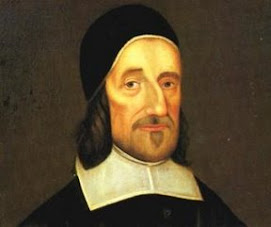
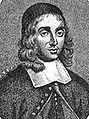
Richard Morton 1637-1698, physician
George Moxon 1602-1687 whose son became a Unitarian

N
James Nalton c 1600–1662
Benjamin Needler 1620–1682
Henry Newcome 1627-1695
Ferdinando Nic[h]olls 1597/8–1662

Thursday, 18 February 2010

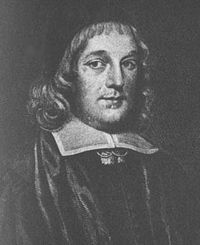
Richard Morton

In 1904 a William Osler began an article in a medical journal on the 17th century medical man Richard Morton thus:

August 22, 1662 - Black Bartholomew's Day, as it has been called - brought sadness and sorrow to many English homes. The enforcement of the Act of Uniformity called for subscription to the Thirty-nine Articles, and enforced the use by all clergymen of the Book of Common Prayer. Among those ejected for refusal to subscribe - 2,ooo in number, it is said - was a young man, aged twenty-five, the Vicar of Kinver, in Staffordshire, Richard Morton by name. The son of a physician, born in 1637, he had been educated at Oxford, where he took the B.A. in 1656-57, became chaplain to his College and took the M.A. in 1659, and in the same year was appointed to the vicarage of Kinver. From the days of St. Luke there have been many instances of what has been called the angelical conjunction of physic and divinity. In the seventeenth century many men could sign after their names, as did Robert Lovell in his History of Animals and Minerals (1661), Philotheologiatronomos. Following Linacre's example, clerical orders have been taken as a rule by the physician late in life, but Morton, ejected from his living, turned his attention to medicine at a comparatively early age. From Baxter's account, he evidently was a loss to the church. He speaks of him as "a man of great gravity, calmness, sound principles, of no faction, an excellent preacher, of an upright life."
It is not known where Morton studied medicine. On the nomination of the Prince of Orange he was created an M.D. of Oxford in 1670. He settled in London, became a Candidate of the Royal College of Physicians in 1675, and a Fellow in 1679. He practised in Grey Friar's Court, Newgate Street, and had an unusual measure of success. He became physician-in-ordinary to the King, and enjoyed the confidence both of the profession and of the public. He seems to have been an intimate friend of Sydenham and a strong supporter of his new way in physic. He died in 1698.
His most important work is the Phthisiologia, 1689, of which there were six or seven subsequent editions in the succeeding century. Two English translations appeared, one in 1694, and the other in 1720.
His Pyretologia appeared in 1692, and is chiefly of value today as giving one of the most systematic and thorough accounts of the malarial fevers of that date.
The rest of the article can be found here.