Apparently the offers of bishoprics and deaneries to Presbyterians were as follows, Edward Reynolds being the only one to take up the offer:
Bishoprics
Norwich Edward Reynolds
Hereford Richard Baxter
Lichfield and Coventry Edmund Calamy
Deaneries
Rochester Thomas Manton
Lichfield William Bates
York Edward Bowles
Showing posts with label William Bates. Show all posts
Showing posts with label William Bates. Show all posts
Wednesday, 19 September 2012

Wednesday, 29 August 2012
Third Way Link
I found this here
On this 350th anniversary of the Great Ejection, when the Puritans were ejected from the Church of England, I pulled down a volume of Thomas Manton, the ejected rector of St. Paul’s, Covent Garden.
Of his influence, the First Bishop of Liverpool J.C. Ryle wrote, “If ever there was an English divine who must be classed as a Puritan, that man is Manton…his works, like the Pilgrim’s Progress deserve the attention of all true Christians…As an expositor of Scripture I regard Manton with unmingled admiration. Here, at any rate, he is facile princeps [easily first] among the divines of the Puritan school… In days like these [Ryle wrote in 1870], I am thankful that the publishers of Manton’s Works have boldly come forward to offer real literary gold to the reading public.”
Dr William Bates preached his funeral sermon. I found it in volume 22. When we read how he described his departed friend, we understand why Ryle wrote what he did and how it was reported that Bates would weep whenever he spoke of Manton for some years after his friend’s death. At the same time, the description below provides us with a powerful depiction of a true preacher and true preaching.
His name is worthy of precious and eternal memory. God had furnished him with a rare union of those parts which are requisite to form an eminent minister of his word. A clear judgment, a rich fancy, a strong memory, and happy elocution met in him; and were excellently improved by his diligent study. In preaching the word he was of conspicuous eminence; and none could detract from him, but from ignorance or envy. He was endowed with an extraordinary knowledge of the scripture; and in his preaching, gave such perspicuous accounts of the order and dependence of divine truths, and with that felicity applied the scripture to confirm them, that every subject, by his management, was cultivated and improved. His discourses were so clear and convincing, that none, without offering violence to conscience, could resist their evidence; and from hence they were effectual, not only to inspire a sudden flame, and raise a short commotion in the affections, but to make a lasting change in the life.His doctrine was uncorrupt and pure; the truth according to godliness. He was far from the guilty, vile intention to prostitute the sacred ordinances for acquiring any private secular advantage; neither did he entertain his hearers with impertinent subtleties, empty notions, intricate disputes, dry and barren, without productive virtue; but as one who always had in his eye the great end of his ministry, the glory of God, and the salvation of men. His sermons were directed to open their eyes, that they might see their wretched condition as sinners, to hasten their flight from the wrath to come, and make them humbly, and thankfully, and entirely receive Christ as their Prince and all-sufficient Saviour; and to build up the converted in their holy faith, and more excellent love, which is the “fulfilling of the law:” in short, to make true Christians eminent in knowledge and universal obedience.And as the matter of his sermons was designed for the good of souls, so his way of expression was proper for that end. His style was not exquisitely studied, not consisting of harmonious periods, but far distant from vulgar meanness. His expression was natural and free, clear and eloquent, quick and powerful; without any spice of folly; and always suitable to the simplicity and majesty of divine truth. His sermons afforded substantial food with delight, so that a fastidious mind could not disrelish them. He abhorred a vain ostentation of wit in handling sacred truths, so venerable and grave, and of eternal consequence. His fervour and earnestness in preaching was such as might soften and make pliant the most stubborn and obstinate spirit. I am not speaking of one whose talent was only voice, who laboured in the pulpit as if the end of preaching were the exercise of the body, and not for the profit of souls.But this man of God was inflamed with holy zeal, and from thence such expressions broke forth as were capable of procuring attention and consent in his hearers. He spake as one who had a living faith within him of divine truth. From this union of zeal with his knowledge, he was excellently qualified to convince and convert souls. His unparalleled assiduity in preaching declared him very sensible of those dear and strong obligations which lie upon ministers to be very diligent in that blessed work. This faithful minister abounded in the work of the Lord; and, which is truly admirable, though so frequent in preaching, yet was always superior to others, and equal to himself, He was no fomentor of faction, but studious of the public tranquillity; he knew what a blessing peace is, and wisely foresaw the pernicious consequences which attend divisions.Consider him as a Christian, his life was answerable to his doctrine. This servant of God was like a fruitful tree, which produces in the branches what it contains in the root. His inward grace was made visible in a conversation becoming the gospel. His resolute contempt of the world secured him from being wrought upon by those motives which tempt low spirits from their duty. He would not rashly throw himself into troubles, nor, spreta conscientia [disdaining conscience], avoid them. His generous constancy of mind in resisting the current of popular humour, declared his loyalty to his divine Master. His charity was eminent in procuring supplies for others, when in mean circumstances himself. But he had great experience of God’s fatherly provision, to which his filial confidence was correspondent.I shall finish my character of him by observing his humility. He was deeply affected with the sense of his frailty and unworthiness. He considered the infinite purity of God, and the perfection of his law, the rule of duty; and by that humbling light discovered his manifold defects. He expressed his thoughts to me a little before his death. “If the holy prophets were under strong impressions of fear upon extraordinary discoveries of the divine presence, how shall we poor creatures appear before the holy and dreadful Majesty? It is infinitely terrible to appear before God, the Judge of all, without the protection of the blood of sprinkling, which speaketh better things than that of Abel.” This alone relieved him, and supported his hopes. Though his labours were abundant, yet he knew that the work of God, passing through our hands is so blemished, that without appealing to pardoning mercy and grace, we cannot stand in judgment.
1662 may have been a significant year for the Book of Common Prayer. It was not, however, a good year for those to whom the gospel and a good conscience were more precious than the institutional church. May God grant to his church more such men and ministers today!
Friday, 23 September 2011
Farewell Sermons Contents
The Contents of the Farewell Sermons volume from SDG
1- Edmund Calamy - Sermon from 2nd Samuel 24:14 "Let us Fall into the Hand of the Lord"
2- Thomas Manton - Sermon from Hebrews 12:1 - "The people of God that have such a multitude of examples of holy men and women set before them, should prepare themselves to run the spiritual race with more patience and cheerfulness."
3- Joseph Caryl - Sermon from Revelation 3:4 - "In which encouragement I told you we might consider two things, or take it into two parts. First, " That they should walk with Christ." Secondly, " They should walk in white."
4- Thomas Case - Sermon on Revelation 2:5 - "CHRIST here prescribes precious physic for the healing of this languishing church of Ephesus; it is compounded of a threefold ingredient: 1. Self-reflection, " Remember from," &c. 2. Holy contrition and humiliation before the Lord, " Repent." 3. Thorough reformation, " Do thy first works."
5- William Jenkyn - Morning Sermon on Hebrews 11:38 - "The apostle in this excellent chapter, (that by some is deservedly called a little book of martyrs) discovers the triumph of faith, or victory against all difficulty we meet with."
6- William Jenkyn - Afternoon Sermon on Exodus 3:2-5 - "First then, for explanation, I shall here endeavour to open these two things to you: first, what it is for a place to be holy, or wherein the nature of the holiness of the places consists ; secondly, what that is, that is the foundation or cause of the holiness of places; and both these must in our discourse, and likewise apprehension, be accurately distinguished."
7- Richard Baxter - Sermon on Colossians 2:6,7 - "Omitting the division, and in part the opening of the words, the observation is ; - " That those that have received Christ Jesus the Lord, must accordingly be rooted, built Up in him, and established in the faith; and walk in him as they have been taught, and abound therein with thanksgiving."
8- Thomas Jacombe - Morning Sermon on John 8:29 - The observation I intend to speak to, shall be this: They that please God, and endeavour always to do the things that please God, such God will be with; such the Father will not leave alone; especially in times of suffering and trouble, for I will bring it to that case.
9- Thomas Jacombe - Afternoon Sermon on John 8:29 - Let me endeavour to prevail with every one of you, so to carry yourselves in your several places and capacities, that whatever you do, you may please God.
10- William Bates - Morning Sermon on Hebrews 12:20,21 - Now in these two verses he sums up, by way of recapitulation, all that which he had discoursed of at large, and in them you may observe these two things. 1. A description of God, to whom he addresses this prayer: The God of Peace. 2. The substance of the prayer itself.
11- William Bates - Afternoon Sermon on Hebrews 12:20,21 - It follows " that great Shepherd of the sheep." For the opening of this, 1. We will consider the title of Christ. 2. The person for whom this title relates.
12- Thomas Watson - Morning Sermon on John 13:34 - Doctrine. Christians ought to make conscience of this duty of loving one another. Confident I am, we shall never see religion thrive in the world, until we see this grace of love flourish in the heart of christians.
13- Thomas Watson - Afternoon Sermon on 2 Corinthians 7:1 - It is the title that I intend now, by the help of God, to insist upon, that sweet parenthesis in the text, "dearly beloved," wherein you have the apostle breathing forth his affections unto this people. He speaks now as a pastor, and he speaks to them as his spiritual children.
14- Thomas Watson - Farewell Sermon on Isaiah 3:10,11 - This text is like Israel's pillar or cloud; it hath a light side, and a dark side: it hath a light side unto the godly, "Say unto the righteous, it shall be well with him;" and it hath a dark side unto the wicked, "Woe unto the wicked, it shall be ill with him." Both you see are rewarded, righteous and wicked; but here is a vast difference, the one hath a reward of mercy, the other a reward of j ustice.
15- Thomas Lye - First Sermon on Philippians 4:1 - I shall without any more ado enter upon the text; in which you have two things considerable. A most melting compellation, and a most serious exhortation. 1. A melting compellation, "my brethren, dearly beloved," &c. 2. A serious exhortation; and in it first, the matter of the duty, stand, and stand it out, and stand fast. Secondly, the manner. First, so stand, so as you have stood, stand fast. Second, in the Lord; stand so, and stand in the Lord, in the Lord's strength, and in the Lord's cause.
16- Thomas Lye - Second Sermon on Philippians 4:1 - "It is the grand and indispensable duty of all sincere saints, in the most black and shaking seasons, to stand fast fixed and steadfast in the Lord."
17- Matthew Mead - Sermon on 1 Corinthians 1:3 - Being therefore now to part, I thought to go to the top of the mount, and leave with you grace and peace from God our Father, and from our Lord Jesus Christ. In which words there are two generals. 1. A double blessing desired: Grace and Peace 2. A double spring discovered: that is the Father and the Son, God and Christ.
18- Matthew Newcomen - Sermon on Revelation 3:3 - There are three doctrines obvious in the text; Doctrine 1. That it is the duty of christians, to remember those truths that they have heard and received. Doctrine 2. That it is the duty of christians to hold fast the truth that they have heard and received. Doctrine 3. That continued repentance is the duty of christians, as well as initial repentance. Remember therefore how thou hast received, and heard, and hold fast and repent.
19- Thomas Brooks - Sermon on Questions Asked and Answered followed by 27 Legacies that Brooks Left to his Beloved People
20- John Collins - Sermon on Jude 3 - These words contain two parts. 1. A duty exhorted to. 2. The manner of the management of duty. The duty exhorted to, is, to retain the faith delivered to the saints. The manner of its management is, that we should earnestly contend to keep it.
21- Edmund Calamy - Sermons 1 Samuel 4:13 - I shall gather two observations from the words. 1. That when the ark of God is in danger of being lost, the people of God have thoughtful heads and trembling hearts. 2. That a true child of God is more troubled, and more solicitous what shall become of the ark, than what shall become of wife and children or estate.
22- John Gaspine - Sermon on Luke 12:32 - The text contains that exhortation of Christ, wherein he exhorts them to undauntedness and resolution in the ways of God. " Fear not, little flock, for it is your Father's good pleasure to give you the kingdom." The words may be divided into these two parts. First, Here is an exhortation: "Fear not, little flock." Secondly, The reason of this exhortation: "for it is your Father's good pleasure to give you the kingdom."
23- Lazarus Seaman - Sermon on Hebrews 13:20,21 - In which words, there are two two things considerable. 1. The matter of the apostle's prayer. 2. The grounds, which he doth insinuate for audience.
24- George Evanke - Sermon on Matthew 26:39 - Doct. A gracious soul will endeavour the crossing his own will, when be sees that it crosses God's. Or, thus, A true Christian dare not, at least ought not, to gratify his own humour when it stands in opposition, or cometh in competition with God's honour.
Tuesday, 26 April 2011
The Savoy Conference
(From Wikipedia)
The Savoy Conference of 1661 was a significant liturgical discussion that took place, after the Restoration of Charles II, in a supposed attempt to effect a reconciliation within the Church of England.
It was convened by Gilbert Sheldon, in his lodgings at the Savoy Hospital in London (where the Savoy Hotel now is) and was attended by commissioners: 12 Anglican bishops and 12 representative ministers of the Puritan and Presbyterian factions. Each side also had nine deputies (called assistants or coadjutors). The nominal chairman was Accepted Frewen, the Archbishop of York. The object was to revise the Book of Common Prayer. Richard Baxter for the Presbyterian side presented a new liturgy, but this was not accepted. In 1662 the Act of Uniformity followed and the Great Ejection.
Commissioners
The nominated commissioners and deputies were as follows:

Accepted Frewen, Archbishop of York
Gilbert Sheldon, Bishop of London
John Cosin, Bishop of Durham
John Warner, Bishop of Rochester
Henry King, Bishop of Chichester
Humphrey Henchman, Bishop of Salisbury
George Morley, Bishop of Worcester
Robert Sanderson, Bishop of Lincoln
Benjamin Laney, Bishop of Peterborough
Brian Walton, Bishop of Chester
Richard Sterne, Bishop of Carlisle
John Gauden, Bishop of Exeter
For the presbyterians (eventually ejectees marked *):
Edward Reynolds, Bishop of Norwich
Anthony Tuckney*
John Conant (Reynolds' son-in-law)
William Spurstow*
John Wallis
Thomas Manton*
Edmund Calamy*
Richard Baxter *
Arthur Jackson*
Thomas Case*
Samuel Clarke*
Matthew Newcomen*
Deputies
On the episcopal side:
John Earle, Dean of Westminster
Peter Heylin Sub-dean of Westminster.
John Hacket
John Barwick
Peter Gunning
John Pearson
Thomas Pierce
Anthony Sparrow
Herbert Thorndike
On the presbyterian side:
Thomas Horton (ejected but then conformed)
Thomas Jacomb*
William Bates*
John Rawlinson*
William Cooper*
John Lightfoot
John Collinges*
Benjamin Woodbridge (ejected but then conformed and then became a nonconformist again)
There was to have been one more deputy on the presbyterian side, the former physician Roger Drake*. A clerical error caused his name to appear as "William Drake" in the official document, and he did not actually attend.
Tuesday, 2 October 2007
Pepys' Diary 10/08
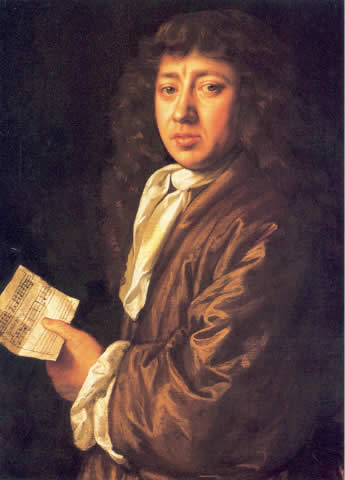
Sunday 10 August 1662
(Lord’s day). Being to dine at my brother's, I walked to St Dunstan's, the church being now finished; and here I heard Dr Bates, who made a most eloquent sermon; and I am sorry I have hitherto had so low an opinion of the man, for I have not heard a neater sermon a great while, and more to my content. So to Tom’s, where Dr Fairebrother, newly come from Cambridge, met me, and Dr Thomas Pepys. I framed myself as pleasant as I could, but my mind was another way. Hither came my uncle Fenner, hearing that I was here, and spoke to me about Pegg Kite's business of her portion, which her husband demands, but I will have nothing to do with it. I believe he has no mind to part with the money out of his hands, but let him do what he will with it. He told me the new service-book (which is now lately come forth) was laid upon their deske at St Sepulchre's for Mr Gouge to read [Thomas Gouge (1605-1681), eminent Presbyterian minister, son of William Gouge DD (lecturer at and afterwards Rector of St Anne’s, Blackfriars). Thomas was vicar of St Sepulchre from 1638 until ejected in 1662]; but he laid it aside, and would not meddle with it: and I perceive the Presbyters do all prepare to give over all against Bartholomew-tide. Mr Herring, being lately turned out at St Bride's, did read the psalm to the people while they sung at Dr Bates’s, which methought is a strange turn. After dinner to St Bride’s, and there heard one Carpenter, an old man, [Richard Carpenter (d c 1670), an Anglican, formerly an Independent and three times joined the Roman church. Author of A new play call’d the pragmatical Jesuit new leven’d (c 1669). ‘A fantastical man that changed his mind with his clothes, and that for his juggles and tricks in matters of religion…was esteemed a theological mountebank” {Wood}] who, they say, hath been a Jesuit priest, and is come over to us; but he preaches very well. So home with Mrs Turner, and there hear that Mr Calamy hath taken his farewell this day of his people, and that others will do so the next Sunday. Mr Turner the draper, I hear, is knighted, made Alderman, and pricked for Sheriffe, with Sir Thomas Bluddel, for the next year, by the King, and so are called with great honour the King’s Sheriffes. Thence walked home, meeting Mr Moore by the way, and he home with me and walked till it was dark in the garden, and so good night, and I to my closet in my office to perfect my Journall and to read my solemn vows, and so to bed.
(Lord’s day). Being to dine at my brother's, I walked to St Dunstan's, the church being now finished; and here I heard Dr Bates, who made a most eloquent sermon; and I am sorry I have hitherto had so low an opinion of the man, for I have not heard a neater sermon a great while, and more to my content. So to Tom’s, where Dr Fairebrother, newly come from Cambridge, met me, and Dr Thomas Pepys. I framed myself as pleasant as I could, but my mind was another way. Hither came my uncle Fenner, hearing that I was here, and spoke to me about Pegg Kite's business of her portion, which her husband demands, but I will have nothing to do with it. I believe he has no mind to part with the money out of his hands, but let him do what he will with it. He told me the new service-book (which is now lately come forth) was laid upon their deske at St Sepulchre's for Mr Gouge to read [Thomas Gouge (1605-1681), eminent Presbyterian minister, son of William Gouge DD (lecturer at and afterwards Rector of St Anne’s, Blackfriars). Thomas was vicar of St Sepulchre from 1638 until ejected in 1662]; but he laid it aside, and would not meddle with it: and I perceive the Presbyters do all prepare to give over all against Bartholomew-tide. Mr Herring, being lately turned out at St Bride's, did read the psalm to the people while they sung at Dr Bates’s, which methought is a strange turn. After dinner to St Bride’s, and there heard one Carpenter, an old man, [Richard Carpenter (d c 1670), an Anglican, formerly an Independent and three times joined the Roman church. Author of A new play call’d the pragmatical Jesuit new leven’d (c 1669). ‘A fantastical man that changed his mind with his clothes, and that for his juggles and tricks in matters of religion…was esteemed a theological mountebank” {Wood}] who, they say, hath been a Jesuit priest, and is come over to us; but he preaches very well. So home with Mrs Turner, and there hear that Mr Calamy hath taken his farewell this day of his people, and that others will do so the next Sunday. Mr Turner the draper, I hear, is knighted, made Alderman, and pricked for Sheriffe, with Sir Thomas Bluddel, for the next year, by the King, and so are called with great honour the King’s Sheriffes. Thence walked home, meeting Mr Moore by the way, and he home with me and walked till it was dark in the garden, and so good night, and I to my closet in my office to perfect my Journall and to read my solemn vows, and so to bed.
Subscribe to:
Posts (Atom)








.jpg/220px-Thomas_Watson_(Puritan).jpg)