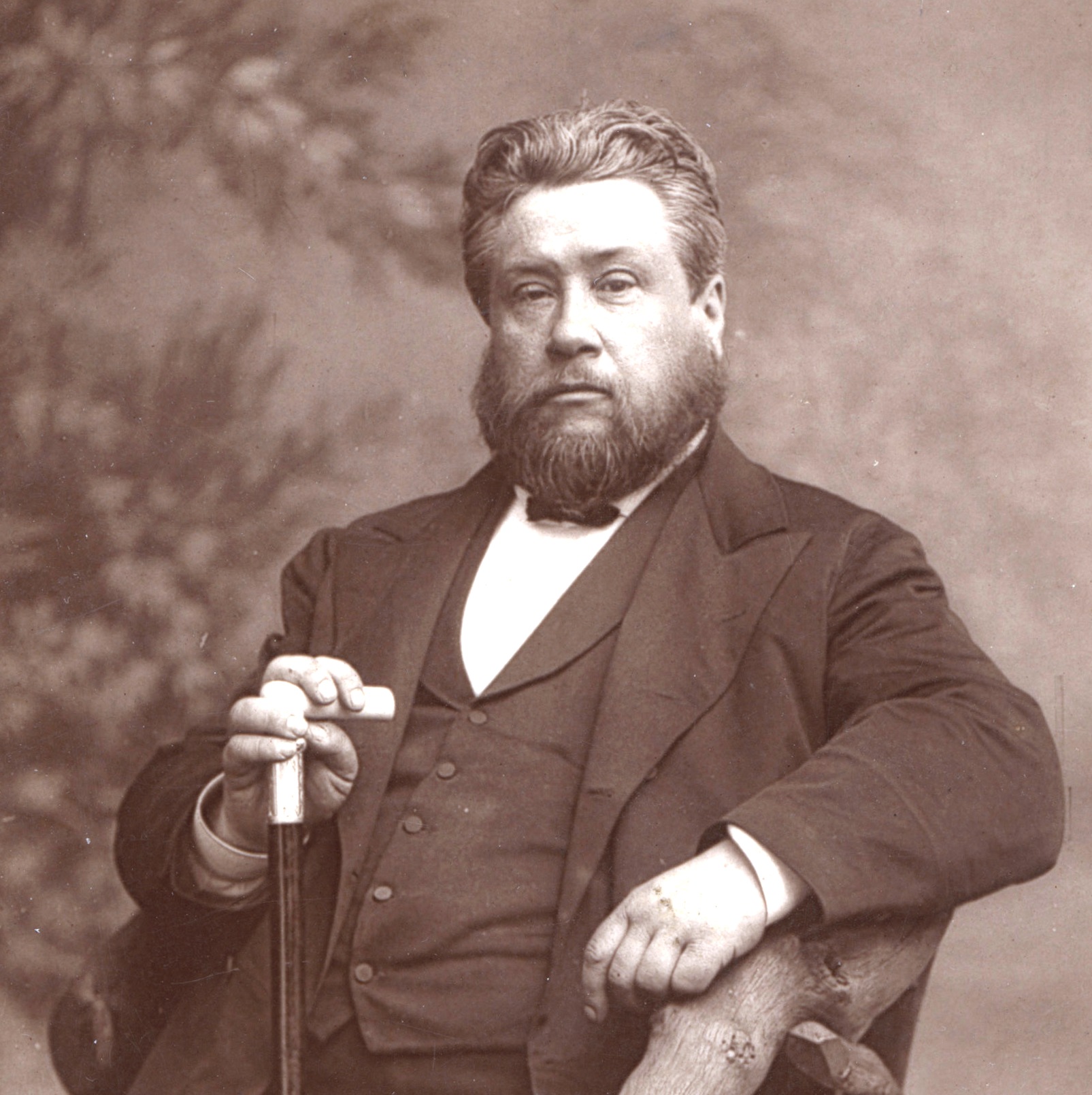
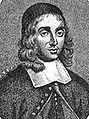
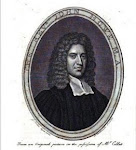
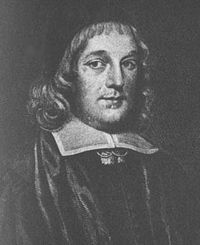
Bridge was a leading English Independent minister and religious and political writer. A native of Cambridgeshire, he was probably born in or around the year 1600. He studied at the Puritan Emmanuel College, Cambridge, receiving an MA in 1626.
Showing posts with label Westminster Assembly. Show all posts
Saturday, 19 April 2025
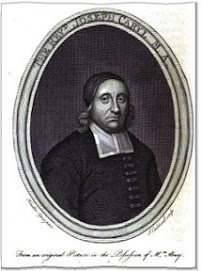
William Bridge c 1600-1670
Bridge was a leading English Independent minister and religious and political writer. A native of Cambridgeshire, he was probably born in or around the year 1600. He studied at the Puritan Emmanuel College, Cambridge, receiving an MA in 1626.
For a short time in 1631, he was a lecturer at Colchester, put in place by Harbottle Grimstone and Robert Rich, second Earl of Warwick; very much against the wishes of Laud, then Bishop of London, who complained of the influence then held by Sibbes and William Gouge, clerical leaders of the Feoffees for Impropriations. From 1637, he lived in Norwich as Rector of St Peter Hungate and St George's, Tombland. He came into conflict with Matthew Wren, Bishop of Norwich for Nonconformity. He went into exile in Rotterdam, taking the position left vacant by Hugh Peters. Charles I of on hearing from Archbishop Laud that Bridge had "gone to Holland", "... rather than [that] he will conform" replied, "Let him go: we are well rid of him."
He returned to Great Yarmouth and became a member of the Westminster Assembly. There he was one of the Five Dissenting Brethren, the small group of leading churchmen who emerged at the head of the Independent faction, opposing the Presbyterian majority, and who composed An Apollegeticall Narration in 1643.
In 1643, he preached before Charles I, making a direct attack on the Queen.
He was Minister at the Old Meeting House Norwich for several years right up until his death.
Works
A Lifting Up for the Downcast
The Wounded Conscience Cured, the Weak One Strengthened and the Doubting Satisfied by Way of Answer to Doctor Ferne (1642)
Ioabs covnsell and King Davids seasonable hearing it (1643), Fast Sermon for February 22
The truth of the times vindicated (1643)
The righteous man's habitation in the time of plague and pestilence: being a brief exposition of the XCI. Psalm (1835)
The refuge: containing the righteous man's habitation in the time of plague and pestilence: being a brief exposition of the 91st Psalm (1832)
The works of the Rev. William Bridge in Five Volumes
A large collected Works of the Rev. William Bridge was published in 1845, and reprinted in 1989 in five hardback volumes by Soli Deo Gloria Publications.
Saturday, 23 October 2021
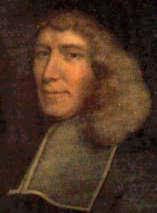
Dr Edmund Staunton 1600-1671
Harding also mentions Edmund Staunton, DD (1600-1671). He began his career in Bushey and for some years preached in West Hertfordshire. Later, as President of Corpus Christi College, Oxford, he suffered ejectment under the Act of Uniformity and withdrew to Rickmansworth. Later he removed to St Albans where he continued to preach “by Stealth, and in face of the penal laws against him.” Dr Staunton was a member of the Westminster Assembly. He died on 15th July 1671 and was buried two days later in the yard of the parish Church at Bovingdon.
A much fuller biographical note and other information can be found here.
Saturday, 4 March 2017
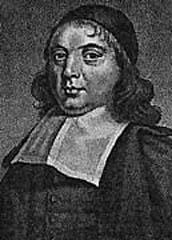
Westminster Divine Simeon Ashe died 1662
Simeon Ashe was educated at the Puritan Emmanuel College, Cambridge. He began his career as a minister in Staffordshire, but was ejected from his living on account of his refusal to read the Book of Sports and to conform to other ceremonies. On his dismissal Sir John Burgoyne befriended him and allowed him the use of an 'exempt' church at Wroxhall; and he was afterwards under the protection of Robert Greville, 2nd Baron Brooke. He was a regular Sunday preacher at Warwick Castle, and a friend of the minister Thomas Dugard (brother of William, father of Samuel Dugard).
When the First English Civil War broke out, he became chaplain to the Earl of Manchester. At the close of the war he received the living of St. Austin, and was also one of the Cornhill lecturers. He was nominated to the Westminster assembly after the death in 1643 of Josias Shute. Although he had joined the side of the parliament, Ashe was strongly opposed to the Cromwellians; and when the time was ripe for the English Restoration he was among the divines who went to Breda to meet Charles II. He died a few days before the passing of the Act of Uniformity, and was buried on 24 August 1662. Had he lived to see the passing of the act, he would have vacated his living and so should be counted among the ejected.
Ashe was a man of some property, and while he held the living of St. Austin, his house was always open to his clerical brethren. Walker charges him with exercising severity against the conforming clergy.
His works - In 1644 he joined with William Goode, another chaplain of the Earl of Manchester, in writing a pamphlet entitled A particular Relation of the most Remarkable Occurrences from the United Forces in the North. This was followed by another pamphlet, for which Ashe alone was responsible, entitled A True Relation of the most Chiefe Occurrences at and since the late Battell at Newbery. The writer's object in both cases was to vindicate the conduct of his patron. In John Vicars's Parliamentary Chronicle there is a letter of his, describing the proceedings of the Earl of Manchester in reducing several garrisons after the battle of Marston Moor.
Ashe was the author of sermons, including
'A Sermon on Ps. ix. 9,' preached before the House of Commons on 30 March 1642
'A Sermon before the House of Lords,' 26 Feb. 1644
'A Funeral Sermon on the Death of the Countess of Manchester,' 12 Oct. 1658, etc.
He also edited some treatises of John Ball, John Brinsley, Ralph Robinson, and others.
Monday, 4 July 2016
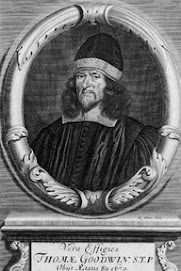
Westminster Divine Richard Byfield c 1598-1664
Richard Byfield (1598?–1664) a Sabbatarian controversialist, a member of the Westminster Assembly and an ejected minister was 16 years of age in 1615 and 67 at his death in December 1664; he was probably born in 1598. He was a son of Richard Byfield by his second wife. Nicholas Byfield was his elder half-brother. Richard Senior became vicar of Stratford-on-Avon in January 1597, so it is reasonable to conclude that, like his elder half-brother, Richard Junior was a Warwickshire man, though his baptism is not to be found in the Stratford-on-Avon register.
In Michaelmas term 1615 he was entered either as servitor or batler at The Queen's College, Oxford. He graduated B.A. 19 October 1619, and M.A. 29 October 1622.
He was curate or lecturer at Isleworth, probably during his brother's incumbency (i.e. before 8 September 1622), and had some other minor employments before being presented in 1627 by Sir Thomas Evelyn to the rectory of Long Ditton, Surrey. He sat in the Westminster Assembly, but was not one of the divines nominated in the original ordinance of 12 June 1643, being appointed, perhaps through the influence of his nephew Adoniram Byfield, to fill the vacancy caused by the 1645 death of Daniel Featley.
During the protectorate he quarreled with Sir John Evelyn, his patron, about the reparation of the church, and Edmund Calamy recounts their amicable reconciliation through the intervention of Cromwell. In 1654 he was appointed one of the assistant commissioners for Surrey, under the ordinance of 29 June for the ejection of scandalous, etc, ministers and schoolmasters.
He wrote a commendation of John Owen's famous work Death of death in Christ.
He held his rectory, with a high character for personal piety and zeal in the ministry until ejection in 1662. At his ejection he was the oldest minister in Surrey, i.e. probably in seniority of appointment, for he was not an old man. Leaving Long Ditton, he retired to Mortlake, where he was in the habit of preaching twice every Sunday in his own family, and did so the very Sunday before his death. He died suddenly in December 1664, and was buried in Mortlake church.
He wrote a commendation of John Owen's famous work Death of death in Christ.
He held his rectory, with a high character for personal piety and zeal in the ministry until ejection in 1662. At his ejection he was the oldest minister in Surrey, i.e. probably in seniority of appointment, for he was not an old man. Leaving Long Ditton, he retired to Mortlake, where he was in the habit of preaching twice every Sunday in his own family, and did so the very Sunday before his death. He died suddenly in December 1664, and was buried in Mortlake church.
Works
Some of the works of his brother Nicholas have been assigned to Richard; he edited a few of them. His own works are:
'The Light of Faith and Way of Holiness,' 1630.
'The Doctrine of the Sabbath Vindicated, in Confutation of a Treatise of the Sabbath written by Mr. Edward Brerewood against Mr. Nicholas Byfield,' 1631. Byfield attacks the spelling 'Sabaoth' adopted by Edward Brerewood.
'A Brief Answer to a lae Treatise of the Sabbath Day,' 1636? (given to Byfield by Peter Heylin, in The History of the Sabbath,' 2nd edit. 1636; it was in reply to A Treatise of the Sabbath Day etc, 1635, by Francis White, who rejoined in An Examination and Confutation, etc, 1637).
'The Power of the Christ of God,' etc, 1641
'Zion's Answer to the Nation's Ambassadors,' etc, 1645 (fast sermon before the House of Commons on 25 June, from Is. xiv. 32)
'Temple Defilers defiled,' 1645 (two sermons at Kingston upon Thames from 1 Cor. iii. 17; reissued with new title-page 'A short Treatise describing the true Church of Christ,' etc, 1653, directed against schism, anabaptism and libertinism)
'A message sent from ... Scotland to ... the Prince of Wales,' 1648 (letter from Byfield)
'The Gospel's Glory without prejudice to the Law,' etc, 1659 (an exposition of Rom. viii. 3, 4)
'The real Way to good Works: a Treatise of Charity.'
Tuesday, 26 August 2014
Hetherington on the Great Ejection
In Hetherington's History of the Westminster Assembly he says
Upon the death of Cromwell, he was succeeded by his son Richard, a man of an amiable character, but utterly unfit to conduct the government of the country in such a time of storm and peril. A plot was formed against him by a part of the army, headed by Fleetwood and Desborough, to whom the leading Independent divines, especially Mr Nye and his party, lent their ready assistance. Richard was persuaded to dissolve the Parliament; Fleetwood and Desborough, and their party, immediately summoned the Rump of the Long Parliament to reassemble, and Richard seeing it impossible to maintain his power without another civil war, and being destitute of military talents, resolved to abdicate his authority, and retire to private life. A new series of dark intrigues followed, in which General Monk acted a prominent part, the issue of which was, the restoration of Charles II on the 29th of May 1660. In consequence of the mutual jealousies of the various parties, the king was restored without conditions of any kind; and thus the liberties, both civil and religious, of the kingdom, in defence of which so much blood had been shed, and so many miseries endured, were laid at his feet. The Prelatic hierarchy were immediately restored to the possession of all their rank, wealth, and power, and speedily proved that the persecuting spirit of Prelacy had sustained no abatement.
For a short time the king affected to treat the Presbyterian ministers with respect and kindness; and they were encouraged to hope, that although Prelacy was restored to its former supremacy, yet some modification of it might be made to which it might be possible to conform. After some consultation among themselves, they presented to his majesty a petition expressing their desires for such alterations as might lead to an accommodation and agreement in an amended and modified Episcopacy. This petition was communicated to the Prelates, who returned such an answer as greatly to obscure all prospect of any accommodation. But as matters were not yet ripe for what was intended, the king issued a declaration concerning ecclesiastical affairs, containing so many plausible statements, that the hopes of the Presbyterians were somewhat revived. At length it was arranged that a conference should be held at the Savoy, between twelve bishops and nine assistants on the part of the Episcopalian Church, and an equal number of ministers on the part of the Presbyterians. The first meeting of this conference took place on the 15th of April 1661, and it was continued, with intermissions, till the 25th of July, when it expired without producing the slightest approximation towards an agreement, the bishops refusing to make any alterations in the Book of Common Prayer, to which their discussions were limited, or to make any concession to the conscientious scruples, or more grave and solid arguments, of the Presbyterian ministers.
A convocation was held soon after the termination of the conference, in which a few alterations were made in the Prayer-Book, not all for the better; and the proceedings of the convocation were ratified by both Houses of Parliament. It now remained to enforce the Prelatic system by the strong hand of legislative power. This was done by the Act of Uniformity, which, after passing both Houses, by small majorities, received the royal assent on the 19th of May 1662, and was to take effect from the 24th of August following. The terms of conformity specified by this act were:
1. Re-ordination, if they had not been episcopally ordained.2. A declaration of unfeigned assent and consent to all and every thing prescribed and contained in the Book of Common Prayer, and administration of sacraments and other rites and ceremonies of the Church of England, together with the psalter, and the form and manner of making, ordaining, and consecrating of bishops, priests, and deacons.3. To take the oath of canonical obedience.4. To abjure the Solemn League and Covenant.5. To abjure the lawfulness of taking arms against the king, or any commissioned by him, on any pretence whatsoever.
Such were the terms of the infamous and tyrannical Act of Uniformity, which was to come into force on what is termed the Feast of St. Bartholomew; and the penalty for any one who should refuse, was deprivation of all his spiritual promotions. The result was, that when the fatal St. Bartholomew’s day arrived, about two thousand Presbyterians relinquished all their ecclesiastical preferments, abandoned all their worldly means of subsistence, left their homes, and more painful than all, their churches and their weeping and heart-stricken flocks, and became literally strangers and pilgrims in their native country, like their Divine Master, not having where to lay their heads. In their day of power, when ejecting Episcopalian ministers convicted of scandalous offenses or of ignorance, they had allowed to these men a fifth part of their former livings; but no similar mercy or charity was shown to them. They were at once driven and abandoned to utter poverty and homelessness; and to grievous wrong was added not less grievous insult, in the cruel and contumelious treatment which they received from their proud and pitiless oppressors. Yet in one respect the day of St. Bartholomew was a glorious day. It testified to a wondering world the strength and the integrity of Presbyterian principles, in their triumph over every earthly influence; or rather, let us say, it proved that the essential spirit of the Presbyterian Church is the spirit of Christianity itself, and therefore it received divine strength in the day of sore trial, that it might finish its testimony in behalf of the sole sovereignty of Christ over his own spiritual kingdom, to the laws and institutions of which man has no right to add, and which he cannot without sin diminish. Yes, for the Presbyterian Church, and even for the Westminster Assembly, by which that Church had been introduced into England, it was a glorious day. But what was it for Prelacy? A day of everlasting infamy, stamping upon its character indelibly the charge, proved by so many repeated facts, of being essentially A PERSECUTING SYSTEM.
But it is equally unnecessary and ungracious to dwell on the detailed results of this tyrannical and persecuting act; and therefore, with a few incidental remarks of some general importance, we shall pass from the painful subject. It must have been observed, that the religious body once known by the name of Puritans, became Presbyterians both in principles and practice, partly before, and thoroughly during the time of the Westminster Assembly. Against them, accordingly, as Presbyterians, was the force of persecution directed, although the demands and the penalties of the Act of Uniformity were equally applicable to the Independents and all other sects of Dissenters; and of the whole two thousand who were ejected by that act, above nine-tenths were Presbyterians. The Independents did not, at that time, number more than an hundred churches in their communion; the Baptists were still fewer; and of the other sects, the greater part had only those lay preachers who had sprung up during the enthusiastic times of the civil war. Of the divines who had constituted the Westminster Assembly, not more than six, or, in strict propriety, only four, conformed. About thirty of them were dead before the act came into operation, some of them very close upon the time, and one or two almost immediately after preaching what would have proved by persecution, as they did by death, their farewell sermons. The names of the six who are stated to have conformed were, Drs Conant, Wallis, Reynolds, and Lightfoot, and Messrs Heyrick and Hodges. But of these Dr Conant at first refused to conform, was ejected, and continued so for a period of eight years, when the persuasion of relatives prevailed on him to comply, and he was appointed to a ministerial charge in Northampton, and subsequently obtained other preferments; and Dr Wallis, who had been one of the scribes to the Westminster Assembly, was made Savilian Professor of Geometry at Oxford, in the year 1649 – an office which in a great measure excluded him from ecclesiastical affairs, and rendered the act of conformity to him little different from a university qualification. It thus appears, that almost the entire surviving members of the Westminster Assembly gave to the principles which they had then declared and advocated the strong and clear testimony of suffering in their defence.
Subscribe to:
Posts (Atom)