To add iniquity to iniquity, the conventicle act was passed, decreeing, that if any person, above the age of sixteen years be present at any meeting for worship, different from the church of England, where there shall be five persons more than the household, they shall, for the first offence, suffer three months imprisonment, or pay five pounds ; for the second, the punishment is doubled; and for the third, they shall be banished to America, or pay a hundred pounds; and if they return from banishment, suffer death (Burnet p. 204). The oath of an informer was sufficient to inflict all the severity of this statute of Draco. While many of the best of men filled our jails, the vilest of the human race rioted in debauchery by informing, for the sake of the reward.
A most dreadful plague visited this aceld'ama of persecution, and while some of the conforming ministers faithfully stood by their flocks, the greater part of them fled, as the hireling when he seeth the wolf; so that the non-conformists seized this opportunity of preaching to the multitudes who, while on the brink of the grave, were left as sheep without a shepherd. But as no revenge could satisfy, so no judgments could alarm the high party; for they now introduced an act to restrain non-conformists from inhabiting corporations. An oath of passive obedience, and non-resistance* was enacted; and all who refused it, were prohibited from coming within five miles of any corporate town where they formerly preached; or from keeping schools, or taking boarders, under a penalty of forty pounds. Thus, though they were not actually burnt alive, they were intentionally starved to death. But while earth and hell were against them, heaven appeared in their behalf. During twenty-eight years of sufferings, their enemies were never gratified by any resistance nor was any of them in prison for debt. Scarcely Elijah himself was fed more immediately from heaven.*
The king, at length, began to complain aloud of the bishops and conforming clergy,* who increased the numbers of dissenters by their conduct, which the people could not help contrasting with that of the ejected ministers. Hence a scheme for toleration was now talked of; but though it was cherished by the moderate divines of the establishment, it roused such opposition from the bigots*, that the non-conformists were left to all the fury of renewed persecution. A paper war fanned the flames of hatred and bigotry. Ralph Willis, called the cobbler of Gloucester, published an account of the scandalous lives of many of the conforming clergy. Samuel Parker, afterwards bishop of Oxford, was the champion for the hierarchy; but he was answered by Andrew Marvel, the pasquin of his age, whose lively wit effected more than all the learning of Dr Owen's grave replies; so that his book afforded merriment to all ranks and parties, from the king and his mistresses, down to the lowest of the populace.
The act against conventicles, was renewed with additional severity*; denying to the sufferers the protection of trial by jury; exposing them to conviction on the oath of a single informer, who was rewarded by a third of the exorbitant fine; while the laws were always to be interpreted against mercy and the non-conformists.
Volumes could not contain a complete history of the sufferings of these men, whose souls, from beneath the altar of God, cry, "how long, Lord, holy, just, and true?" At length, to accomplish the design of favouring the papists, and establish the king's prerogative to dispense with the laws, a declaration of indulgence was published by his majesty, suspending all the penal laws against dissenters,and allowing them to meet in places of worship licensed by the king. The high-church clergy were dreadfully alarmed, and severely condemned the dissenters for using the liberty of which they had been unjustly deprived.*
*Warner, vol. II. p. 604. Warner, p. 612.
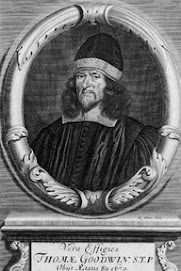
*The righteous governor of the world sent fire as well as plague, so that-eighty-nine parish churches in London, together with St Paul's cathedral, were burnt down. Some temporary places were erected with boards, where, as well as in their own abodes, the non-conformists preached. They were called tabernacles; a name which has been since familiar among those who worship apart from the establishment. Drs. Owen and Goodwin, with other independent ministers, adopted this practice, so that many of the citizens of London flocked to the places where the liturgy was not used.
*Pierce, p. 240. Warner, vol. II. p. 611, 615.
*Warner, p. 615.
*To the honour of bishop Williams it should be recorded, that he argued against this infamous act, though the king had requested him not to speak against it, or to stay away from the house while it was debated. He told his majesty that, as an Englishman and a senator he was bound to speak his mind.
*Dr. Calamy being present at his late parish of Aldermanbury, London, was invited to preach, as the person expected did not cornet For complying he was thrown into Newgate; but there was such a resort of persons of distinction to visit him, that it was thought prudent, after a few days, to restore him to liberty.
*At this time was passed the Test Act, of which we shall speak intirely in the words of Dr. Warner, the clergyman to whose history so frequent reference is made in the progress of this work. " Whatever the dissenters might at first think of the indulgence, they saw now that they were only to be tools to advance the Romish religion, etc, etc"









.jpg/220px-Thomas_Watson_(Puritan).jpg)