Showing posts with label books. Show all posts

Thursday, 7 August 2014

Book on The Great Ejectment of 1662

Somehow I seem to have missed giving notice of the book The Great Ejectment of 1662: Its Antecedents, Aftermath, and Ecumenical Significance.
Amazon gives this synopsis:
By Bartholomew's Day, 24 August, 1662, all ministers and schoolmasters in England and Wales were required by the Act of Uniformity to have given their "unfeigned assent and consent" to the Book of Common Prayer of the Church of England. On theological grounds nearly two thousand ministers - approximately one fifth of the clergy of the Church of England - refused to comply and thereby forfeited their livings.
This book has been written to commemorate the 350th Anniversary of the Great Ejectment.
In Part One three early modern historians provide accounts of the antecedents and aftermath of the ejectment in England and Wales, while in Part Two the case is advanced that the negative responses of the ejected ministers to the legal requirements of the Act of Uniformity were rooted in positive doctrinal convictions that are of continuing ecumenical significance.
Endorsements:
"Notwithstanding the need to revise judgment on many events in the seventeenth century, the Great Ejectment of 1662 remains a significant dividing of the ways in the history of British Christianity, deserving the penetrating analysis that Alan Sell and his colleagues provide, for what was designed to secure an Anglican monopoly in national life, in the event confirmed a large part of the nation in its Nonconformity, thereby giving birth to Britain's unique form of Christian pluralism."
- John H. Y. Briggs Professor Emeritus, University of Birmingham Director Emeritus of the Baptist History and Heritage Centre, Regent's Park College, University of Oxford Author of The English Baptists of the Nineteenth Century (1994)
"Broad and deep, like the Dissenting tradition it surveys, this book is a valuable compendium of information and a clear-sighted, generous account of the historical significance of 'Black Bartholomew' for the history of English and Welsh Protestantism over three hundred and fifty years."
- John Spurr Professor and Head of the College of Arts and Humanities, Swansea University Author of The Post-Reformation: Religion, Society, Politics and Britain, 1603-1714 (2006)
Editor Biography:
Alan P. F. Sell, a philosopher-theologian and ecumenist, is employed in research, writing, and lecturing in the United Kingdom and abroad. He has held academic posts in England, Canada, and Wales, and ecclesiastical posts in England and Geneva. He is the author or editor of over thirty books, of which the most recent are Convinced, Concise and Christian: The Thought of Huw Parri Owen (Pickwick, 2012) and Christ and Controversy: The Person of Christ in Nonconformist Thought and Ecclesial Experience (Pickwick, 2012).

Wednesday, 25 September 2013

Review of the book in Evangelical Times October 2013

The Great EjectionGary Brady
EP Books, 176 pages, £8.99
ISBN: 978-0-85234-802-4
Star Rating : *****
 
Who governs the church, Jesus Christ or the state? In practical terms, what determines the doctrine and practice of the church? Is it the Bible or is it public opinion? Throughout the long history of the church, Christians have had to face and answer such questions. Once again they have been thrown up by the debate about the nature and character of marriage. It is good to be able to consider the way in which our fathers approached such issues. The record of the legislation of 1660-1662 and its aftermath provides us with such an opportunity. The year 2012 was the 350th anniversary of what has become known as the ‘Great Ejection’, when almost 2000 Puritan pastors and their flocks were forced out of the Church of England because they were unable to submit to unbiblical conditions of service. The theses included acceptance of the divine right and authority of diocesan bishops and an allegiance to the Prayer Book in terms which could only be given to the Bible. Hundreds of men, unable to bow to parliament’s decisions on these issues, were deprived of their charges and compelled to accept the prospect of poverty in a social and political wilderness. Gary Brady has given us a fine account of these events. He explains the issues and discusses the reasons why Puritans, who had only recently seemed so secure in their ministries, were suddenly plunged into a crisis of conscience after 1660. The story moves from the high politics of Charles II’s reign to the very human story of the sacrifices and triumphs of hundreds of Christian people. Lists of excluded ministers are included and may be useful for reference purposes, but the great value is the inspiring way in which the experiences of local churches and their members and ministers are described. This inspiring record should be widely read and studied by Christians today. It is very highly recommended.
Robert W. Oliver

Saturday, 24 August 2013

Anniversary 2013

And so the anniversary comes round once again. Understandably, this year the date is marked in a more low key way. Last year, among other things, there was the well attended study day on March 27, at the Evangelical Library, North London. The speakers were Garry Williams on 1662 and its immediate aftermath, Gary Brady on 1662 and the men who were ejected and Robert Oliver on 1689 and the toleration of dissent. A panel discussion closed the day considering 1662 and dissent today. The papers have been published in the Library magazine In writing. We will seek to make the papers available on the Library website soon. I'm afraid I haven't made much headway with Raymond Brown's book yet. I notice that Peter Adam's St Antholin lecture is in print. See here.

Tuesday, 9 July 2013

Sermons on the Great Ejection

GoodBookStall Review:
The Act of Uniformity of 1662 prescribed that any minister in England who refused to conform to the Book of Common Prayer by 14th August 1662 would be ejected from the Church of England. Over 2,000 evangelical ministers left their livings rather than conform to what they saw as extra-Biblical rules and regulations. It was a sad day for the Church of England from which many think the Church never recovered.
This book is not the history of that tragic event but rather gives us an insight into the kind of men who were affected. The book consists of brief biographies and the last sermons by seven men who chose to leave their flock. At the end there is a fascinating catechism which gives us the Biblical reasons why so many felt compelled to resign. First published in 1662 and 1663 the text has been updated into modern English.
Here we see Puritan preaching at is best: Biblical exposition, lively illustrations and pastoral application. Not surprisingly there is a great deal of parting counsel which could be summed up by the phrase "Stand firm in the faith". For these men truth and holiness rightly came before conformity and unity.
Any Christian who is grappling with the issue of whether unity is more important than truth would do well to read this book, especially the catechism. Any minister who is about to preach his last sermon to a congregation will find many stimulating ideas here. All Christians who desire to feed their soul will not be disappointed – this is a spiritual feast.
If you have never read any Puritan books this is a good place to start – you will find these sermons readable, challenging and edifying.
Alan Hill

Thursday, 20 September 2012

Radio broadcast due

You may be interested to know that I did an interview about the new book on 1662 recently and it is scheduled to be broadcast next Thursday, Sept. 27 at 2:30am; 12:30pm and 9:30pm PDT (BST is 8 hours ahead) on "His People" over the Pilgrim Radio Network and at pilgrimradio.com here.

Thursday, 6 September 2012

The new book

The Book is out

The book is now out. It is 165 pages in length and is retailing at the moment at the bargain price of £7.64. Evangelical Press have done us proud. Do get your copy asap. 

Spirituality in Adversity

Raymond Brown's new book Spirituality in Adversity. English Nonconformity in a Period of Repression, 1660-1689 is now out from Paternoster.
Paternoster say
Spirituality in Adversity demonstrates through a specific historical period of persecution the fortitude and faith of evangelical men and women as they face unspeakable hardship in the name of Christ. This exhaustive masterpiece traces the period of the repression in the seventeenth century, analysing the persecution and its aftermath. The unique feature of this scholarly and very readable work is that it examines the way those persecuted responded to hardship their faith, their worship, their perseverance. With marvellous warmth Raymond Brown shows us the spirituality of these men and women a spirituality centred on Jesus Christ and the Father s love, even in such times. ...
This is is a remarkable book by any standards - scholarly and pastoral, meticulous and heart-warming. A significant masterpiece on the faith, worship, perseverance of remarkable men and women.
The unique feature of this scholarly and very readable work is that it examines the way those persecuted responded to hardship: their faith, their worship, their perseverance. With marvellous warmth Raymond Brown shows us the spirituality of these men and women- spirituality centred on Jesus Christ and the Father's love, even in such times.
They add these quotes:
"Brown dives into the writings of those persecuted and demonstrates the rich theology that could only be written with such depth by those who lived in suffering and found God faithful and satisfying. I highly recommend this book to scholars as well as common sufferers looking for solace in God."
Larry Siekawitch, pastor and author of Balancing Head and Heart in Seventeenth Century Puritanism
"At a time when Evangelicals interested in the study of spirituality often overlook the immense resources of their own antecedents, I hope that this book will help to redress the balance."
Timothy Grass, church historian, author and associate editor for the Ecclesiastical History Society                           
"Raymond Brown's research - the fruit of a lifetime of study - reveals how suffering forged a deep spirituality." Derek Tidball
See here and here
Details

  • Paperback: 375 pages
  • Publisher: Authentic Media (13 July 2012)
  • Language: English
  • ISBN-10: 1842277855
  • ISBN-13: 978-1842277850
  • Wednesday, 29 August 2012

    Third Way Link

    I found this here

    On this 350th anniversary of the Great Ejection, when the Puritans were ejected from the Church of England, I pulled down a volume of Thomas Manton, the ejected rector of St. Paul’s, Covent Garden.
    Of his influence, the First Bishop of Liverpool J.C. Ryle wrote, “If ever there was an English divine who must be classed as a Puritan, that man is Manton…his works, like the Pilgrim’s Progress deserve the attention of all true Christians…As an expositor of Scripture I regard Manton with unmingled admiration. Here, at any rate, he is facile princeps [easily first] among the divines of the Puritan school… In days like these [Ryle wrote in 1870], I am thankful that the publishers of Manton’s Works have boldly come forward to offer real literary gold to the reading public.”
    Dr William Bates preached his funeral sermon. I found it in volume 22. When we read how he described his departed friend, we understand why Ryle wrote what he did and how it was reported that Bates would weep whenever he spoke of Manton for some years after his friend’s death. At the same time, the description below provides us with a powerful depiction of a true preacher and true preaching.
    His name is worthy of precious and eternal memory. God had furnished him with a rare union of those parts which are requisite to form an eminent minister of his word. A clear judgment, a rich fancy, a strong memory, and happy elocution met in him; and were excellently improved by his diligent study. In preaching the word he was of conspicuous eminence; and none could detract from him, but from ignorance or envy. He was endowed with an extraordinary knowledge of the scripture; and in his preaching, gave such perspicuous accounts of the order and dependence of divine truths, and with that felicity applied the scripture to confirm them, that every subject, by his management, was cultivated and improved. His discourses were so clear and convincing, that none, without offering violence to conscience, could resist their evidence; and from hence they were effectual, not only to inspire a sudden flame, and raise a short commotion in the affections, but to make a lasting change in the life.
    His doctrine was uncorrupt and pure; the truth according to godliness. He was far from the guilty, vile intention to prostitute the sacred ordinances for acquiring any private secular advantage; neither did he entertain his hearers with impertinent subtleties, empty notions, intricate disputes, dry and barren, without productive virtue; but as one who always had in his eye the great end of his ministry, the glory of God, and the salvation of men. His sermons were directed to open their eyes, that they might see their wretched condition as sinners, to hasten their flight from the wrath to come, and make them humbly, and thankfully, and entirely receive Christ as their Prince and all-sufficient Saviour; and to build up the converted in their holy faith, and more excellent love, which is the “fulfilling of the law:” in short, to make true Christians eminent in knowledge and universal obedience.
    And as the matter of his sermons was designed for the good of souls, so his way of expression was proper for that end. His style was not exquisitely studied, not consisting of harmonious periods, but far distant from vulgar meanness. His expression was natural and free, clear and eloquent, quick and powerful; without any spice of folly; and always suitable to the simplicity and majesty of divine truth. His sermons afforded substantial food with delight, so that a fastidious mind could not disrelish them. He abhorred a vain ostentation of wit in handling sacred truths, so venerable and grave, and of eternal consequence. His fervour and earnestness in preaching was such as might soften and make pliant the most stubborn and obstinate spirit. I am not speaking of one whose talent was only voice, who laboured in the pulpit as if the end of preaching were the exercise of the body, and not for the profit of souls.
    But this man of God was inflamed with holy zeal, and from thence such expressions broke forth as were capable of procuring attention and consent in his hearers. He spake as one who had a living faith within him of divine truth. From this union of zeal with his knowledge, he was excellently qualified to convince and convert souls. His unparalleled assiduity in preaching declared him very sensible of those dear and strong obligations which lie upon ministers to be very diligent in that blessed work. This faithful minister abounded in the work of the Lord; and, which is truly admirable, though so frequent in preaching, yet was always superior to others, and equal to himself, He was no fomentor of faction, but studious of the public tranquillity; he knew what a blessing peace is, and wisely foresaw the pernicious consequences which attend divisions.
    Consider him as a Christian, his life was answerable to his doctrine. This servant of God was like a fruitful tree, which produces in the branches what it contains in the root. His inward grace was made visible in a conversation becoming the gospel. His resolute contempt of the world secured him from being wrought upon by those motives which tempt low spirits from their duty. He would not rashly throw himself into troubles, nor, spreta conscientia [disdaining conscience], avoid them. His generous constancy of mind in resisting the current of popular humour, declared his loyalty to his divine Master. His charity was eminent in procuring supplies for others, when in mean circumstances himself. But he had great experience of God’s fatherly provision, to which his filial confidence was correspondent.
    I shall finish my character of him by observing his humility. He was deeply affected with the sense of his frailty and unworthiness. He considered the infinite purity of God, and the perfection of his law, the rule of duty; and by that humbling light discovered his manifold defects. He expressed his thoughts to me a little before his death. “If the holy prophets were under strong impressions of fear upon extraordinary discoveries of the divine presence, how shall we poor creatures appear before the holy and dreadful Majesty? It is infinitely terrible to appear before God, the Judge of all, without the protection of the blood of sprinkling, which speaketh better things than that of Abel.” This alone relieved him, and supported his hopes. Though his labours were abundant, yet he knew that the work of God, passing through our hands is so blemished, that without appealing to pardoning mercy and grace, we cannot stand in judgment.
    1662 may have been a significant year for the Book of Common Prayer. It was not, however, a good year for those to whom the gospel and a good conscience were more precious than the institutional church. May God grant to his church more such men and ministers today!

    Reformed Reader Link

    I found this here
    In August of 1662 around 2,000 ministers left the national church of England for the sake of conscience (they were called the non-conformists).  You’ll have to read about this significant church history event elsewhere since I simply want to point out a few prayers of repentance that two pastors prayed the last Sunday of their parish ministry in the English state church.  The pastors were Edmund Calamy (d. 1666) and Thomas Watson (d. 1686).  Here are excerpts from their prayers.  Notice the depth of their repentance and confession of sin.
    “We confess we have forfeited all our mercies; we have heard much of God, Christ, and heaven with our ears, but there is little of God, Christ, and heaven in our hearts.  We confess, many of us by hearing sermons, are sermon-proof; we know how to scoff and mock at sermons, but we know not how to live sermons” (Calamy).
    “We have sinned presumptuously against the clearest light and dearest love; always have we sinned.  …Thou hast shown mercy to us, but the better thou hast been to us, the worse we have been to thee.  Thou hast loaded us with thy mercies, and we have wearied thee with our sins.  When we look into ourselves, oh, the poison of our natures!  …By our spiritual leprosy we infect our holy things.  Our prayers need pardon and our tears need the blood of sprinkling to wash them.  …We confess we are untuned and unstrung for every holy action; we are never out of tune to sin but always out of tune to pray.  We give the world our main affections and our strong desires…there is not that reverence, nor that devotion, nor that activeness of faith that there should be. …Oh, humble us for our unkindness, and for Christ’s sake blot out our transgressions; they are more than we can number, but not more than [thou canst] pardon” (Watson).
    When these types of deep, heart-felt prayers of repentance and confession are spoken in private and in the pulpit, the Christian church is strengthened.  We shouldn’t balk at the intensity of confession here, we should likewise say and expound upon the words that arose from the beaten-breast of the tax collector: “Lord, have mercy on me, a sinner” (Lk. 18:13; cf. Neh. 9:1ff).
    The above prayer excerpts are found in this new revised edition of the Sermons of the Great Ejection (Edinburgh: Banner of Truth, 2012).
    shane lems

    Monday, 30 July 2012

    Banner of Truth Trust

    This is the cover of the Banner of Truth magazine for August. The cover is flagging up the reissue of a small book of farewell sermons originally published by Banner back in 1962 and includes introductory material from the book by Iain Murray, which includes biographical material on the seven preachers. The book's contents are as follows:


    Introduction
    Edmund Calamy Trembling for the Ark of God (1 Sam. 4:13)
    Thomas Brooks A Pastor’s Legacies
    John Collins Contending for the Faith (Jude 3)
    Thomas Lye A Pastor’s Love for His People (Phil. 4:1) Stand Fast in the Lord (Phil. 4:1)
    Thomas Watson Weal to the Righteous but Woe to the Wicked (Isa. 3:10, 11) Parting Counsels (2 Cor. 7:1)
    John Oldfield Stumbling at the Sufferings of the Godly (Psa. 69:6)
    John Whitlock Remember, Hold Fast and Repent (Rev. 3:3)
    The Nonconformist’s Catechism

    Friday, 23 September 2011

    Farewell Sermons Contents

    The Contents of the Farewell Sermons volume from SDG

    1- Edmund Calamy - Sermon from 2nd Samuel 24:14 "Let us Fall into the Hand of the Lord"

    2- Thomas Manton - Sermon from Hebrews 12:1 - "The people of God that have such a multitude of examples of holy men and women set before them, should prepare themselves to run the spiritual race with more patience and cheerfulness."

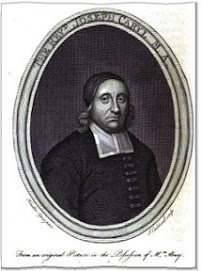
    3- Joseph Caryl - Sermon from Revelation 3:4 - "In which encouragement I told you we might consider two things, or take it into two parts. First, " That they should walk with Christ." Secondly, " They should walk in white."

    4- Thomas Case - Sermon on Revelation 2:5 - "CHRIST here prescribes precious physic for the healing of this languishing church of Ephesus; it is compounded of a threefold ingredient: 1. Self-reflection, " Remember from," &c. 2. Holy contrition and humiliation before the Lord, " Repent." 3. Thorough reformation, " Do thy first works."

    5- William Jenkyn - Morning Sermon on Hebrews 11:38 - "The apostle in this excellent chapter, (that by some is deservedly called a little book of martyrs) discovers the triumph of faith, or victory against all difficulty we meet with."

    6- William Jenkyn - Afternoon Sermon on Exodus 3:2-5 - "First then, for explanation, I shall here endeavour to open these two things to you: first, what it is for a place to be holy, or wherein the nature of the holiness of the places consists ; secondly, what that is, that is the foundation or cause of the holiness of places; and both these must in our discourse, and likewise apprehension, be accurately distinguished."

    7- Richard Baxter - Sermon on Colossians 2:6,7 - "Omitting the division, and in part the opening of the words, the observation is ; - " That those that have received Christ Jesus the Lord, must accordingly be rooted, built Up in him, and established in the faith; and walk in him as they have been taught, and abound therein with thanksgiving."

    8- Thomas Jacombe - Morning Sermon on John 8:29 - The observation I intend to speak to, shall be this: They that please God, and endeavour always to do the things that please God, such God will be with; such the Father will not leave alone; especially in times of suffering and trouble, for I will bring it to that case.

    9- Thomas Jacombe - Afternoon Sermon on John 8:29 - Let me endeavour to prevail with every one of you, so to carry yourselves in your several places and capacities, that whatever you do, you may please God.

    10- William Bates - Morning Sermon on Hebrews 12:20,21 - Now in these two verses he sums up, by way of recapitulation, all that which he had discoursed of at large, and in them you may observe these two things. 1. A description of God, to whom he addresses this prayer: The God of Peace. 2. The substance of the prayer itself.

    11- William Bates - Afternoon Sermon on Hebrews 12:20,21 - It follows " that great Shepherd of the sheep." For the opening of this, 1. We will consider the title of Christ. 2. The person for whom this title relates.

    12- Thomas Watson - Morning Sermon on John 13:34 - Doctrine. Christians ought to make conscience of this duty of loving one another. Confident I am, we shall never see religion thrive in the world, until we see this grace of love flourish in the heart of christians.

    13- Thomas Watson - Afternoon Sermon on 2 Corinthians 7:1 - It is the title that I intend now, by the help of God, to insist upon, that sweet parenthesis in the text, "dearly beloved," wherein you have the apostle breathing forth his affections unto this people. He speaks now as a pastor, and he speaks to them as his spiritual children.

    14- Thomas Watson - Farewell Sermon on Isaiah 3:10,11 - This text is like Israel's pillar or cloud; it hath a light side, and a dark side: it hath a light side unto the godly, "Say unto the righteous, it shall be well with him;" and it hath a dark side unto the wicked, "Woe unto the wicked, it shall be ill with him." Both you see are rewarded, righteous and wicked; but here is a vast difference, the one hath a reward of mercy, the other a reward of j ustice.

    15- Thomas Lye - First Sermon on Philippians 4:1 - I shall without any more ado enter upon the text; in which you have two things considerable. A most melting compellation, and a most serious exhortation. 1. A melting compellation, "my brethren, dearly beloved," &c. 2. A serious exhortation; and in it first, the matter of the duty, stand, and stand it out, and stand fast. Secondly, the manner. First, so stand, so as you have stood, stand fast. Second, in the Lord; stand so, and stand in the Lord, in the Lord's strength, and in the Lord's cause.

    16- Thomas Lye - Second Sermon on Philippians 4:1 - "It is the grand and indispensable duty of all sincere saints, in the most black and shaking seasons, to stand fast fixed and steadfast in the Lord."

    17- Matthew Mead - Sermon on 1 Corinthians 1:3 - Being therefore now to part, I thought to go to the top of the mount, and leave with you grace and peace from God our Father, and from our Lord Jesus Christ. In which words there are two generals. 1. A double blessing desired: Grace and Peace 2. A double spring discovered: that is the Father and the Son, God and Christ.

    18- Matthew Newcomen - Sermon on Revelation 3:3 - There are three doctrines obvious in the text; Doctrine 1. That it is the duty of christians, to remember those truths that they have heard and received. Doctrine 2. That it is the duty of christians to hold fast the truth that they have heard and received. Doctrine 3. That continued repentance is the duty of christians, as well as initial repentance. Remember therefore how thou hast received, and heard, and hold fast and repent.

    19- Thomas Brooks - Sermon on Questions Asked and Answered followed by 27 Legacies that Brooks Left to his Beloved People

    20- John Collins - Sermon on Jude 3 - These words contain two parts. 1. A duty exhorted to. 2. The manner of the management of duty. The duty exhorted to, is, to retain the faith delivered to the saints. The manner of its management is, that we should earnestly contend to keep it.

    21- Edmund Calamy - Sermons 1 Samuel 4:13 - I shall gather two observations from the words. 1. That when the ark of God is in danger of being lost, the people of God have thoughtful heads and trembling hearts. 2. That a true child of God is more troubled, and more solicitous what shall become of the ark, than what shall become of wife and children or estate.

    22- John Gaspine - Sermon on Luke 12:32 - The text contains that exhortation of Christ, wherein he exhorts them to undauntedness and resolution in the ways of God. " Fear not, little flock, for it is your Father's good pleasure to give you the kingdom." The words may be divided into these two parts. First, Here is an exhortation: "Fear not, little flock." Secondly, The reason of this exhortation: "for it is your Father's good pleasure to give you the kingdom."

    23- Lazarus Seaman - Sermon on Hebrews 13:20,21 - In which words, there are two two things considerable. 1. The matter of the apostle's prayer. 2. The grounds, which he doth insinuate for audience.

    24- George Evanke - Sermon on Matthew 26:39 - Doct. A gracious soul will endeavour the crossing his own will, when be sees that it crosses God's. Or, thus, A true Christian dare not, at least ought not, to gratify his own humour when it stands in opposition, or cometh in competition with God's honour.

    Farewell Sermons SDG

    Solid Ground Books are currently advertising this volume of Farewell Sermons here. They say

    FAREWELL SERMONS
    Addresses from Some of the Most Eminent Nonconformist Ministers of the Great Ejection of 1662
    Richard Baxter, Thomas Manton, Thomas Watson, Thomas Brooks, Joseph Caryl, William Jenkyn, William Bates and Eleven More

    GREAT NEWS!
    SOLID GROUND has an Opportunity to Publish a New Edition of "FAREWELL SERMONS: Addresses from Some of the Most Eminent Nonconformist Ministers of the Great Ejection of 1662
    The following paragraphs from the Original Preface will explain the power in this volume:
    "Most of the sermons contained in this collection were delivered on the twenty-fourth of August, in the year 1662. On that day the act requiring a perfect conformity to the book of Common Prayer, and to the rites and ceremonies of the church took place: the effect of which enactment was the silencing of nearly two thousand five hundred ministers, the death of three thousand nonconformists, and the ruin of sixty thousand families. Such was the result of the restoration of Charles the Second of infamous memory.
    To ascertain the spirit which actuated the ejected ministers, it is sufficient to refer to the following selection of their farewell sermons, which were delivered at the very moment they were agonizing under the fangs of persecution, but which discover nothing but a combination of christian graces. Bishop Burnet admits that 'many of them were distinguished by their abilities and their zeal '; and the celebrated Locke has remarked, 'Bartholomew-day was fatal to our church and religion, by throwing out a very great number of worthy, learned, pious and orthodox divines.'"
    C H Spurgeon said "Those great preachers whose names we remember, were men who counted nothing their own: they were driven out from their benefices, because they could not conform to the Established Church, and they gave up all they had willingly to the Lord. They were hunted from place to place, they wandered here and there to preach the gospel to a few. Those were foul times; but they promised they would walk the road fair or foul, and they did walk it knee-deep in mud; and they would have walked it if it had been kinee-deep in blood too. But now we are all little men, there is scarce a man alive now upon this earth."
    John Bunyan, who spent 12 years in Bedford jail for his Nonconformity, said, "I fought till my sword did cleave to my right hand; and then they were joined together, as if a sword grew out of my arm; and when the blood ran through my fingers, then I fought with most courage."
    Iain Murray wrote, "John Stoughton has described the Sunday upon which most of the Farewell Sermons were preached: 'No Sunday in England ever resembled exactly that which fell on the 17th of August, 1662, one week before the feast of St Bartholomew. There have been "mourning, lamentation, and woe," in particular parish churches when death, persecution, or some other cause has broken pastoral ties, and severed from loving congregations their spiritual guides; but for many hundreds of ministers on the same day to be uttering farewells is an unparalleled circumstance. In after years, Puritan fathers and mothers related to their children the story of assembled crowds, of aisles, standing-places and stairs, filled to suffocation, of people clinging to open windows like swarms of bees, of overflowing throngs in churchyards and streets, of deep silence or stifled sobs, as the flock gazed on the shepherd - "sorrowing most of all that they should see his face no more." ' It is well for us to bear such a background in mind as we read the following pages. The atmosphere of that day was electric and charged with emotion; the popular discontent was great and strong guards stood ready in London, but these sermons seem far removed from all that. There is a calmness, and unction and a lack of invective. Great though their sorrow was for their flocks and for their nation, they had a message to preach which was more than equal to the strain of the crisis. An eternal God, an Ever-Living Saviour and a glorious hope of heaven, carried them through this heaviest trial."
    Don Kistler, founder of Northampton Press, said the following about this volume: "This is a precious volume, because it is the last sermon many of these Puritan pastors preached to their congregations before they were forced out of their pulpits. Yet you will not find any bitterness or acrimony in their sermons. Instead, they do what they had done every other Lord's Day: They preached the glories of Christ.
    First published in 2 volumes in the 1600's, then retypeset in 1816 in a single volume, and then published again in 1992, this wonderful collection of Puritan sermons is now available once again. Who knows when it might be available after this edition is gone? Do not miss this opportunity to have this marvelous work. You will be the richer for it. Also, this will likely be your only chance to read sermons by some of the lesser-known, but not lesser-important men represented here, such as Lazarus Seaman, Thomas Lye, George Evanke, and Thomas Jacomb. Solid Ground is to be commended for choosing to reprint this work. Now commend them yourself by purchasing it!"
    Ray Rhodes, founder of Nourished in the Word Ministries just added: "If writing makes a man more precise in his communication then writing under persecution further clarifies the message. Some of history's richest sermons have been preached and books written when the author was under either the threat or the actual fires of suffering. The authors of these "Farewell Sermons" are some of the brightest lights in all of Puritan history. Each word, sentence, and paragraph hits the target. Words cannot be wasted when life hangs in the balance. Do you want your character strengthend and your faith deepened? Read these sermons that have been washed by the tears of those who were persecuted for righteousness sake."
    Robert Paul Martin, author of 'A Guide to the Puritans' wrote - "Simply one of the finest volumes ever published. The farewell sermons of great Puritan preachers. What more could we ask?"

    Friday, 15 July 2011

    Coleman on the 2000 Confessors of 1662

    Thomas Coleman's book on the 2000 Confessors of 1662 first appeared in 1862. Some 240 pages long it has seven unequal chapters. After an introduction linking the St Bartholomew's Day massacre, 1662 and the disruption in Scotland the first chapters (1-3) cover the history of the period - the events leading up to the ejection (17-27), the principles on which they acted (28-51) and the oppressive measures they suffered (52-84).
    At this point the book becomes more anecdotal with a long chapter (82 pages) on Characteristics of the men and their times, looking at the sufferings endured (85-137), some remarkable interpositions on their behalf (138-158) and rebukes suffered by adversaries (159-167). Chapter 5 outlines the eminent piety of some of these men (168-207). Chapter 6, makes four points regarding their subsequent influence (208-223) - 1. Their great influence on the civil and religious liberties of Britain 2Their powerful influence in teaching to their own generation, and to those that have succeeded them, that there is something more in religion than a name and a form 3. Their great influence on the theology of their country 4. Their great influence in maintaining the vital power of Christianity against the formality that was promoted by the ritualism of the Church. A final chapter considers the way things were at the time of  publication (224-236).
    There is also an appendix listing numbers county by county and an index. An edition of the book can be accessed here

    Wednesday, 6 July 2011

    Millard The Great Ejectment of 1662

    Benjamin A Millard's 1912 book The Great Ejectment of 1662 is just 114 pages and seeks to introduce the subject to young Congregationalists of the time. It is the sort of thing we need today updated.
    It was published by the Congegational Union of England and Wales has 8 chapters.
    1. Before the king came home - Giving the background and explaining the religous parties of the time (Independents, Presbyterians, Praltists adn Roman Catholics)
    2. "Presbyterian" Ideals - Having explained their dominance among the Puritans at this time he says that they sought four things - 1. Limitation of the scope and powers of the Episcpal office 2. A more thorough and effective system of spiritual discipline 3. Omission of certain ceremonial acts and prohibition of certain vestments 4. Thorough revision of the Prayer Book inviolving omissions and additions.
    3. The Act of Uniformity - Here he surveys the course of events to the passing of the act
    4. "Black Bartholomew" - This relates the actual events of the time the act was implemented
    5. The whip of scorpions - Here he realtes the persecution that followed including the bringing in of further Acts that served to make the suffering of the Nonconformists greater.
    6. "Of whom the world was not worthy" - something further on the sufferings that were endured 1662-1688 with some examples
    7. The spoils of victory (1) - After a brief review he give, first, more particular consideration to the matters arising, namely 1 The supremacy of Scripture 2 The responsibilities of conscience 3 The basis on which a National Church should be established 4 How spiritual unity can be realised
    8. The spoils of victory (2)  - The final brief consideration is to do with 1 Human rights 2 Spiritual freedom
    

    Monday, 4 July 2011

    Baptists and 1662

    This is a 46 page Carey Kingsgate booklet from 1962 containing two essays, one by E A Payne and one by Norman S Moon giving the background to 1662 and saying what there is to be said about Baptists in that connection. Moon says that according to W T Whitley no more than 26 Baptists were among the 2,000 (Payne suggests less). Most notable was Henry Jessey of Southwark. Others include Richard Adams, Richard Breviter, Daniel Dyke, John Donne, John Gibbs and John Tombes. Also note Vavasor Powell, John Miles and Thomas Ewins. Payne also points out that Francis Bampfield and others later became Baptists, after their ejection. The conventicle act affected Baptist churches quite a bit and at the end of 1662 there were 289 Baptists in Newgate Prison and 18 in The Tower. The booklet takes the story into the more recent past, mentioning The Occasional Conformity Act of 1711, Dissenting Academies, Carey and the eventual repeal of the Test and Corporation Acts in 1828.
    (An article on the subject by W T Whitley can be found online here)

    Books on the subject 1962

    See here for a summary of some books published in conncection with our subject in 1962.

    Friday, 8 April 2011

    The Ejected of 1662 in Cumberland & Westmorland

    The book The Ejected of 1662 in Cumberland & Westmorland can be consulted here on Google Books as a preview. Most though not all of the book can be seen there.