Showing posts with label Plague. Show all posts

Thursday, 2 April 2020

Calamy in his Continuation of the account of ministers ... ejected .... Part 1

Of The Account Of The Ministers, Lecturers, Masters and Fellows of Colleges, and Schoolmasters, who Were Ejected and Silenced After the Restoration in 1660, by Or Before the Act for Uniformity
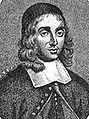
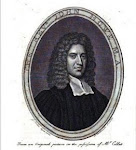
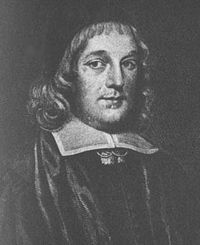
Pag. 32. St. Mary Magdalen Milk Street; Mr. Thomas Vincent. Add, MA of Christ Church, Oxon. He was born at Hertford in May, 1634. He and Mr. Nathanael Vincent were Sons of the Worthy Mr. John Vincent, a Minister born in the West, but who died in the rich Living of Sedgfield in the Bishoprick of Durham. It was observed of this Mr John Vincent, that he was so narrated, and forc'd upon so many Removes for his Nonconformity, that though he had a good Number of Children, yet he never had two of them born in one County. As to the Time of the Death of this Mr. Thomas Vincent, (who was the elder Brother of the two) the Year 1671, should be chang'd into 1678.
He succeeded Mr. Case in this Living, though neither the one nor the other of them are mentioned in London, Westminster and Southwark. He is mentioned in Newcourt's Rep. Eccl. Vol. I. p. 471: Only Mr. Vincent's immediate Successor is taken notice of, Mr. Thompson, who came to the Living, Sept. 9. 1662. Mr. John Evans has added some farther Account of him, before a late Edition of his useful Treatise intituled, God's Terrible Voice in the City.
He was one of the few Ministers who had the Zeal and Courage to abide in the City amidst all the Fury of the Pestilence in 1665, and pursu'd his Ministerial Work in that needful but dangerous Season with all Diligence and Intrepidity, both in publick and private. Some Divines of the Establishment maintain'd their Station at that time with a Primitive Zeal and Fervour. Dr. Anthony Walker of Aldermanbury, through the whole Vitasition, preach'd a constant Weekly Lecture at his own Church. Mr Meriton also continu'd, and so did Dr. Thomas Hcrtcn, who was encourag'd to it by that extraordi- nary Providence which had preserv'd him, when an Infant, from the Plague, while his Nurse had it upon her. But the main Body of the Publick Ministers retir'd from the Danger, and left their Pulpits vacant. In this Case the Ministers that had been silenc'd Three Years before, and had preached only privately and to small Numbers, thought it their Duty to give the best Help they could to the many Thousands that remain'd in the City. They stay'd and preach'd to vast Congregations; and the immediate Views of Death before them, made both Preachers and Hearers serious at an uncommon Rate. Among those thus employ'd, were, Mr Chester, Mr Turner, Mr Franklin, Mr Grimes, (who came from Ireland, and sometimes went by the Name of Chambers,) and this Mr Thomas Vincent, He was for some time employ'd in assisting Mr. Doolittle at Islington in giving some Young Persons an Academical Education, for which Sort of Service he was thought well qualify'd. Upon the Progress of the Distemper in the City, he acquainted his good Friend with his Design to quit that Employment, and apply himself peculiarly to the Visitation of the Sick, and the instructing of the Sound, in that Time of pressing Necessity. Mr. D. endeavour'd to dissuade him, by representing the Danger he must run; that he thought he had no Call to it, being then otherwise employ'd; and that it was rather advisable he should reserve himself for farther Service to the rising Age, in that Station wherein he then was so usefully fix'd. Mr. Vincent not being satisfyed to desist from his intended Service, they agreed to desire the Advice of their Brethren, in and about the City upon the Case. When Mr. D. had represented his Reasons at large, Mr Vincent acquainted his Brethren, that he had very seriously consider'd the Matter before he had come to a Resolution: He had carefully examin'd the State of his own Soul, and could look Death in the Face with Comfort: He found no Timorousness and Dread in his own Temper: He thought it was absolutely necessary that such vast Numbers of dying People should have some' Spiritual Assistance: He could have no Prospect of Service in the Exercise of his Ministry through his whole Life like that which now offer'd itself: He had often committed the Case and himself to God in Prayer; and upon the whole had solemnly devoted himself to the Service of God and Souls upon this Occasion: And therefore hoped none of them would endeavour to weaken his Hands in this Work. When the Ministers present had heard him out, they unanimously declar'd their Satisfaction and Joy, that they apprehended the Matter was of God, and concurred in their Prayers for his Protection and Success.
He went out hereupon to his Work with the greatest Firmness and Assiduity. He constantly preach'd every Lord's Day through the whole Visitation, either at Aldgate-Church, or Great St. Hellens in Bishopsgate-Street, or Allhallows in Thames Street, or some other Church. His Subjects were most moving and important; and his Management of them most pathetick and searching. It was a general Inquiry through the preceding Week where he was to preach: Multitudes follow'd him where- ever he went: And he preach'd not a Sermon by which there were not several awaken'd, and as far in London, Westminster and Southwark. As far as Men could judge brought home to God. Besides this, he without the least Terror visited everyone that sent for him, doing the best Offices he could for them in their last Extremities : Being instant in Season and out of Season to save Souls from Death.

Wednesday, 1 April 2020

Calamy on the Plague in his Nonconformist memorial

In the year 1665, the plague broke out, which carried of about an hundred thousand persons in the city of London. The ejected ministers had, till this time, preached very privately, and only to a few : but now, when the clergy in the city-churches fled, and left their flocks in the time of their extremity, several of the Nonconformists pitying the dying and distressed people, who had none to help them to prepare for another world, nor to comfort them in their terrors, when about 10,000 died in a week; were convinced that no obedience to the laws of man could justify their neglecting men's souls and bodies in such extremities. They therefore resolved to stay with them, to enter the deserted pulpits, and give them what assistance they were able, under such an awakening providence; to visit the sick, procure what relief they could for the poor, especially such as were shut up. The persons that determined upon this good work were Mr. T. Vincent, Mr. Chester, Mr Janeway, Mr Turner, Mr Grimes, Mr Jackson, Mr Franklyn, and some others. The face of death so awakened preachers and hearers, that the former exceeded themselves in lively fervent preaching; and the latter heard with a peculiar ardour and attention. Througli the blessing of God, many were converted, and religion took such hold on their hearts, that it could never afterwards be efaced. While God was consuming the people by this judgment and the Nonconformists were labouring to save their souls, the parliament, which sat at Oxford, was busy in making an act to render their case incomparably harder than it was before, by putting upon them a certain oath, which if they refused, they must not come (unless upon the road) within five miles of any city or corporation, any place that sent burgesses to parliament, any place where they had been ministers, or had preached after the act of oblivion ....

Daniel Neal on the plague

The next judgment which befell the nation was the most dreadful plague that had been known within the memory of man. This was preceded by an unusual drought; the meadows were parched and burned up like the highways. insomuch that there was no food for the cattle, which occasioned first a murrain among them, and then a general contagion among the human species, which increased in the city and suburbs of London until eight or ten thousand died in a week.
The richer inhabitants fled into the remoter counties; but the calamities of those who stayed behind, and of the poorer sort, are not to be expressed. Trade was at a full stand; all commerce between London and the country was entirely cut off, lest the infection should be propagated thereby. Nay, the country housekeepers and farmers durst not entertain their city friends or relations till they had performed quarantine in the fields or outhouses. If a stranger passed through the neighbourhood, they fled from him as an enemy. In London the shops and houses were quite shut up, and many of them marked with a red cross, and an inscription over the door, Lord, have mercy upon us! Grass grew in the streets; and every night the bellman went his rounds with a cart, crying, Bring out your dead. From London the plague spread into the neighbouring towns and villages, and continued near three quarters of a year, till it had swept away almost one hundred thousand of the inhabitants. Some of the established clergy, with a commendable zeal, ventured to continue in their stations, and preach to their parishioners throughout the course of the plague, as Dr. Walker, Dr. Horton, Dr. Meriton, and a few others, but most of them fled, and deserted heir parishes at a time when their assistance was most wanted; upon this some of the ejected ministers ventured to preach in the vacant pulpits, imagining that so extraordinary a case would justify their disregard to the laws.
The ministers who embarked in this service were, the Reverend Mr Thomas Vincent, Mr Chester, Mr Janeway, Mr Turner, Grimes, Franklin and others. The face of death, and the arrows that fled among the people in darkness at noonday, awakened both preachers and hearers: many who were at church one day were thrown into their graves the next; the cry of great numbers was, “What shall we do to be saved?” A more awful time England had never Seen. But it will amaze all posterity, that in a time both of war and pestilence, and when the Nonconformist ministers were hazarding their lives in the service of the souls of the distressed and dying citizens of London, that the prime minister and his creatures, instead of mourning for the nation's sins, and meditating a reformation of manners, should pour out all their vengeance upon the Nonconformists, in order to make their condition more insupportable.
One would have thought such a judgment from Heaven, and such a generous compassion in the ejected ministers, should have softened the hearts of their most cruel enemies; but the Presbyterians must be crushed, in defiance of the rebukes of Providence. Bishop Kennet and Mr Echard would excuse the ministry, by alleging that some of the old Oliverian officers were enlisted in the Dutch service, which, if true, was nothing to the body of the Presbyterians, though Lord Clarendon did what he could to incense the Parliament, and make them believe they were in confederacy with the enemies of the government. ....
*** Dr. Grey has introduced here a full and affecting narrative of the progress of this calamity, and of the mortality it produced; drawn up by the pen of Mr. Vincent, one who charitably gave his assistance at that time, as copied by Dr. Calamy, in his Continuation, p. 33. It was usual for people, as they went about their business, to drop down in the street. A bagpiper, who, excessively overcome with liquor, had fallen down and lay asleep in the street, was taken up and thrown into a cart, and betimes the next morning carried away with some dead bodies. At daybreak he awoke, and, rising, began to play a tune: which so surprised those who drove the cart, and could see nothing distinctly, that in a fright they betook them to their heels, and would have it they had taken up the devil in the disguise of a dead man. —Sir John Reresby's Memoirs, p. 10, 11
De Foe has recorded this awful visitation in a most graphic volume.
Baxter's Life, part iii., p. 2. Baxter, in another place, says, “It is scarcely possible for people that live in times of health and security to apprehend the dreadfulness of the pestilence! How fearful were people, even a hundred miles from London, of anything bought in a draper's shop there, or of any person that came to their houses! How they would shut their doors against their friends, and if men met one another in the fields, how they would avoid each other.” Baxter says that only three Nonconformist ministers died of the plague.--Baxter's Life, part it. to. 448

Thomas Vincent 1665

The great plague in London, in the year 1665, gave occasion for the display of the piety and zeal of several of the ejected ministers, and of the providence of God in preserving them from the contagion, when prosecuting their ministerial labours in the midst of it.
The Rev Thomas Vincent was at this period tutor of an academy at Islington, but determined to leave his situation, and devote himself to the spiritual instruction of the people in London, where many of the pulpits were deserted. His friends vainly endeavoured to dissuade him from the dangerous enterprise. He agreed, however, to follow the advice of his reverend brethren in and about the city. When they were assembled, he told them his resolution, and assured them that it had been the result of much serious thought. He had carefully examined the state of his own soul, and could look death in the face with comfort. He thought it absolutely necessary that the vast numbers of people then dying, should have some spiritual assistance, and that he could never again have such a prospect of ministerial usefulness as now presented itself. He added, that he had solemnly devoted himself to God and souls upon this occasion; and that, therefore, he hoped none of them would endeavor to weaken his hands in this work.
Encouraged by the ministers, who prayed for his protection and success, he entered on his labors with fortitude and diligence. During all the time of the plague, he preached every sabbath in some of the parish churches. He chose the most moving and important subjects, and treated them in the most pathetic and searching manner.
The awfulness of the judgment then before the eyes of all, gave great force to his addresses, and a very general inquiry was always made where he would preach the next sabbath. Many learned from him the necessity of salvation, and the way to heaven through the blood of Christ. He visited all who sent for him, and it pleased God to take especial care of his life; for though in this year there died in London, of the plague, 68,596, including seven persons in the family in which he lived, he continued in perfect health all the time, and was a useful minister to a numerous congregation at Hoxton for upwards of twelve years afterwards. Thus were the promises in the ninety-first psalm fulfilled to this servant of God.
From Anecdotes. Originally published 1841 by the Religious Tract Society of London.

Monday, 23 March 2020

Appleby on the Nonconformists and the Plague 1665 Part 2

... In some cases the courage of certain Nonconformists drew praise even from Anglicans. When the impeccably royalist third Earl of Devonshire, Lord Lieutenant of Derbyshire, received a request 
that the ejected minister Thomas Stanley be expelled from his residence at Eyam, the Earl replied 'that it was more reasonable, that the whole Country should in more than Words testifie their Thankfulness to him, who together with Isis Care of the Town had taken such Care, as none else did, to prevent the Infection of the Towns adjacent. If Nonconformist clergy had demonstrated their worth by preaching and pastoral work in the affected areas, the plague had also worked to their disadvantage. The finances of many merchants who had previously provided financial support for the Nonconformist ministry had been badly affected. Meanwhile, the ecclesiastical authorities were 
stung by pamphlets deriding those Church of England clergy who had fled from their livings in panic, allowing Nonconformists to take their places. Even a pamphlet such as A Friendly Letter to the Flying Clergy, which praised Archbishop Sheldon for remaining at his post, gave a damaging impression of Anglican pusillanimity. This public perception was later reinforced by Daniel Defoe in his fictitious Journal of the Plague Year, and even more so by Richard Baxter's published memoirs. The appropriation of the vacant London pulpits, however, was not in itself responsible for the Five Mile Act. Among the items that had been occupying Sheldon's attention even before the Great Plague marooned him in Lambeth Palace had been the results of a questionnaire that he had sent to his subordinate bishops in order to ascertain the state of the ministry within the Church of England. The responses that he received in return included alarming appraisals regarding the potential scope of Nonconformist activities and the extent to which the ejected ministers continued to exercise influence over their former congregations. The various concerns of the Lords and Commons meeting at Oxford in October 1665 also served to fuel their anxieties regarding Dissent, and in particular the need to restrict the movements of ejected ministers. Michael Wafts has opined that it is possible to justify the Conventicle Act by reason of the Cavalier Parliament's fear of rebellion, but no such excuse can be offered in defence of the Five Mile Act of 1665 In fact, a deteriorating military situation coupled with political and economic dislocation caused by the worst plague for three hundred years had rendered a fragile state more vulnerable to sedition than ever before. The Cavalier Parliament probably had more excuse for anxiety in 1665 rather than less. As ever, Clarendon recoiled from such indiscriminate repression, and so joined the earls of Manchester and Southampton, and Lord Wharton, in opposing the bill. The preamble to the Five Mile (or 'Oxford') Act declared that many clergy who had refused to subscribe to the various declarations required by the Act of Uniformity had nevertheless continued to preach illegally, and conducted worship at meetings in contravention of the law. Such people were now to be required, as from 24 March 1666, not to live or approach within five miles of any city, corporate town or borough of England, Wales or Berwick-on-Tweed, unless passing through whilst travelling to another destination. The ejected ministers were in addition forbidden to live or come within five miles of any parish, town or place where they had had a ministry since the Act of Oblivion (1660), unless they first took the oath of non-resistance detailed in the Act of Uniformity, with the additional clause that they would not seek any change of government, either in church or state. This became known as the 'Oxford Oath'. The fine for each transgression was to he £40. Any cleric or lay person refusing to take the oath was further forbidden to teach or take on boarders to instruct, on pain of a fine of £10 for each offence. Any two or more justices were henceforth empowered to imprison any found guilty of such offences for  aperiod of six months without bail.


Appleby on the Nonconformists and the Plague 1665 Part 1

From David J Appleby's essay in The Great Ejectment of 1662: Its Antecedents, Aftermath, and Ecumenical Significance editor Alan P F Sell

In 1665 plague crossed the Channel, bringing perhaps the worst visitation since the Black Death of 1348. Over the next two years it spread across England and Wales, mainly through the cloth trade routes. As London citizens began to die in droves, the wealthy and well connected fled. King and Parliament removed to Oxford, leaving George Monck, Duke of Albemarle and his army in charge of London. England was by now at war with the Dutch and, with the economic and political life of the capital seriously disrupted, the authorities were understandably more nervous than usual. The traditional ties between English religious dissenters and the Netherlands gave rise to suspicions of treasonable collaboration, and Albemarle kept his soldiers busy rounding up both Quakers and more conventional Nonconformists. Many of these unfortunate individuals subsequently died of plague in the unhealthy environs of London's prisons; including Richard Flavell, a minister who had come to London after having been ejected from his Gloucestershire living, only to perish in Newgate. Hundreds of arrests were also made in the provinces. Charles appointed his brother, James. Duke of York to supervise operations in the areas so recently affected by the Northern Rising. Predictably, little effort was made to distinguish been radicals and moderates, with the result that peaceable Presbyterian ministers such as Philip Henry found themselves caught in the net.
Whatever else he may have been, Gilbert Sheldon was no coward. He remained working in Lambeth throughout the epidemic. Similarly, at least nineteen Anglican clergy stayed to comfort their London congregations, and eleven of them paid for this devotion with their lives. Several of their colleagues, however, deserted their parishes in panic. Nonconformist clergy who had remained in the city promptly climbed into the empty pulpits, or held prayer meetings in private houses to bring spiritual solace to people by now desperately afraid that judgement day was approaching. Calamy records the names of fourteen such ministers who preached in London during these troubled times, the best known being Thomas Vincent, formerly of St. Mary Magdalen, Milk Street. Several more ministers are known to have been living in London and may also have participated in the work. A number of others, Richard Baxter among them, moved out of the city, taking the plague with them in some cases. Relatively little work has been done to investigate the conduct of Nonconformist clergy (and 
their episcopalian counterparts, for that matter) in provincial areas affected by the Great Plague, although it has been suggested that matters in the grievously afflicted cloth-working town of Colchester in Essex followed a similar course to London. The former Colchester minister Owen Stockton may well have engaged in pastoral work in the plague-ridden town, for example, and Obadiah Grew certainly did so in Coventry. ....

Monday, 29 October 2007

Bogue and Bennett 03

To add iniquity to iniquity, the conventicle act was passed, decreeing, that if any person, above the age of sixteen years be present at any meeting for worship, different from the church of England, where there shall be five persons more than the household, they shall, for the first offence, suffer three months imprisonment, or pay five pounds ; for the second, the punishment is doubled; and for the third, they shall be banished to America, or pay a hundred pounds; and if they return from banishment, suffer death (Burnet p. 204). The oath of an informer was sufficient to inflict all the severity of this statute of Draco. While many of the best of men filled our jails, the vilest of the human race rioted in debauchery by informing, for the sake of the reward.
A most dreadful plague visited this aceld'ama of persecution, and while some of the conforming ministers faithfully stood by their flocks, the greater part of them fled, as the hireling when he seeth the wolf; so that the non-conformists seized this opportunity of preaching to the multitudes who, while on the brink of the grave, were left as sheep without a shepherd. But as no revenge could satisfy, so no judgments could alarm the high party; for they now introduced an act to restrain non-conformists from inhabiting corporations. An oath of passive obedience, and non-resistance* was enacted; and all who refused it, were prohibited from coming within five miles of any corporate town where they formerly preached; or from keeping schools, or taking boarders, under a penalty of forty pounds. Thus, though they were not actually burnt alive, they were intentionally starved to death. But while earth and hell were against them, heaven appeared in their behalf. During twenty-eight years of sufferings, their enemies were never gratified by any resistance nor was any of them in prison for debt. Scarcely Elijah himself was fed more immediately from heaven.*
The king, at length, began to complain aloud of the bishops and conforming clergy,* who increased the numbers of dissenters by their conduct, which the people could not help contrasting with that of the ejected ministers. Hence a scheme for toleration was now talked of; but though it was cherished by the moderate divines of the establishment, it roused such opposition from the bigots*, that the non-conformists were left to all the fury of renewed persecution. A paper war fanned the flames of hatred and bigotry. Ralph Willis, called the cobbler of Gloucester, published an account of the scandalous lives of many of the conforming clergy. Samuel Parker, afterwards bishop of Oxford, was the champion for the hierarchy; but he was answered by Andrew Marvel, the pasquin of his age, whose lively wit effected more than all the learning of Dr Owen's grave replies; so that his book afforded merriment to all ranks and parties, from the king and his mistresses, down to the lowest of the populace.
The act against conventicles, was renewed with additional severity*; denying to the sufferers the protection of trial by jury; exposing them to conviction on the oath of a single informer, who was rewarded by a third of the exorbitant fine; while the laws were always to be interpreted against mercy and the non-conformists.
Volumes could not contain a complete history of the sufferings of these men, whose souls, from beneath the altar of God, cry, "how long, Lord, holy, just, and true?" At length, to accomplish the design of favouring the papists, and establish the king's prerogative to dispense with the laws, a declaration of indulgence was published by his majesty, suspending all the penal laws against dissenters,and allowing them to meet in places of worship licensed by the king. The high-church clergy were dreadfully alarmed, and severely condemned the dissenters for using the liberty of which they had been unjustly deprived.*
*Warner, vol. II. p. 604. Warner, p. 612.
*The righteous governor of the world sent fire as well as plague, so that-eighty-nine parish churches in London, together with St Paul's cathedral, were burnt down. Some temporary places were erected with boards, where, as well as in their own abodes, the non-conformists preached. They were called tabernacles; a name which has been since familiar among those who worship apart from the establishment. Drs. Owen and Goodwin, with other independent ministers, adopted this practice, so that many of the citizens of London flocked to the places where the liturgy was not used.
*Pierce, p. 240. Warner, vol. II. p. 611, 615.
*Warner, p. 615.
*To the honour of bishop Williams it should be recorded, that he argued against this infamous act, though the king had requested him not to speak against it, or to stay away from the house while it was debated. He told his majesty that, as an Englishman and a senator he was bound to speak his mind.

*Dr. Calamy being present at his late parish of Aldermanbury, London, was invited to preach, as the person expected did not cornet For complying he was thrown into Newgate; but there was such a resort of persons of distinction to visit him, that it was thought prudent, after a few days, to restore him to liberty.
*At this time was passed the Test Act, of which we shall speak intirely in the words of Dr. Warner, the clergyman to whose history so frequent reference is made in the progress of this work. " Whatever the dissenters might at first think of the indulgence, they saw now that they were only to be tools to advance the Romish religion, etc, etc"