Showing posts with label conscience. Show all posts

Tuesday, 2 October 2012

John Corbet on Nonconformity Part 2

The idea that their principles of government had a palpable inconsistence with the welfare of governors is also refuted when we offer an appeal concerning it to the whole Christian Church, both of the present and former ages.
Being a nonconformist he calls a grievance and distress that was not in the power of our own wills to help. He goes on to reiterate what he said at the beginning.

We affect not singularity, disunity or dissent from others, and so far as we are constrained to it, we take it for our infelicity. We grudge not at the liberty of others, but are so far glad on the behalf of able and faithful men, as they are in a capacity of more public service for God and his church; and though we are dissatisfied in the way wherein they have gained it, yet we retain charity and peace towards them and are willing to concur with them in the common interest of true religion.

His next concern is to refute the idea that these men had chosen not to conform for reasons of expediency. No, they question the truth of some things asserted, the lawfulness of some things laid down and fear the dangerous tendency of some forms and rules of ministration. He admits that some of these matters may be comparatively minor. But this argument cuts both ways as if they are minor things then their opponents should be willing to let the nonconformists differ. They for their part are convinced that it is not right to allow lesser evils for the greater good and they cannot do what they know to be contrary to God's will.
The further problem is that even if these are minor matters, what is desired is

an unfeigned assent and consent to all and everything contained in large human volumes, imposed by our superiors, who acknowledge they are not infallible.

We have not so much he says as our internal judgement and choice left to us about a multitude of human ordinances and determinations.

Some argued that all the church wanted was a general submission but for Corbet and others that was clearly not what was being asked. Another writer (Joseph Read in Mr. Read's case: published for prevention of scandal to his brethren & people, 1682) says

There is a great deal of difference (let us note here) between All and Some - between reading the ordinary Lord's Day 'Service and approving the book, and all that is in it. Mr Baxter in his Plea for Peace, gives no less than thirty particular instances of several things in the Common-Prayer-Book which the Nonconformists cannot declare their assent and consent to.

Corbet goes on to refer briefly to the whole matter of re-ordination and the almost complete lack of discipline that existed in the national church but does not go into these matters. He again reasserts too that episcopacy and the King's civil and ecclesiastical supremacy were not the issue.
The desire is not to have ministers domineer over their churches but that they should be free to serve the congregations to which they are sent, disciplining only those that voluntarily submit to such discipline. He denies that discipline by the church necessarily demands punishment by the civil magistrate. Nonconformists are keen to learn the lessons of history and have no desire for the sort of church tyranny that we associate with the Church of Rome.
He then talks about the fact that he is not giving all the reasons why he and others do not conform. It has not really been expedient to do even what he does do here until this point. He emphasises that if some way could be found to conform then they would take it. Why would they needlessly suffer as they do? If it is suggested that they are simply ashamed of retracting he asserts that “if our consciences were well secured, we would trust God with our reputation”. He also cites a number of titles setting forth the position that were submitted to the ecclesiastical powers before the Act of Uniformity.
He believes that there should be no animosity between those who differ on the question and cites Charles II's speech to the House of Commons on his return to England saying that the presbyterians were peaceable and arguing that there was no reason why there should not be changes in their favour. Some took the view that it would be unwise to give the nonconformists even an inch. They spoke, he says, “as if our exclusion, not our conformity were desired”. He also complains of the way they seized on some things said unwisely by nonconformists (or even by others with no real right to the title) that seemed ridiculous and odious and unfairly tarred everyone with the same brush.
He moves on then to a reassertion of their orthodoxy as Bible believers, rational and plain preachers and those who seek genuine conversions not merely the recruitment of disciples to their cause. He rejects preparationism and assures his readers, importantly, that the people he represents are no antinomians. He says, sounding every inch a Puritan,

We teach none to call themselves godly, merely because they hear sermons, frequent lectures, and meet together for prayer and other religious exercises; yet our aim is that men should make religion their business, and we encourage their diligence in attending on God's ordinances, and redeeming the time, and helping each other forward in the way to heaven.

He then returns to his earlier assertions of not wanting to decry the conformists. Rather a godly conformist than a merely opinionative nonconformist. Far from refusing to enter the Parish church they would greatly rejoice if every parish had a godly minister, conformist or not. Their argument is not with the articles if faith, which they accept. They would love a better public settlement, which at this point was still seven years away. They prize unity enough to “dread the weakening or shattering of it by needless schisms”. He disavows the view that if Christians part the other party must be considered impious. He says

If by scruple of conscience we cannot join in one church communion, yet we ought to keep the unity of faith and love.

He also points out that before the restoration many presbyterians were for moderation and is only seeking the same moderation from the conformists now they hold the cards.
And so he concludes

We have here set forth our principles that all may take notice how we are misrepresented by those that make other representations of us. And we are ready to clear our selves against those that accuse us of contradicting them in our practice.

He says that were there enough conforming ministers preaching nonconformists like himself would be happy to desist from preaching. He goes as far as to say

If we live where the public authority hath set up worthy ministers, our duty is to promote their reputation with the people and to farther the success of their labours and to attend on their ministry when we are not necessarily hindered. And our labours in concurrence with them can be no grievance to any to whom it is not a grievance that their Lord's service and the success of their own endeavours should be farthered by their fellow-servants.

London, for example, was a place where there was plenty of room for more ministers.
He goes on to say that

it is a palpable injury to burden us with the various parties with whom we are now herded by our ejection in the general state of dissenters and to make us responsible for them all.

Nonconformists can surly not be held responsible for all that might be done in their name by a small handful.
His plea then is for indulgence and toleration, something that Corbet never saw in his lifetime but that came, eventually, in 1689.

John Corbet on Nonconformity Part 1

The book Principles and practises of several nonconformists was published in London in 1682. Its tagline says that it is a book Wherein it appears that their religion is no other than what is profest in the Church of England. The modern historian Professor N H Keeble says of the Account that it is
a classic defence of the nonconformists' faith as conscientious and practical protestantism, of ‘healing principles’ and the same ‘Catholick Spirit’ as the established church (23), against caricatures of it as ‘a mixture of folly and villany … turbulent and seditious’ .
It is marked he says “by succinctness, lucidity, and accessibility”.
The small sized book is not a long one consisting of only just over 30 pages. On the title page it says that it is written by nonconformists

in vindication of themselves and others of their persuasion, against the misrepresentation made of them and an hearty desire of unity in the church and of peace and concord among all true Protestants for the strengthening of their common interest in this time of their common danger.
Corbet
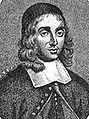
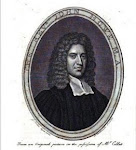
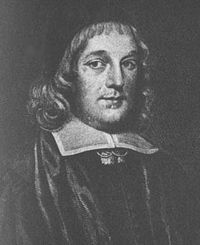
Richard Baxter wrote the foreword to it but the author is a lesser known man called John Corbet (1620-1680). Let me say something about Corbet here. He was the son of a Gloucester shoemaker and was born in 1620. He went from the grammar school in Gloucester to Magdalen Hall, Oxford, in 1636, getting his BA three years later. He then took up a lectureship at St Mary-de-Crypt in Gloucester in 1640, also working as an usher or assistant in the free school attached to the church. When Gloucester was garrisoned for the parliament, he was appointed chaplain to Colonel Edward Massey, the governor, and preached strongly anti-royalist sermons, saying that “nothing had so much deceived the world as the name of a king, which was the ground of all mischief to the church of Christ.” He was an eye witness of events in this period and apparently wrote about them without bias and straightforwardly. At the close of the war he became a preacher at Bridgwater, Somerset and later went to Chichester, before moving on to Bramshot, Hampshire.
It is from Bramshot that he was ejected for nonconformity in 1662. Now in his forties he retired to London, where he lived without preaching until the death of his first wife. He then lived, probably as chaplain, in the house of Sir John Micklethwaite, president of the College of Physicians. In order to be nearer to Richard Baxter he joined the household of Alderman Webb at Totteridge, Hertfordshire. About this time he married again, a daughter of Dr William Twiss. Baxter says of Corbet that they never once ‘differed in any point of doctrine, worship, or government, ecclesiastical or civil, or ever had one displeasing word.’ He was able to gain a licence to preach when Charles issued his indulgence in 1672 and was invited to return to his congregation in Chichester. While there he took part in a debate with Bishop Gunning, who was apparently very unfair and discourteous. Later in life Corbet suffered with stones but carried on preaching until very near to the end of his life which came in 1680.
He died in London, where he had gone hoping to have an operation. He was buried in St Andrew's, Holborn. Baxter preached his funeral sermon, declaring him to be ‘a man so blameless in all his conversation’ that he never heard any one ‘accuse or blame him except for nonconformity.’ Baxter also spoke of him as ‘a man of extraordinary judgement, stayedness, moderation, peaceable principles and blameless life, a solid preacher, well known by his writings’ Calamy called him 'a great man, every way'.
He was the author of several works and his literary remains were gathered together and published after his death, this work being among them.

Summary of Principles and Practices
Corbet writes representing a group that is under attack and that he feels is being misrepresented as foolish, wicked, troublesome and seditious. Their views are said to be frivolous, confusing and most dangerous. In defence he says that they wish firstly to cast themselves on the Lord and to be patient and learn from their experience. However, they also feel it their duty to make clear their principles and practices before all for the sake of truth and so that their opponents will not be in any doubt about their position. “The bare stating of our case” he believes “will be our sufficient defence”.
He begins by arguing in a very Baxterian way for mere Christianity. His concern is not to defend some little sect or some obscure set of idiosyncratic beliefs. Rather, his concern is for Christianity itself. He is arguing for Christianity not for what had sometimes been seen “as an impertinent trifling sect”. The Nonconformists are not chiefly against the Church of England standards such as the 39 Articles and the Homilies, most of which they are quite happy with. Indeed he believes that they are more genuinely committed to them than some Anglicans are in truth. It is the Word of God, however, that is their absolute standard. He makes clear that they are not opposed to the use of a set liturgy as such but to the confinement of a minister to this one form allowing no extemporary prayer or exhortation.
In his Second plea for peace Baxter says the same thing
 
We are far from condemning all forms of prayer and public liturgies as unlawful,of which we have his Majesty's Testimony in his Declaration about Ecclesiastical Affairs much more are we far from condemning all the ancient and present churches of Christ that have used such, or yet use them, throughout the Christian world and yet far more are we from separating from them on that account (for using Liturgies) and from encouraging such a separation.

Even John Owen, who in his Discourse of the work of the Spirit in Prayer, writes against the making or composing of forms of prayer for private use nevertheless notes that this does not prevent a congregation agreeing to a prescribed form by common consent, if they judge it best for their own edification.
Corbet moves next to the matter of bishops and, as we have intimated, he is not opposed to bishops per se. Most nonconformists were happy with the modified episcopalianism that had been proposed by Archbishop Usher many years before. The chief concern is that there should be faithful preaching in every place and proper discipline sin the churches. He is opposed to simony, absenteeism and pluralism, as the Reformers were.
Nonconformists were often accused of being guilty of schism for breaking with the national church. He defends them, of course and says that all they plead for is conformity to what God's Word actually says. He is nevertheless willing to admit that a higher standard must be accepted from ministers than from others and also the importance of “public peace and order, and the general good.”
He then comes to the matter of church and state and it is probable that here many of us will be disappointed. He is a true Constantinian and sees no problem with Supreme Magistrates having a civil supremacy in all ecclesiastical matters, calling synods, making canons, etc. He says
We acknowledge the King's supremacy in all causes, and over all persons, civil and ecclesiastical, in these his Majesty's realms and dominions.

He also asserts their right to act independently of what the churches may say. In a typically Mediaeval and Renaissance way he sees it to be their duty to retrain atheists and heretics.
(Conscience)
This leads him onto the important matter of the conscience. He differentiates between the way God's law binds the conscience and the way that human laws bind it. Obviously, when there is a contradiction between God's laws and man's it is the latter that must give way. With us, then, he argues, it is no controversy whether the King or Conscience be the Supreme Governor. Conscience is in fact not a governor but a discerner of duty. When it sees a conflict therefore it undoubtedly has to follow what God says. There is no excuse for doing otherwise. If the law is sinful
It is the subject's duty in these cases first to lay by his error and then to act according to truth and right and for that end to use the best means for his own true information.
This is what the nonconformists had done at the time. Many had had doubts about what to do, however. In such cases, he says, many would say it is best to obey the authorities. However, that does not follow as it would still be sinful to obey the magistrate if he commanded a sin. Surely, it is better rather to err on the side of not sinning against God. Obeying is perhaps more dangerous than refusing. Certainly, it may prevent the greater sin being committed. This was the conclusion that nonconformists came to – better to refuse the magistrate, which may be a sin, than to do what was against God's law.
He is not saying that if the magistrates make a thing indifferent to be a law then it is unlawful, rather that if they demand something indifferent it becomes a duty.
We boast not of such principles as make men of ductile consciences, obsequious to all designs and interests he adds but we embrace such as will keep the church and world in order.
And so he says
When the higher Powers command what God forbids, though we are bound not to perform it, yet we must be subject, and not resist, but patiently submit to suffering.
This resistance must not be armed resistance. Like most presbyterians at the time he is very eager to distance himself from the execution of Charles I. Indeed, he does not want to get into the question of civil government and the whole question of royal prerogatives and the privileges of parliaments at all.
What Corbet says so very carefully here is typical of the views held at the time. The story is told of how someone once said to the northern nonconformist Oliver Heywood 1603-1702, “Ah, Mr Heywood, we should gladly have you preach still in our church”. He replied “Yes, I would as gladly preach as you can desire it, if I could do it with a safe conscience”. The man honestly replied “Oh, sir, many nowadays make a great gash in their consciences: cannot you make a little nick in yours?” Heywood clearly could not.
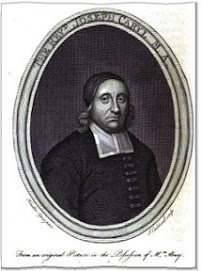
In his farewell sermon Joseph Caryl 1602-1763 says

The heart or conscience is a busy faculty, and hath many offices, it records what we do, and comes as a witness. The conscience is judge of what we do, and accordingly reproves what we do amiss; therefore saith Job, “I will take care of this:” I am more afraid of the reproach of conscience, than ofany man whatsoever; therefore I will not do any thing that may cause my conscience to reproach me as long as I live. This is upon the heart of God's people, they are resolved, let men reproach and rail against them as much as they will, their hearts shall not reproach them.
Samuel Birch 1620/21–1680 of Bampton in Oxfordshire wrote for himself
I am at thy footstool - I may not do evil that good may come – I may not do this great sin against my God and the dictates of my conscience. I therefore surrender myself, my soul, my ministry, my people, my place, my wife, and children, and whatsoever else is here concerned, into thy hand, from whom I received them. Lord, have mercy upon me and assist me for ever to keep faith and a good conscience.
Corbet sums up the first part of his book, then by saying
We doubt not but this free and open dealing will be our defence against those licentious tongues and pens that have proclaimed the religion of the Non-Conformists to be a foolish religion, when indeed it is no other than the religion professed by the Church of England.

Wednesday, 26 September 2012

Anything but sin

In Read's Case here we read on page 4
It was the saying of a Reverend Minister Mr. J. B. of Worcester, when he lay upon his death bed, and was asked what thoughts he had of His Nonconformity "I would have done anything but sin," saith he, "that I might have continued in the exercise of my ministry but when it came to that, there was no remedy."

Friday, 24 August 2012

Today is the day

Today is the day 350 years ago when 2000 or so were ejected from the national church in England and Wales for the sake of conscience. It is right that we should give thanks for their noble stand and pray that we too may be men and women willing to follow conscience and to do what we believe is according to the Word of God regardless of what it costs.

Tuesday, 7 August 2012

Grace Magazine article


I have an article in this month's magazine as follows. More on Grace here.

1662 And All That

Like Grace Magazine itself, most though not all of its readers could be described as Baptist. Here in the UK, Baptists are considered to be nonconformists or dissenters. There were plenty of Baptists and other dissenters from the national church before 1662 but it was in that year, 350 years ago this year, that nonconformity as such arose and began to be, under God, a significant force in the life of the nation.
The writer Anthony Burgess once wrote, “It's always good to remember where you come from and celebrate it. To remember where you come from is part of where you're going.” The beginnings of nonconformity are something that nonconformists or dissenters today ought to be familiar with. Back in 1962, speaking at the Evangelical Library, Dr Lloyd-Jones said that practically all that is good in evangelicalism finds its roots in the Puritanism so fiercely persecuted then. He also declared that “the very greatness of the men themselves as men of God demands our attention”.

1662
So what happened in that year? Who were these nonconformists or dissenters and what did they refuse to conform to or dissent from? This was the year that the Act of Uniformity was passed. The main event occurred on St Bartholomew's Day, August 24, 1662, when about two thousand ministers and others in the pay of the national church in England and Wales were silenced or ejected from their livings for failing to conform to and dissenting from what the Church of England now required.
What was required, among other things, was that they use the newly published prayer book. The 1662 prayer book has many admirable qualities but there is much to object to and this renewed policy of vigorously enforcing its use was too much for many, especially after having not used for over a decade during the Interregnum after the death of Charles I. The prayer book was not the only concern (nonconformists also objected, for example, to the requirement of re-ordination by a bishop where that had not happened before) but it proved to be the catalyst for their objections and fears.

Puritans
The Great Ejection, as it has come to be known, really includes all the ejectments and silencing that took place in the years from the Restoration of Charles II in 1660 through to 1662 and the immediately following period. Previous to this the number of independent churches, including baptist ones, was relatively small. It was with the ejection of such a large number of men, some 20% of the clergy, the majority of whom went on preaching, despite strong and sometimes vicious opposition and gathered local nonconformist churches, that nonconformity began to be the force we know it was in the 18th and 19th centuries.
Most of the names of the men who were ejected and their wives who suffered with them are unfamiliar to us, though some such as Richard Baxter, Thomas Manton and Thomas Watson are still read. Henry Jessey was the most famous Baptist. Most of the ejected were presbyterian, though some 194 were congregationalist. There were apparently only 19 Baptists, 11 of them in Wales, though some became Baptists later. They were nearly all men, however, who any Reformed Baptist today could admire and be ready to learn from. Though some few good men did remain in the national church, Gerald Bray is right to say that almost all of the ejected “were Puritans, and so the Act may be said to represent the expulsion of Puritanism from the national Church.”

Persecution
The persecution launched against these men also swept into its net Baptists and others already outside the national church. John Bunyan is the most famous example. He was imprisoned in 1660 and remained there for the best part of the next 12 years. His congregation had previously been meeting in the parish church in Bedford but that all came to an end with the Restoration. Their conscientious stand for the truth and their great courage and wisdom in the face of persecution give an example that ought to be known and emulated. 
Relief from direct persecution finally came for the nonconformists with the Toleration Act of 1689, when King William and Queen Mary came to the throne. It was in that year that the Particular Baptists finally felt free to publish their confession of faith. The work had been completed back in 1677. Nonconformists continued to be treated as second class citizens, even then, being practically barred from Oxford and Cambridge Universities, for example, until as late as 1828 but at least the worst of the persecution was over.
The years 1662 to 1689 saw great variation in the levels of persecution and understandably things varied from place to place. In 1664 a conventicle act was passed banning religious gatherings of more than five (apart from family members). In 1665 a particularly cruel law was passed. Known as the five mile act, this act forbade the ejected from living within five miles of their former place of abode. The idea was to try and cut them off from their former congregations, who usually remained loyal. In 1670 a second conventicle act was passed. Famously described by Andrew Marvell as ‘the quintessence of arbitrary malice’, it reduced penalties for ordinary worshippers but fines for preachers and the owners of places where conventicles were found went up to £20 for a first offence, £40 for a second. The idea of distraint was also introduced, the seizure of a person’s property in order to obtain payment. If the minister could not pay, wealthier members of the congregation could lawfully be plundered.
In 1672 and 1683 Charles then James decreed indulgences but, unsupported in Parliament by law, these did not last and the pattern of persecution continued in most places. The Broadmead Baptists wrote of some eight waves of persecution altogether and it is clear that, as is often the case to this day, persecution did come in waves. Typically again, it varied in form and intensity, from minor harassment to mass imprisonment. Various factors were involved such as one's willingness to adapt to the situation and the attitude of local magistrates. A G Matthews suggests that 12.4% of the ejected men, some 215 altogether, were imprisoned between 1662 and the death of Charles II in 1685. Most were in for short periods but others were in prison for lengthy terms. Some seven ministers actually died in prison.

Providence
There was a Bible taught confidence among dissenters that their sufferings were working for them “a far more exceeding and eternal weight of glory”. When Joseph Oddy was taunted by a Cambridge wit with the doggerel lines

Good day, Mr Oddy,
Pray how fares your body;
Methinks you look damnably thin?

He shot back with

That sir's your mistake,
'Tis for righteousness' sake;
Damnation's the fruit of your sin.

Dissenters were not slow to see in various providences God's hand encouraging them and dealing with their persecutors. What else could one make of the Great Plague of 1665, the Great Fire of London of 1666 and the war with the Dutch, too, for that matter? “Nonconformist writings abound” says Michael Watts “in stories of disasters which befell individual persecutors”.
Positively, Philip Henry, father of Matthew, observed in old age that though many of the ejected ministers were brought very low, had many mouths to feed, were greatly harassed by persecution and their friends were generally poor and unable to support them, yet, in all his acquaintance, he never knew, nor could remember to have heard of any nonconformist minister being in prison for debt.

A Lesson
The Bible speaks about the conscience often enough but it is a rather neglected subject among evangelicals today. The 1662 men were men who knew that they had a conscience and who were willing to act upon it with courage when necessary.
The story is told of how someone once said to Oliver Heywood, “Ah, Mr Heywood, we should gladly have you preach still in our church”. He replied “Yes, I would as gladly preach as you can desire it, if I could do it with a safe conscience”. The man honestly replied “Oh, sir, many nowadays make a great gash in their consciences: cannot you make a little nick in yours?” Heywood clearly could not. Oh for men and women like him today.