These are to certify whom it may concern that Isaac Loeffs MA of the last year and Fellow of PeterHouse Cambridge is of a godly life and conversation orthodox in judgment and well affected to the parliament In witness whereof I have subscribed my hand La Seaman Magr CSP Dated Sept 9 1648. After this follows the Latin testimonial of Henry Rich Earl of Holland Chancellor of the University of Cambridge dated Dec 9 in the same year certifying that Mr Isaac Loeffs was admitted to the degree of MA at the appointed time and annual commencement in 1648 and that he was a discreet person whose learning good life and laudable conversation qualified him for that degree and could not be called in question by the envy of slanderous or malice of insidious persons &c. In the year 1652 Mr Loeffs was presented to the living of Shenley in Hertfordshire vacant by the resignation of Mr Stephen Jones in 1650. The patron of the living was John Crew, of Crew, in the county of Chester, Esq, who had transferred the right of nomination to three of the parishioners from whom Mr Loeffs received a legal presentation. Mr Loeffs continued in possession of this living till the Restoration when he was ejected for nonconformity. Som e time afterwards he came to London and was chosen lecturer of St Magnus, LondonBridge but was deprived of this situation also by the act of Uniformity in 1662 After this as Dr Calamy informs us he became assistant to Dr Owen in his gathered church. It is probable however that he was co pastor with Mr Clarkson whom he succeeded. In the church book his name stands in the list of pastors immediately after the latter. We know nothing further concerning him excepting that he died July 10 1689. Mr Loeffs published a treatise on The Soul's Ascension in a State of Separation in 1670.
Saturday, 23 October 2021
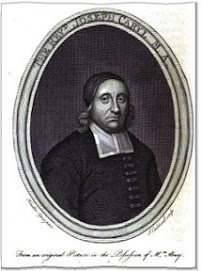
Isaac Loeffs d 1689
This is another man mentioned by Harding
Rev Isaac Loeffs (d 1689), the Rector of Shenley from 1650 to 1662, was a lecturer at the Church of St Magnus in London, at that time a Congregational foundation. He suffered ejection but appears to have remained at Shenley. He was known to have been preaching in 1669 at St Albans, Elstree, Codicote and Ridge. About 1675 he removed to London and acted as assistant to a famous congregational minister, Dr Owen/
From elsewhere we learn that Loeffs was educated in Peter House, Cambridge of which he became Fellow Dr Calamy has preserved the following testimonial to his character while at the University by Dr Lazarus Seaman Master of the College.

Dr Edmund Staunton 1600-1671
Harding also mentions Edmund Staunton, DD (1600-1671). He began his career in Bushey and for some years preached in West Hertfordshire. Later, as President of Corpus Christi College, Oxford, he suffered ejectment under the Act of Uniformity and withdrew to Rickmansworth. Later he removed to St Albans where he continued to preach “by Stealth, and in face of the penal laws against him.” Dr Staunton was a member of the Westminster Assembly. He died on 15th July 1671 and was buried two days later in the yard of the parish Church at Bovingdon.
A much fuller biographical note and other information can be found here.
Sunday, 17 October 2021
William Haworth d 1703
Harding also has this to say about William Haworth
Another pioneer of Congregationalism in St Albans at this time was William Haworth, minister of St Peter’s Church from 1660 to 1662. His stay was marked by one very tragic happening. On 4th May 1662, just three months before the Act of Uniformity became law, Haworth was called from St Peter's to the Abbey to conduct the funeral service of a Mrs Tervil, one of his own parishioners. During the service, the proceedings were rudely interrupted by the entry of a Major Crosby “swearing in a furious manner, calling them rogues and rebels, and directing his speech to the preacher” and ordering him out of the pulpit.21 Leaving the Abbey, Crosby returned at once, flourishing a pistol and accompanied by an armed constable, threatened the minister. At this, one of the congregation, John Townsend stepped forward to intervene and was shot dead by the irate officer. Instead of arresting Crosby, the constable took Haworth and other members of the congregation into custody. When the prisoners were brought to trial Haworth was imprisoned, but no action whatsoever was taken against Crosby. The judge who acted in so infamous a manner was Sir Harbottle Grimston.
Released from prison, Haworth was obliged to leave St Albans. He retired to Hertford, where we find him ministering in secret to a small company of Independents until 1672, and then as the appointed minister until 1703. At Hertford, Haworth succeeded a John Singleton, MD who was ejected from Oxford in 1660 for his nonconformist sympathies. The Congregational Church in Hertford, situated in Cowbridge, still have in their possession the original church book, dating from 1673. A former minister of the church there, states that the book “...is worn and discoloured by age and the writing is not always easy to decipher...unfortunately the pages that contained the record of Mr Haworth's ministry are missing; but from the list of members, which was written by Mr Haworth, we may surmise that the district was large and the work heavy.”
A memorial tablet in the vestibule of the present building bears the inscription:
The Congregational Church assembling in this place was instituted AD 1673.
The Rev William Haworth of St John's College, Cambridge,
afterwards Vicar of St Peter’s, St Albans, was the first pastor.
Haworth died in January 1702/3 and was succeeded in the pastorate by Mr (later Dr) John Guyse who remained until 1727, when he proceeded to a church in New Broad Street, London. As regards the church itself, Turner, a local historian of the early nineteenth century, has this to say: “The Independent Chapel is situated at Cowbridge. It is a freehold, secured to the Protestant Dissenters of this faith and order; and comprises a neat and commodious building, fitted up with galleries, capable of accommodating about 500 persons. The first Independent or Congregational Church in England was established in the year 1616, and there is every reason to believe that a chapel for their accommodation was erected in Hertford shortly after that period.”
(Haworth or Hayworth was born in Preston)
Job Tookey 1616-1670
In his book on Independency in St Albans F A J Harding speaks about Tookey. He says that
During the Commonwealth, a number of clergymen ministered in St
Albans; some of whom were afterwards ejected from their livings under the act of
uniformity, 1662.
He mentions George Newton, MA, 1664 (ejected from Taunton)
John Geree, MA, 1646-1648
Job Tookey, MA, 1649 (ejected from Yarmouth)
John Oliver, 1653
Richard Roberts, MA, 1655 (ejected from Cullesden, Surrey)
Nathaniel Partridge, 1657 (ejected)
St Peter’s Church
Robert Tirling, 1644-1645
William Rechford, 1647-1659
William Haworth, 1660 (ejected) Richard Lever, M.A.,1646-1649
Simon Smyth, 1650
Edward Withnell (ejected) George Newton, M.A., 1644
John Lesley, 1645-1656
Nathaniel Partridge, 1657-1660
He then focuses on the founder
of Congregationalism in St Albans, Job Tookey, who, according to
Calamy was preacher at St Albans in 1648, and “gathered a Congregational
church there.” Urwick (Nonconformity in Herts) adds, “The first Congregational church in St Albans
was gathered in St Albans Abbey.” Notice that both commentators use the
word “gathered”. This is a basic congregational principle, which denotes that those forming that particular assembly of worshippers are “gathered” round
Christ, Who is at the centre of the Church.
The church meeting in St Albans
Abbey under the ministry of Rev Job Tookey was truly “congregational” for the
reasons that, being a “gathered” church, the congregation, as directed by the
Holy Spirit, was a sovereign body and independent of outside control,
humanly speaking; and Job Tookey himself, was appointed minister by the
citizens of the town. This independency of action claimed by
Congregationalists, earned for their assemblies the title of Independent
Churches.
Spicer Street Chapel, the present-day direct descendent of the
Abbey Congregational assembly, is still known as the Independent Meeting
House. By way of further explanation, the late Dr A M Fairbairn might be
quoted: “While Congregational denotes the normative principle and
constitution of the society, Independent simply describes the relation in which
all societies so constituted must stand to every authority external or foreign.
The term in its oldest historical use expresses the right of the churches to be
independent, as regards interference from without, in order that they might be
free to live under the sole authority of Christ. And so Independency here
means freedom; ‘free’ is the modern synonym of ‘independent.’
The appointment of Job Tookey as minister at the Abbey was made
easier by the fact that the citizens of St Albans were, in truth, the owners of
the Abbey Church and were, therefore, in a position to appoint whoever they
liked to the living. They were no doubt influenced in their choice by reason of
Tookey’s personal piety and general trustworthiness as well as their desire to
get rid of the risk of having one of Laud’s nominees. Tookey’s two
Commonwealth predecessors at the Abbey, Newton and Geree, while chosen
by the citizens, do not appear to have held the principle of the “gathered
church” as did Tookey, and it is for that reason we fix on him as the originator
of the Congregational manner of worship and church government.
It may be well at this juncture to explain how the Abbey came into the
possession of the citizens. After the expropriation of church lands and
buildings by order of Henry VIII, all such property became vested in the crown;
in 1553, however, the townspeople of St Albans were able to buy the building
for £400 to convert it into a parish church and grammar school, the latter
being conducted in the Lady Chapel. This purchase was made possible by a
charter granted by Edward VI on 12th May 1553. The charter provided, to
quote Clutterbuck, that “in consideration of the sum of £400 and a yearly fee
farm rent of £10 paid to him by the inhabitants of the borough, granted the
same, together with the advowson and right of patronage thereto belonging,
to the Mayor and Burgesses of St Albans for ever, to serve as the parish
church of the borough...” This bargain was confirmed by a clause in the
charter of incorporation granted to the Borough by this monarch. The fee farm
rent was afterwards redeemed by the inhabitants of the Borough on 30th July
1684, for £200...
Records of Job Tookey's ministry are few, but of great interest. In 1650,
the year following the execution of Charles I, commissioners appointed by
Parliament to enquire into the state of the Ecclesiastical Benefices, found by
their inquest that “this Rectory was... sequestered from one John Browne; and
that Mr Job Tookey, an able and godly minister, officiated the Cure”. A few
items in the Parish Registers established Job Tookey’s stay in St Albans: -
“May 26 1650 (born March 10), Job, son of Mr Job Tookey, Minister”
“November 16 1651 Hannah, daughter of Mr Job Tookey” Other daughters were Martha, Rebecca and Sarah. His son Job, according to
Calamy, went to the north of England and turned out to be a scapegrace. A
grandson, Thomas Tookey, was minister of the Yarmouth Congregational
Church 1711-1724.
After about five years Tookey removed to
Yarmouth, where he became the teacher of a Congregational Church with Bridge as pastor until
ejected under the Act of Uniformity 1662. In 1665, he came to London and
died there in 1670. (He was a graduate of Immanuel, Cambridge, a Puritan college.)
Thursday, 26 August 2021
Reading The Great Ejection Sermons
I can still remember as a teenager pulling my father’s copy of the 1962 Banner edition of Sermons of the Great Ejection off one of his study shelves and turning to Edmund Calamy’s sermon, ‘Trembling for the Ark of God.’ That sermon impacted me profoundly. But, before turning to the detail of this and other sermons, it will be helpful to explain the historical origin of the book.
These sermons were all preached in 1662, the year when 2,000 or so ministers were expelled from ministry in the Church of England by the Act of Uniformity, which required unswerving commitment to the Book of Common Prayer, episcopal ordination and rejection of the Solemn League and Covenant. This Act was designed to drive Puritan preachers from the national church, and achieved this aim on Black Bartholomew’s Day 1662. In the words of J. C. Ryle this represented ‘an injury to the cause of true religion in England which will probably never be repaired.’
However, at least one good came from the tragedy of the Great Ejection - the farewell sermons of Puritan preachers to their congregations. And this Puritan Paperback gives a selection of the best of these sermons, the parting pastoral counsel of some of the finest preachers and theologians England ever produced. After a helpful foreword from Iain Murray, each of the sermons is introduced with a brief biography of the preacher, some of whom will be well known to Banner readers (Thomas Brooks, Thomas Watson, Edmund Calamy) and others relatively unknow (John Collins, Thomas Lye, John Oldfield, John Whitlock). Some prayers have also been included, and the volumes concludes with the 1772 Nonconformist’s Catechism.
To give a flavour of the sermons, consider the first sermon in the volume, Edmund Calamy preaching on Eli trembling for the ark of God (1 Sam. 4:13). In many ways this is a model Puritan sermon. The context for the text is briefly expounded. A biblical theology of the ark and what it represents (fundamentally a visible sign of God’s gracious presence with his people) and what it typifies (Jesus Christ, the Church, and the ordinances of the church) is outlined. From this, Calamy proceeds to draw rich and varied spiritual lessons from the text. For example, believers are troubled when the ark (Christ, his church, the gospel) is in danger of being lost because 1) they love the ark; 2) they have a personal interest in the ark; 3) the damage that follows the ark being lost; 4) if the ark is lost it is because of our sin. This last point is so vital and so convicting. The ark is in danger, not first because of other’s sins, but because of our sins (e.g. Dan. 9:5-6): ‘Oh, beloved, it is for your sin and my sin that the ark of God is in danger.’
There is realism and a hope in Calamy’s application. He is well aware that ‘England has no letters patent of the gospel; the gospel is removable.’ Therefore, he wanted God’s people to have ‘an aching heart for the ark of God that was in danger.’ But he also wanted God’s people to have hope. As long as there was ‘an abundance of praying people’ Calamy argued the ark was safe, for ‘God will never forsake a praying people.’ There is clearly much more in Calamy’s sermon, all of it was needed in 1662, and all of it is needed today. So, take up this volume and read it.
Other sermons are of a uniformly high standard. Thomas Brooks’ ‘Pastor’s Legacies’ are wonderful; John Collins on ‘Contending for the faith’ is a much-needed word for today; Thomas Lyle beautiful covers the love of a pastor for his people and the congregation’s duty in return to ‘stand fast in the Lord’ (Phil. 4:1); Thomas Watson is as helpful as ever on the difference between the righteous and the wicked (Isa. 3:10-11) and how God’s promises stir up a pastor’s beloved people to holiness (2 Cor. 7:1); John Oldfield outlines how to respond to the sufferings of the godly (Psa. 69:6) and the final sermon of John Whitlock is a is a profound challenge to ‘remember, hold fast and repent’ (Rev. 3:3).
These are not antiquarian sermons. They breathe the spirit of the living word of God and will repay reading today, when, to return to Calamy’s sermon, there is as much need to tremble for the ark of God as there was in 1662.
Wednesday, 10 March 2021
Thomas Browning, Rothwell
From The Annals of Coggeshall
Thomas Browning (c 1634-1685) was born of pious parents at Coggeshall, about the year 1634, and was sent to Oxford at sixteen years of age. Here he "chose the worst companions and despised the best instructions; and after some years left, and became tutor in Col. Sydenham's family. There was so much religion here that he quickly grew weary of it and left, and chose rather to embrace a vain and uncertain course of life." On attending Westminster Abbey, he was greatly impressed by the sermons of Mr John Howe, the pastor; and afterwards of Mr Thomas Weld of New England and Mr Pinchback, assistant of Dr. Thomas Manton. About this time Mr Sames met with him in London, and induced his parents, whom he had estranged by his former life, to invite him and his wife to reside with them at Coggeshall.
He became a member of the church, and was at length encouraged by Mr Sames to devote himself to the ministry, and preached his first sermon on Matt. i. 20 in his pulpit in the Parish Church. Going with Mr Sames to a commencement at Cambridge, they met with Mr Beverly of Rothwell, who was seeking a minister for the adjoining parish of Desborough; and Mr Browning, after preaching there, was invited to become pastor in 1657. Here he continued faithfully discharging his duties for five years.
In all his work he followed the advice once given him by Dr. Owen, " Study things, acceptable words in course will follow." He was ejected among the two thousand, preaching his farewell sermon on 2 Cor. xiii. 14. The people of Desborough and Rothwell gathered together to form one congregation under his ministry, at Rothwell, where he had licence to preach in 1672, and continued during the rest of his life.
"Some soldiers came one Lord's-day, April, 1682, to break up a meeting, and to take Mr Browning of Rothwell. The constable advised them to be well-advised in what they did, 'for,' said he, 'when Sir was alive, he eagerly prosecuted these meetings, and engaged 8 soldiers of the country troop therein, whereof myself was one. Sir himself is dead; 6 of the soldiers are dead; some of them were hanged, and some of them broke their necks; and I myself fell off my horse and broke my collarbone in the act of prosecuting them, and it cost me 30s. to be cured. It hath given me such warnings, that for my part I am resolved I will never intermeddle with them more.' This story he repeated several times that day, which shews how readily conscience, when a little awakened, construes the Divine Providences to be acts of judgment and admonition."*
Mr Browning was on one occasion arrested and imprisoned in Northampton Gaol; from which place he wrote the following with other letters to his church:
"My dear Brethren and Beloved,
"I salute you in the Lord, and make mention of you to him with joy, counting it my most happy lot, next interest in His love, to have so great a share in yours We have peace in the midst of trouble, and quiet in the day of war; because 'this man is our peace even while the Assyrian is in the land.' God has been a little sanctuary to us in our scatterings, and has over-ruled that which was designed for our ruin to our help. O my brethren! methinks I am with you, weeping with you, joying with you, praying with you, and hearing with you. It is true fellowship my soul has with you at a distance. I long after you much in the Lord, yet rejoicingly stay his good pleasure. I would not come out a moment before his time. I would not take a step without his direction. I am wonderfully well; better and better. The cup of afflictions for the Gospel is sweeter the deeper: a stronger cordial the nearer the bottom — I mean death itself. O the joy unspeakable the glorious and dying martyrs of Jesus have had! How full freight have been their souls in their passage to their port! I tell you, if you knew what Christ's prisoners, some of them, enjoyed in their gaols, you would not fear their condition, but long for it. And I am persuaded, could their enemies conceive of their comfort, in mere vexation of heart they would stay their persecutions. 'Therefore, my brethren, my joy and crown, stand fast in the Lord.' Rejoice greatly to run your race: fear not their fear: sit loose from the world: allot yourselves this portion which God has allotted you, through many tribulations to enter into the kingdom of heaven. Come the worst is death, and that is the, best of all ... My brethren, do not budge. Keep your ground: the scripture is your law: God is your king. Your principles are sober, your practices are peaceable. Your obedience to superiors known in those things wherein your obedience is required. If men have nothing against you but in the matters of your God, rejoice and triumph in all your persecutions. . . . I exhort you all to walk in the faith, fear, love and joy of the Lord. Study your mutual edification. Fear nothing of events till they come: only fear offending God with a neglect of your duty. There is no shadow like the shadow of God's wings; therefore keep close to God. Ps. Ivii. 1."
"T. B."
Reference to his death is made in the church-book of Rothwell:
"Mr Thomas Browning, pastor of this church, was gathered to his Father's house in peace, in an awfully persecuting day, May 9, 1685, having served his Lord in this house with much pains and many tears, with much presence and success, about 23 years."
He was buried in Rothwell churchyard, and was succeeded by Mr Richard Davis.**
* Mr Beverly says in his Diary—"1658, May 13. Pretty cheerful till Brother Browning's return from Essex, who told me the sad news (among some other more refreshing) that there was some discord in the New England churches: Mr Stone turned classical. O what a fountain of tears broke my heart forthwith out into, to conceive that Satan should infest those precious churches which the Lord had hitherto so gloriously carried as on eagle's wings."
** Monuments of Mercy, or some of the distinguished favours of Christ to the Congregational Church at Rowel, as handed down in the ministry of Mr John Beverley, and Mr Thomas Browning, remembered. By Matthew Mayrice. London, printed for B. Hett, at the Bible and Crown in the Poultry, near Cheapside, 1729.
Palmer says "His tomb yet remains with a Latin inscription. The late Mr Moses Gregson, who married a descendant of his, communicated to the Editor some extracts from his Diary, which discover an ardent piety."
Thursday, 2 April 2020
Calamy in his Continuation of the account of ministers ... ejected .... Part 2
His Account of the Plague in his Treatise call'd God's Terrible Voice in the City, is very affecting. He there tells us, that it was in Holland in the Beginning of May 1664, and the same Year began in some remote Parts of this Land, though [in London] the Weekly Bills of mortality took notice but of three. In the Beginning of May 1665, nine died of it in the Heart of the City, and eight in the Suburbs. The next Week, the Bill fell from nine to three. In the next Week it mounted from three to 14, in the next to seventeen, in the next to 43. In June the Number increas'd from 43 to 112; the next Week to 168; the next to 267; the next to 470. In the first Week of July, the Number arose to 725, the next 1,089, the next to 1,843, the next to 2,010. In the first Week in August the Number amounted to 2,817, the next to 3,880, the next to 4,237, the next to 6,102. In September a Decrease of the Distemper was hop'd for: But it was not yet come to its Height. In the first Week there died of it six thousand nine hundred eighty-eight: And though in the second Week the Number abated to 6,544; yet in the third Week it arose to 7,165, which was the highest: And then of the 130 Parishes in and about the City there were but four which were not infected; and in those there were but few People remaining that were not gone into the Country.
In the House where he lived, there were eight in Family; three Men, three Youths, an old Woman, and a Maid. It was the latter End of Sept. before any of them were touched. The Maid and two of the youths were first seiz'd with the Distemper, which began with a shivering and trembling in her Flesh, and quickly seiz'd on her Spirits. This was on the Monday, and she died on the Thursday full of Tokens. On Friday one of the Youths had a swelling in his Groin; and on the Lord's Day died with the Marks of the Distemper upon him. On the same Day another of the Youths sicken'd, and on the Wednesday following he died. On the Thursday Night the Master of the House fell sick, and within a Day or two was full of Spots, but was strangely recovered, beyond his own or others Expectations. In the fourth Week in September there was a Decrease, to 5,538. In the first Week of October, there was a farther Decrease to 4,929; in the next to 4,327, the next to 2,665, the next to 1,421 and the next to 1,031.
The first Week in Nov. there was an Increase, to 1,414; but it fell the Week after to 1,050 and the Week after to 652 and so lessen'd more and more to the End of the Year. And the whole Number of those that were reckon'd to die of the Plague in London, this Year, was 68,596. But God was pleas'd to take a particular Care of this Good Man. He continued in perfect Health all the while, and surviv'd this sad Providence, and was useful by his unwearied Labours to a numerous Congregation, till the Year 1678.
Calamy in his Continuation of the account of ministers ... ejected .... Part 1
Of The Account Of The Ministers, Lecturers, Masters and Fellows of Colleges, and Schoolmasters, who Were Ejected and Silenced After the Restoration in 1660, by Or Before the Act for Uniformity
Pag. 32. St. Mary Magdalen Milk Street; Mr.
Thomas Vincent. Add, MA of Christ Church, Oxon. He was born at Hertford in May,
1634. He and Mr. Nathanael Vincent were Sons
of the Worthy Mr. John Vincent, a Minister born
in the West, but who died in the rich Living of
Sedgfield in the Bishoprick of Durham. It was observed of this Mr John Vincent, that he was so narrated, and forc'd upon so many Removes for his
Nonconformity, that though he had a good Number of Children, yet he never had two of them
born in one County. As to the Time of the Death
of this Mr. Thomas Vincent, (who was the elder Brother of the two) the Year 1671, should be chang'd
into 1678.
He succeeded Mr. Case in this Living, though neither the one nor the other of them are mentioned in London, Westminster and Southwark. He is mentioned in Newcourt's Rep. Eccl. Vol. I. p. 471: Only Mr. Vincent's immediate Successor is taken notice of, Mr. Thompson, who came to the Living, Sept. 9. 1662. Mr. John Evans has added some farther Account of him, before a late Edition of his useful Treatise intituled, God's Terrible Voice in the City.
He was one of the few Ministers who had the Zeal and Courage to abide in the City amidst all the Fury of the Pestilence in 1665, and pursu'd his Ministerial Work in that needful but dangerous Season with all Diligence and Intrepidity, both in publick and private. Some Divines of the Establishment maintain'd their Station at that time with a Primitive Zeal and Fervour. Dr. Anthony Walker of Aldermanbury, through the whole Vitasition, preach'd a constant Weekly Lecture at his own Church. Mr Meriton also continu'd, and so did Dr. Thomas Hcrtcn, who was encourag'd to it by that extraordi- nary Providence which had preserv'd him, when an Infant, from the Plague, while his Nurse had it upon her. But the main Body of the Publick Ministers retir'd from the Danger, and left their Pulpits vacant. In this Case the Ministers that had been silenc'd Three Years before, and had preached only privately and to small Numbers, thought it their Duty to give the best Help they could to the many Thousands that remain'd in the City. They stay'd and preach'd to vast Congregations; and the immediate Views of Death before them, made both Preachers and Hearers serious at an uncommon Rate. Among those thus employ'd, were, Mr Chester, Mr Turner, Mr Franklin, Mr Grimes, (who came from Ireland, and sometimes went by the Name of Chambers,) and this Mr Thomas Vincent, He was for some time employ'd in assisting Mr. Doolittle at Islington in giving some Young Persons an Academical Education, for which Sort of Service he was thought well qualify'd. Upon the Progress of the Distemper in the City, he acquainted his good Friend with his Design to quit that Employment, and apply himself peculiarly to the Visitation of the Sick, and the instructing of the Sound, in that Time of pressing Necessity. Mr. D. endeavour'd to dissuade him, by representing the Danger he must run; that he thought he had no Call to it, being then otherwise employ'd; and that it was rather advisable he should reserve himself for farther Service to the rising Age, in that Station wherein he then was so usefully fix'd. Mr. Vincent not being satisfyed to desist from his intended Service, they agreed to desire the Advice of their Brethren, in and about the City upon the Case. When Mr. D. had represented his Reasons at large, Mr Vincent acquainted his Brethren, that he had very seriously consider'd the Matter before he had come to a Resolution: He had carefully examin'd the State of his own Soul, and could look Death in the Face with Comfort: He found no Timorousness and Dread in his own Temper: He thought it was absolutely necessary that such vast Numbers of dying People should have some' Spiritual Assistance: He could have no Prospect of Service in the Exercise of his Ministry through his whole Life like that which now offer'd itself: He had often committed the Case and himself to God in Prayer; and upon the whole had solemnly devoted himself to the Service of God and Souls upon this Occasion: And therefore hoped none of them would endeavour to weaken his Hands in this Work. When the Ministers present had heard him out, they unanimously declar'd their Satisfaction and Joy, that they apprehended the Matter was of God, and concurred in their Prayers for his Protection and Success.
He went out hereupon to his Work with the greatest Firmness and Assiduity. He constantly preach'd every Lord's Day through the whole Visitation, either at Aldgate-Church, or Great St. Hellens in Bishopsgate-Street, or Allhallows in Thames Street, or some other Church. His Subjects were most moving and important; and his Management of them most pathetick and searching. It was a general Inquiry through the preceding Week where he was to preach: Multitudes follow'd him where- ever he went: And he preach'd not a Sermon by which there were not several awaken'd, and as far in London, Westminster and Southwark. As far as Men could judge brought home to God. Besides this, he without the least Terror visited everyone that sent for him, doing the best Offices he could for them in their last Extremities : Being instant in Season and out of Season to save Souls from Death.
He succeeded Mr. Case in this Living, though neither the one nor the other of them are mentioned in London, Westminster and Southwark. He is mentioned in Newcourt's Rep. Eccl. Vol. I. p. 471: Only Mr. Vincent's immediate Successor is taken notice of, Mr. Thompson, who came to the Living, Sept. 9. 1662. Mr. John Evans has added some farther Account of him, before a late Edition of his useful Treatise intituled, God's Terrible Voice in the City.
He was one of the few Ministers who had the Zeal and Courage to abide in the City amidst all the Fury of the Pestilence in 1665, and pursu'd his Ministerial Work in that needful but dangerous Season with all Diligence and Intrepidity, both in publick and private. Some Divines of the Establishment maintain'd their Station at that time with a Primitive Zeal and Fervour. Dr. Anthony Walker of Aldermanbury, through the whole Vitasition, preach'd a constant Weekly Lecture at his own Church. Mr Meriton also continu'd, and so did Dr. Thomas Hcrtcn, who was encourag'd to it by that extraordi- nary Providence which had preserv'd him, when an Infant, from the Plague, while his Nurse had it upon her. But the main Body of the Publick Ministers retir'd from the Danger, and left their Pulpits vacant. In this Case the Ministers that had been silenc'd Three Years before, and had preached only privately and to small Numbers, thought it their Duty to give the best Help they could to the many Thousands that remain'd in the City. They stay'd and preach'd to vast Congregations; and the immediate Views of Death before them, made both Preachers and Hearers serious at an uncommon Rate. Among those thus employ'd, were, Mr Chester, Mr Turner, Mr Franklin, Mr Grimes, (who came from Ireland, and sometimes went by the Name of Chambers,) and this Mr Thomas Vincent, He was for some time employ'd in assisting Mr. Doolittle at Islington in giving some Young Persons an Academical Education, for which Sort of Service he was thought well qualify'd. Upon the Progress of the Distemper in the City, he acquainted his good Friend with his Design to quit that Employment, and apply himself peculiarly to the Visitation of the Sick, and the instructing of the Sound, in that Time of pressing Necessity. Mr. D. endeavour'd to dissuade him, by representing the Danger he must run; that he thought he had no Call to it, being then otherwise employ'd; and that it was rather advisable he should reserve himself for farther Service to the rising Age, in that Station wherein he then was so usefully fix'd. Mr. Vincent not being satisfyed to desist from his intended Service, they agreed to desire the Advice of their Brethren, in and about the City upon the Case. When Mr. D. had represented his Reasons at large, Mr Vincent acquainted his Brethren, that he had very seriously consider'd the Matter before he had come to a Resolution: He had carefully examin'd the State of his own Soul, and could look Death in the Face with Comfort: He found no Timorousness and Dread in his own Temper: He thought it was absolutely necessary that such vast Numbers of dying People should have some' Spiritual Assistance: He could have no Prospect of Service in the Exercise of his Ministry through his whole Life like that which now offer'd itself: He had often committed the Case and himself to God in Prayer; and upon the whole had solemnly devoted himself to the Service of God and Souls upon this Occasion: And therefore hoped none of them would endeavour to weaken his Hands in this Work. When the Ministers present had heard him out, they unanimously declar'd their Satisfaction and Joy, that they apprehended the Matter was of God, and concurred in their Prayers for his Protection and Success.
He went out hereupon to his Work with the greatest Firmness and Assiduity. He constantly preach'd every Lord's Day through the whole Visitation, either at Aldgate-Church, or Great St. Hellens in Bishopsgate-Street, or Allhallows in Thames Street, or some other Church. His Subjects were most moving and important; and his Management of them most pathetick and searching. It was a general Inquiry through the preceding Week where he was to preach: Multitudes follow'd him where- ever he went: And he preach'd not a Sermon by which there were not several awaken'd, and as far in London, Westminster and Southwark. As far as Men could judge brought home to God. Besides this, he without the least Terror visited everyone that sent for him, doing the best Offices he could for them in their last Extremities : Being instant in Season and out of Season to save Souls from Death.
Wednesday, 1 April 2020
Calamy on the Plague in his Nonconformist memorial
In the year 1665, the plague broke out, which carried of about an hundred thousand persons in the city of London. The ejected ministers had, till this time, preached very privately, and only to a few : but now, when the clergy in the city-churches fled, and left their flocks in the time of their extremity, several of the Nonconformists pitying the dying and distressed people, who had none to help them to prepare for another world, nor to comfort them in their terrors, when about 10,000 died in a week; were convinced that no obedience to the laws of man could justify their neglecting men's souls and bodies in such extremities. They therefore resolved to stay with them, to enter the deserted pulpits, and give them what assistance they were able, under such an awakening providence; to visit the sick, procure what relief they could for the poor, especially such as were shut up. The persons that determined upon this good work were Mr. T. Vincent, Mr. Chester, Mr Janeway, Mr Turner, Mr Grimes, Mr Jackson, Mr Franklyn, and some others. The face of death so awakened preachers and hearers, that the former exceeded themselves in lively fervent preaching; and the latter heard with a peculiar ardour and attention. Througli the blessing of God, many were converted, and religion took such hold on their hearts, that it could never afterwards be efaced. While God was consuming the people by this judgment and the Nonconformists were labouring to save their souls, the parliament, which sat at Oxford, was busy in making an act to render their case incomparably harder than it was before, by putting upon them a certain oath, which if they refused, they must not come (unless upon the road) within five miles of any city or corporation, any place that sent burgesses to parliament, any place where they had been ministers, or had preached after the act of oblivion ....
Daniel Neal on the plague
The next judgment which befell the nation was the most dreadful plague that had been known within the memory of man. This was preceded by an unusual drought; the meadows were parched and burned up like the highways. insomuch that there was no food for the cattle, which occasioned first a murrain among them, and then a general contagion among the human species, which increased in the city and suburbs of London until eight or ten thousand died in a week.
The richer inhabitants fled into the remoter counties; but the calamities of those who stayed behind, and of the poorer sort, are not to be expressed. Trade was at a full stand; all commerce between London and the country was entirely cut off, lest the infection should be propagated thereby. Nay, the country housekeepers and farmers durst not entertain their city friends or relations till they had performed quarantine in the fields or outhouses. If a stranger passed through the neighbourhood, they fled from him as an enemy. In London the shops and houses were quite shut up, and many of them marked with a red cross, and an inscription over the door, Lord, have mercy upon us! Grass grew in the streets; and every night the bellman went his rounds with a cart, crying, Bring out your dead. From London the plague spread into the neighbouring towns and villages, and continued near three quarters of a year, till it had swept away almost one hundred thousand of the inhabitants. Some of the established clergy, with a commendable zeal, ventured to continue in their stations, and preach to their parishioners throughout the course of the plague, as Dr. Walker, Dr. Horton, Dr. Meriton, and a few others, but most of them fled, and deserted heir parishes at a time when their assistance was most wanted; upon this some of the ejected ministers ventured to preach in the vacant pulpits, imagining that so extraordinary a case would justify their disregard to the laws.
The ministers who embarked in this service were, the Reverend Mr Thomas Vincent, Mr Chester, Mr Janeway, Mr Turner, Grimes, Franklin and others. The face of death, and the arrows that fled among the people in darkness at noonday, awakened both preachers and hearers: many who were at church one day were thrown into their graves the next; the cry of great numbers was, “What shall we do to be saved?” A more awful time England had never Seen. But it will amaze all posterity, that in a time both of war and pestilence, and when the Nonconformist ministers were hazarding their lives in the service of the souls of the distressed and dying citizens of London, that the prime minister and his creatures, instead of mourning for the nation's sins, and meditating a reformation of manners, should pour out all their vengeance upon the Nonconformists, in order to make their condition more insupportable.
One would have thought such a judgment from Heaven, and such a generous compassion in the ejected ministers, should have softened the hearts of their most cruel enemies; but the Presbyterians must be crushed, in defiance of the rebukes of Providence. Bishop Kennet and Mr Echard would excuse the ministry, by alleging that some of the old Oliverian officers were enlisted in the Dutch service, which, if true, was nothing to the body of the Presbyterians, though Lord Clarendon did what he could to incense the Parliament, and make them believe they were in confederacy with the enemies of the government. ....
*** Dr. Grey has introduced here a full and affecting narrative of the progress of this calamity, and of the mortality it produced; drawn up by the pen of Mr. Vincent, one who charitably gave his assistance at that time, as copied by Dr. Calamy, in his Continuation, p. 33. It was usual for people, as they went about their business, to drop down in the street. A bagpiper, who, excessively overcome with liquor, had fallen down and lay asleep in the street, was taken up and thrown into a cart, and betimes the next morning carried away with some dead bodies. At daybreak he awoke, and, rising, began to play a tune: which so surprised those who drove the cart, and could see nothing distinctly, that in a fright they betook them to their heels, and would have it they had taken up the devil in the disguise of a dead man. —Sir John Reresby's Memoirs, p. 10, 11
De Foe has recorded this awful visitation in a most graphic volume.
Baxter's Life, part iii., p. 2. Baxter, in another place, says, “It is scarcely possible for people that live in times of health and security to apprehend the dreadfulness of the pestilence! How fearful were people, even a hundred miles from London, of anything bought in a draper's shop there, or of any person that came to their houses! How they would shut their doors against their friends, and if men met one another in the fields, how they would avoid each other.” Baxter says that only three Nonconformist ministers died of the plague.--Baxter's Life, part it. to. 448
Subscribe to:
Posts (Atom)








.jpg/220px-Thomas_Watson_(Puritan).jpg)