Wednesday, 29 August 2012

Reformed Reader Link

I found this here
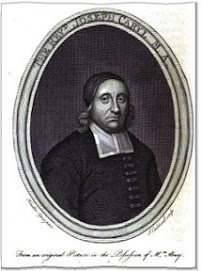
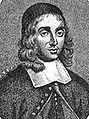
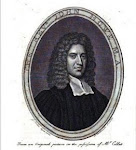
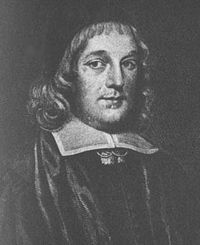
In August of 1662 around 2,000 ministers left the national church of England for the sake of conscience (they were called the non-conformists).  You’ll have to read about this significant church history event elsewhere since I simply want to point out a few prayers of repentance that two pastors prayed the last Sunday of their parish ministry in the English state church.  The pastors were Edmund Calamy (d. 1666) and Thomas Watson (d. 1686).  Here are excerpts from their prayers.  Notice the depth of their repentance and confession of sin.
“We confess we have forfeited all our mercies; we have heard much of God, Christ, and heaven with our ears, but there is little of God, Christ, and heaven in our hearts.  We confess, many of us by hearing sermons, are sermon-proof; we know how to scoff and mock at sermons, but we know not how to live sermons” (Calamy).
“We have sinned presumptuously against the clearest light and dearest love; always have we sinned.  …Thou hast shown mercy to us, but the better thou hast been to us, the worse we have been to thee.  Thou hast loaded us with thy mercies, and we have wearied thee with our sins.  When we look into ourselves, oh, the poison of our natures!  …By our spiritual leprosy we infect our holy things.  Our prayers need pardon and our tears need the blood of sprinkling to wash them.  …We confess we are untuned and unstrung for every holy action; we are never out of tune to sin but always out of tune to pray.  We give the world our main affections and our strong desires…there is not that reverence, nor that devotion, nor that activeness of faith that there should be. …Oh, humble us for our unkindness, and for Christ’s sake blot out our transgressions; they are more than we can number, but not more than [thou canst] pardon” (Watson).
When these types of deep, heart-felt prayers of repentance and confession are spoken in private and in the pulpit, the Christian church is strengthened.  We shouldn’t balk at the intensity of confession here, we should likewise say and expound upon the words that arose from the beaten-breast of the tax collector: “Lord, have mercy on me, a sinner” (Lk. 18:13; cf. Neh. 9:1ff).
The above prayer excerpts are found in this new revised edition of the Sermons of the Great Ejection (Edinburgh: Banner of Truth, 2012).
shane lems

Friday, 24 August 2012

Today is the day

Today is the day 350 years ago when 2000 or so were ejected from the national church in England and Wales for the sake of conscience. It is right that we should give thanks for their noble stand and pray that we too may be men and women willing to follow conscience and to do what we believe is according to the Word of God regardless of what it costs.

Friday, 17 August 2012

An anonymous prayer from 1662

This prayer was prayed 350 years ago today on the Lord's Day before the Great Ejection

To thee, O Lord Jesus, we commend ourselves: To thee who judgeth rightly, thy poor Servant resigneth, and committeth this Congregation. The Lord pardon unto me wherein I have been wanting unto them: The Lord pardon unto them, wherein they have been wanting in the hearing of thy Word, that we may not part with sin in our hearts. Unto thee who judgest uprightly I commend them. The Bishop of Souls take care of them: Preserve them from the love of the World: teach them to wait on thee, and to receive from thee whatever any one or Family may stand in need of.
Provide them a Pastor according unto thine own will, only in the mean time give us that Anointing [that] shall lead us out of our own wills and ways, that we may walk in the ways of Christ Jesus. The Lord Jesus say now amongst them, I am your Shepherd, you shall not want. Say to them as thou didst to thy Disciples, Let not your hearts be troubled, you believe in the Father, believe also in me. So far as we are able we put thy Name upon them: we name the Name of the Lord Jesus over them. The Lord Jesus bless them; teach them to follow Holiness, Peace, and a Heavenly Conversation. The Lord make them useful to each other. The Lord Jesus be a blessing to them, and me and all ours. The God of Peace and Consolation fill them with blessings according as thou seest every one stand in need of. To thee, O Lord, we commend them, do thou receive them, that under thy counsel they may be preserved blameless, until the day [of] Jesus, where we may all meet crowned with Glory. Amen.

Tuesday, 7 August 2012

Evangelical Times

This month's Evangelical Times has four independent articles by myself and Lee Gatiss. For more on ET see here. For ine my artilces see here.

Grace Magazine article


I have an article in this month's magazine as follows. More on Grace here.

1662 And All That

Like Grace Magazine itself, most though not all of its readers could be described as Baptist. Here in the UK, Baptists are considered to be nonconformists or dissenters. There were plenty of Baptists and other dissenters from the national church before 1662 but it was in that year, 350 years ago this year, that nonconformity as such arose and began to be, under God, a significant force in the life of the nation.
The writer Anthony Burgess once wrote, “It's always good to remember where you come from and celebrate it. To remember where you come from is part of where you're going.” The beginnings of nonconformity are something that nonconformists or dissenters today ought to be familiar with. Back in 1962, speaking at the Evangelical Library, Dr Lloyd-Jones said that practically all that is good in evangelicalism finds its roots in the Puritanism so fiercely persecuted then. He also declared that “the very greatness of the men themselves as men of God demands our attention”.

1662
So what happened in that year? Who were these nonconformists or dissenters and what did they refuse to conform to or dissent from? This was the year that the Act of Uniformity was passed. The main event occurred on St Bartholomew's Day, August 24, 1662, when about two thousand ministers and others in the pay of the national church in England and Wales were silenced or ejected from their livings for failing to conform to and dissenting from what the Church of England now required.
What was required, among other things, was that they use the newly published prayer book. The 1662 prayer book has many admirable qualities but there is much to object to and this renewed policy of vigorously enforcing its use was too much for many, especially after having not used for over a decade during the Interregnum after the death of Charles I. The prayer book was not the only concern (nonconformists also objected, for example, to the requirement of re-ordination by a bishop where that had not happened before) but it proved to be the catalyst for their objections and fears.

Puritans
The Great Ejection, as it has come to be known, really includes all the ejectments and silencing that took place in the years from the Restoration of Charles II in 1660 through to 1662 and the immediately following period. Previous to this the number of independent churches, including baptist ones, was relatively small. It was with the ejection of such a large number of men, some 20% of the clergy, the majority of whom went on preaching, despite strong and sometimes vicious opposition and gathered local nonconformist churches, that nonconformity began to be the force we know it was in the 18th and 19th centuries.
Most of the names of the men who were ejected and their wives who suffered with them are unfamiliar to us, though some such as Richard Baxter, Thomas Manton and Thomas Watson are still read. Henry Jessey was the most famous Baptist. Most of the ejected were presbyterian, though some 194 were congregationalist. There were apparently only 19 Baptists, 11 of them in Wales, though some became Baptists later. They were nearly all men, however, who any Reformed Baptist today could admire and be ready to learn from. Though some few good men did remain in the national church, Gerald Bray is right to say that almost all of the ejected “were Puritans, and so the Act may be said to represent the expulsion of Puritanism from the national Church.”

Persecution
The persecution launched against these men also swept into its net Baptists and others already outside the national church. John Bunyan is the most famous example. He was imprisoned in 1660 and remained there for the best part of the next 12 years. His congregation had previously been meeting in the parish church in Bedford but that all came to an end with the Restoration. Their conscientious stand for the truth and their great courage and wisdom in the face of persecution give an example that ought to be known and emulated. 
Relief from direct persecution finally came for the nonconformists with the Toleration Act of 1689, when King William and Queen Mary came to the throne. It was in that year that the Particular Baptists finally felt free to publish their confession of faith. The work had been completed back in 1677. Nonconformists continued to be treated as second class citizens, even then, being practically barred from Oxford and Cambridge Universities, for example, until as late as 1828 but at least the worst of the persecution was over.
The years 1662 to 1689 saw great variation in the levels of persecution and understandably things varied from place to place. In 1664 a conventicle act was passed banning religious gatherings of more than five (apart from family members). In 1665 a particularly cruel law was passed. Known as the five mile act, this act forbade the ejected from living within five miles of their former place of abode. The idea was to try and cut them off from their former congregations, who usually remained loyal. In 1670 a second conventicle act was passed. Famously described by Andrew Marvell as ‘the quintessence of arbitrary malice’, it reduced penalties for ordinary worshippers but fines for preachers and the owners of places where conventicles were found went up to £20 for a first offence, £40 for a second. The idea of distraint was also introduced, the seizure of a person’s property in order to obtain payment. If the minister could not pay, wealthier members of the congregation could lawfully be plundered.
In 1672 and 1683 Charles then James decreed indulgences but, unsupported in Parliament by law, these did not last and the pattern of persecution continued in most places. The Broadmead Baptists wrote of some eight waves of persecution altogether and it is clear that, as is often the case to this day, persecution did come in waves. Typically again, it varied in form and intensity, from minor harassment to mass imprisonment. Various factors were involved such as one's willingness to adapt to the situation and the attitude of local magistrates. A G Matthews suggests that 12.4% of the ejected men, some 215 altogether, were imprisoned between 1662 and the death of Charles II in 1685. Most were in for short periods but others were in prison for lengthy terms. Some seven ministers actually died in prison.

Providence
There was a Bible taught confidence among dissenters that their sufferings were working for them “a far more exceeding and eternal weight of glory”. When Joseph Oddy was taunted by a Cambridge wit with the doggerel lines

Good day, Mr Oddy,
Pray how fares your body;
Methinks you look damnably thin?

He shot back with

That sir's your mistake,
'Tis for righteousness' sake;
Damnation's the fruit of your sin.

Dissenters were not slow to see in various providences God's hand encouraging them and dealing with their persecutors. What else could one make of the Great Plague of 1665, the Great Fire of London of 1666 and the war with the Dutch, too, for that matter? “Nonconformist writings abound” says Michael Watts “in stories of disasters which befell individual persecutors”.
Positively, Philip Henry, father of Matthew, observed in old age that though many of the ejected ministers were brought very low, had many mouths to feed, were greatly harassed by persecution and their friends were generally poor and unable to support them, yet, in all his acquaintance, he never knew, nor could remember to have heard of any nonconformist minister being in prison for debt.

A Lesson
The Bible speaks about the conscience often enough but it is a rather neglected subject among evangelicals today. The 1662 men were men who knew that they had a conscience and who were willing to act upon it with courage when necessary.
The story is told of how someone once said to Oliver Heywood, “Ah, Mr Heywood, we should gladly have you preach still in our church”. He replied “Yes, I would as gladly preach as you can desire it, if I could do it with a safe conscience”. The man honestly replied “Oh, sir, many nowadays make a great gash in their consciences: cannot you make a little nick in yours?” Heywood clearly could not. Oh for men and women like him today.

Monday, 30 July 2012

Banner of Truth Trust

This is the cover of the Banner of Truth magazine for August. The cover is flagging up the reissue of a small book of farewell sermons originally published by Banner back in 1962 and includes introductory material from the book by Iain Murray, which includes biographical material on the seven preachers. The book's contents are as follows:


Introduction
Edmund Calamy Trembling for the Ark of God (1 Sam. 4:13)
Thomas Brooks A Pastor’s Legacies
John Collins Contending for the Faith (Jude 3)
Thomas Lye A Pastor’s Love for His People (Phil. 4:1) Stand Fast in the Lord (Phil. 4:1)
Thomas Watson Weal to the Righteous but Woe to the Wicked (Isa. 3:10, 11) Parting Counsels (2 Cor. 7:1)
John Oldfield Stumbling at the Sufferings of the Godly (Psa. 69:6)
John Whitlock Remember, Hold Fast and Repent (Rev. 3:3)
The Nonconformist’s Catechism

Wednesday, 11 July 2012

Fuller on 1662 heroes

In the CIRCULAR LETTER of the Northampton Baptist Association of 1785 by Andrew Fuller headed CAUSES OF DECLENSION IN RELIGION, AND MEANS OF REVIVAL we read in one place

Let us recollect the best periods of the Christian church. and compare them with the present; and the best parts of our own life, if we know when they were, and compare them with what we now are. — A recollection of the disinterestedness zeal and godly simplicity of the primitive Christians, and their successors in after-ages, millions of whom, in Christ's cause, loved not their lives unto death, would surely make us loathe ourselves for our detestable lukewarmness! As Protestants, let us think of the fervent zeal and holy piety of our Reformers — think what objects they grasped, what difficulties they encountered, and what ends they obtained! As Protestant Dissenters, let us reflect on the spirit and conduct of our puritan and non-conforming ancestors. Think how they served Goa at the expense of all that was dear to them in this world, and laid the foundation of our churches in woods, and dens, and caves of the earth! Say, too, was their love to God more than need be? Is the importance of things abated since their death? Might not they have pleaded the danger and cruelty of the times in excuse for a non-appearance for God, with much more seeming plausibility than we can excuse our Spirit of hateful indifference? O let us remember whence we are fallen, and repent!

Tuesday, 17 April 2012

Coleman Anecdote 19 Mrs Gaunt

Mrs Gaunt
There is another female martyr that we cannot pass by, who died for her religion in the same period, and by the same guilty hands as Lady Alice. Mrs. Gaunt, who is called by Burnet an Anabaptist, was an inhabitant of London, where she spent all her time in acts of charity, visiting the poor and theprisoners in jails, without confining her attention to any religious profession. A person of her character was likely to become odious, and thus be singled out as a mark for the arrows of persecution, which thus flew thick around the most excellent in the nation. A rebel took refuge in her house, where she concealed him till she should find an opportunity of sending him out of the country, he, with unparalleled baseness, betrayed her to save his own life, which he learned would be the reward of the treacherous ingratitude. But, though theevidence was not sufficient for a legal conviction, she was condemned to be burnt. Penn, the quaker, who saw her die, says Bishop Burnet, told me, "she laid the straw about her to burn her speedily, and behaved herself in such a manner that all the spectators melted into tears." With amazing cheerfulness and firmness she said, "I exult that God has honoured me to be the first that is called to suffer by fire in this reign, and that my suffering is a martyrdom for that religion that is all love. Charity," said she, "is a part of my religion, as well as faith. My crime is at worst only thatof feeding an enemy, so I hope I shall have my reward from Him for whose sake I did this service, how unworthy soever the person was that made so ill a return for it." The rebel received a pardon as a recompense for his treachery, she was burned alive for her charity.

Monday, 16 April 2012

Coleman Anecdote 18 Alice Lisle

Alice Lisle, Her Trial and Execution
In Hampshire, John Hickes, a Nonconformist divine, and Richard Nelthorpe, a lawyer, who had been outlawed for his share in the Eye House Plot, had sought refuge at the house of Alice, widow of John Lisle. John Lisle had sat in the Long Parliament, and in the High Court of Justice; had been a Commissioner of the Great Seal, in the days of the Commonwealth; and had been created a Lord by Cromwell. The titles given by the Protector had not been recognised by any Government which had ruled England since the downfall of his house; but they appear to have been often used in conversation, even by Royalists. John Lisle's widow was, therefore, commonly known as the Lady Alice. She was related to many respectable, and to some noble families; and she was generally esteemed, even by the other gentry of her county, for it was well known to them that she had deeply regretted some violent acts in which her husband had borne a part; that she had shed bitter tears for Charles I; and that she protected and relieved many Cavaliers in their distress. The same womanly kindness which had led her to befriend the Royalists in their time of trouble, would not suffer her to refuse a meal and a hiding-place to the wretched men who now entreated her to protect them. She took them into her house; set meat and drink before them, and showed them where they might take rest. The next morning her dwelling was surrounded by soldiers. Strict search was made; Hickes was found concealed in a malt-house, and Nelthorpe in a chimney. If Lady Alice knew her guests to have been concerned in the insurrection in the west, she was undoubtedly guilty of what, in strictness, is a capital crime; "for the law of principal and accessory then was, and is to this day," remarks Macaulay, "in a state disgraceful to English jurisprudence." Odious as the law was, it was strained for the purpose of destroying Alice Lisle. She could not, according to the doctrine laid down by the highest authority, be convicted till after the conviction of the rebels whom she had harboured. She was, however, set to the bar before either Hickes or Nelthorpe had been tried. It was no easy matter in such a case to obtain a verdict for the Crown. The witnesses prevaricated. The jury, consisting of the principal gentlemen of Hampshire, shrank from the thought of sending a fellow-creature to the stake for conduct which seemed rather deserving of praise than of blame. Jeffreys was beside himself with fury. This was the first case of treason on the circuit, and there seemed to be a strong probability that his prey would escape him. He stormed, cursed, and swore, in language which no well-bred man would have used at a. race or a cock-fight. One witness, named Dunne, partly from concern for Lady Alice, and partly from fright at the threats and maledictions of the Chief Justice, entirely lost his head, and at last stood silent. "Oh how hard the truth is," said Jeffreys, "to come -out of a lying Presbyterian knave!" The witness, after a pause of some minutes, stammered a few unmeaning words. "Was there ever," exclaimed the judge, with an oath, "was there ever such a villain on the face of the -earth r1 Dost thou believe there is a God? Dost thou believe in hell fire? Of all the witnesses I ever met with, I never saw thy fellow." Still the poor man, scared out of his senses, remained mute. And again Jeffreys burst forth :— "I hope, gentlemen of the jury, that you take notice of the horrible carriage of this fellow. How can one help abhorring these men and their religion? A Turk is a saint to such a fellow as this. A Pagan would be ashamed of such villainy. O blessed Jesus! what a generation of vipers do we live among." "I cannot tell what to say, my lord," faltered Dunne. The judge again broke forth into a volley of oaths. "Was there ever," he cried, "such an impudent rascal? Hold a candle to him, that we may see his brazen face. You, gentlemen, that are counsel for the Crown, see that an information for perjury be preferred against this fellow." After the witnesses had been thus handled, the Lady Alice was called on for her defence. She began by saying, "That though she knew Hickes to be in trouble when she took him in, she did not know or suspect that he had been concerned in the rebellion. He was a divine, a man of peace. It had, therefore, never occurred to her that he could have borne arms against the Government; and she had supposed that he wished to conceal himself because warrants were out against him for field preaching." The Chief Justice began to storm. "There is not one of these lying, snivelling, canting Presbyterians, but, one way or another, have a hand in rebellion. Presbytery has all manner of villainy in it. Nothing but Presbytery could have made Dunne such a rogue. Show me a Presbyterian, and I'll show you a lying knave." He summed up in the same style, declaiming during an hour against Whigs and Dissenters, and reminding the jury that the prisoner's husband had borne a part in the death of Charles I., a fact which was not proved by any testimony, and which, if it had been proved, would have been utterly irrelevant to the issue. The jury retired, and remained long in consultation. The judge grew impatient. He could not conceive how, in so plain a case, they should ever have left the box. He sent a messenger to tell them, that if they did not instantly return, he would adjourn the court and lock them up all night. Thus put to the torture, they came, but came to say "that they doubted whether the charge had been made out." Jeffreys expostulated with them vehemently, and after another consultation, they gave a reluctant verdict of guilty. Our historians give different statements in reference to the conduct of the jury. Rapin says, " They found her not guilty three times." Burnet says, "They brought her in the second time not guilty, but, overcome with fear, they brought her in the third time guilty;" while Macaulay only gives the one statement of not guilty, or, "That they doubted whether the charge had been made out." On the following morning sentence was pronounced. Jeffreys gave directions that Alice Lisleshould be burned alive that afternoon! This excess of barbarity moved the pity and indignation of that class which was most devoted to the Crown. The clergy of Winchester Cathedral remonstrated with the Chief Justice, who, brutal as he was, was not mad enough to risk a quarrel on such a subject, with a body so much respected by the Tory party. He consented to put off the execution five days. During that time the friends of the prisoner besought James to show her mercy. Ladies of high rank interceded for her. Feversham, whose recent victory had increased his influence at Court, and who, it is said, had been bribed to take the compassionate side, spoke in her favour. Clarendon, the king's brother-in-law, pleaded her cause; but all was in vain. The utmost that could be obtained was, that her sentence should be commuted from burning to beheading. She was put to death on the scaffold in the market-place of Winchester, and she passed through it with serene courage. She was a woman of fine understanding, as well as exalted devotion and benevolence, and she behaved in the most heroic manner at the place of execution. The speech which, notwithstanding her advanced age, she delivered on the scaffold, is said to have commenced with a religious exordium, expressive of the patience and submission of her soul to the Divine will.