Tuesday, 21 January 2014

Spurgeon's Ejected Predecessors 02

Spurgeon's great grandfather's great grandfather Job Spurgeon was a Dedham Quaker who was thrown into prison in 1679 for refusing to conform to the Church of England. He spent 15 weeks laying on a straw pallet in extremely severe winter weather without any fire in Chelmsford.
C H Spurgeon's predecessor at the Tabernacle was Benjamin Keach whose sufferings for nonconformity are well known.

Spurgeon's Ejected Predecessors 01

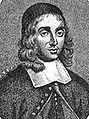
The Puritan volumes that C H Spurgeon read as a boy in his grandfather's Congregational manse were from the library started by Stambourne's first nonconformists minister, Henry Havers, who was given his books by one Thomas Green. In a history of Stambourne a writer called Etinckamp says something like this on Havers. Havers was followed by his son and then his great nephew, all three sharing the same name.
 
The decisive time in Stambourne, Essex, as in many villages was 1660. The Restoration of the Monarchy did not lead there to a parallel restoration of Anglican religious supremacy; indeed it could be claimed that the village has a nonconformist majority to this day. Henry Havers, rector since 1651, was a presbyterian who had signed the Watchword but stopped short of taking the Engagement. He continued, even after 1662, both to preach to and to hold sway over his parishioners. As he had full legal tenure under the authority of the Great Seal, no action could be taken against him; despite the litigious times he did not offend against the laws then existing. This period of uneasy calm came to an end on St Bartholomew's day 1662 when, in common with two thousand or so others, he refused to swear the oath required by the Act of Uniformity passed by the Government of the newly restored King Charles II (reigned 1660-1685). He was now ejected and formally deprived of the living. He did not however leave the parish and the Hearth Tax records imply that he still occupied the Rectory at Michaelmas 1664. He had however founded a nonconformist group known as the Stambourne Meeting which survives as the Congregational Church to this day. Several persons were prosecuted for housing the conventicles. Havers moved his domicile only half a mile down the Rectory Lane where he had purchased, or more probably built, New House Farm, within a moat. It was for this address that he obtained his Presbyterian licence to preach in 1672. Though he was from now on often in the courts and did for some short times leave the village he continued preaching there until he died at the ripe old age of 84. The battle between him and the Church of England for the spiritual care of the parish continued all this time and he decidedly had the best of it. Thomas Brown says that in 1700 no one could be found to act as Churchwarden: in a census of 1676 Stambourne was the only Essex parish to show nonconformists outnumbering their Church counterparts (by 65 to 60); the numbers would not be greatly dissimilar today.
Havers is an ancient Essex family. Henry had money of his own, as well as by marriage. The records of Newhouse farm begin only in 1813 and it was pulled down during the last war. The chimney bore a date in diaper, possibly I.P. 1678. He seems to have disregarded the Five Mile Act of 1665 but did seek and obtain two licences to preach. There is a legend of his being sought by soldiers of the King in the village but escaped by hiding in a kiln which had cobwebs across the opening. The XVIIIth century antiquarian Bishop White Kennett, who in 1745 married Dorcas, the widow of Clopton Havers Henry's second son, notes that the Meetings were well attended while the parish church was in a state of neglect. Absenteeism of the Rector, Mark le Pla, may well account both for this and the absence of a warden. This Clopton Havers, a pioneering physician, became Stambourne's most famous son.

Thursday, 19 December 2013

Coleman Interposition 10

The Rev John Rogers, with Justice Cradock and his Granddaughter
It has frequently been found that circumstances that appear to be of a very trifling incidental nature lead to results of very great moment and value, and those results are sometimes brought to light in a remarkable manner. These things will be regarded by the reader as strikingly manifest in the following incidents which occurred in the life of Mr John Rogers, who was ejected from the living of Croglin in Cumberland.
Sir Richard Cradock, who was a violent hater and persecutor of the Dissenters, and who exerted himself to enforce all the severe laws then in being against them, happened to live near Mr Rogers, to whom he bore a particular enmity, and whom he wanted above all things to have in his power. Hearing that he was one day to preach some miles distant, he thought a fair opportunity offered for accomplishing his base design, and in order to it, directed two men to go as spies, and take down the names of all the hearers whom they knew, that they might appear as witnesses against them, and against Mr Rogers. The plan seemed to succeed to his wishes. These men brought him the names of several persons who were present at the meeting, and he summoned such of them as he had a particular spite against, together with Mr Rogers, to appear before him. Knowing the violence of the man, they came with trembling hearts, expecting to be treated with the utmost severity. "While they were waiting in the great hall, expecting to be called upon, a little girl about six or seven years of age, who was Sir Richard's granddaughter, happened to come into the hall. She looked at Mr Rogers, and was much taken with his venerable appearance.
He being naturally fond of children, took her upon his knee and caressed her, which occasioned her to have a great fondness for him. At length Sir Richard sent a servant to inform him and the rest, that one of the witnesses being taken ill and unable to attend, they must come again another day.
They accordingly came at the time appointed, and being convicted, the justice ordered their mittimus to be written, to send them all to prison. Mr Rogers expecting to see the little girl again, brought some sweetmeats with him to give her. As soon as she saw him, she came running to him, and appeared fonder of him than before. This child was a particular favourite of her grandfather, and had got such an ascendancy over him, that he could deny her nothing; and she possessed such a violent spirit, that she could bear no contradiction; so that she was indulged in everything she wanted. At one time, when she was contradicted, she ran a penknife into her arm, to the great danger of her life. This bad spirit, in the present instance, was overruled for good. Whilst she was sitting on Mr Rogers's knee, eating the sweetmeats, she looked earnestly at him, and asked, "What are you here for, sir?" He answered, "I believe your grandfather is going to send me and my friends to jail." "To jail," says she, "why, what have you done?" "Why, I did nothing hut preach at such a place, and they did nothing but hear me." "But," says she, "my grandpapa shan't send you to jail." "Ay, but, my dear," he replied, "I believe he is now making out our mittimus to send us all there." Upoii this, she ran up to the chamber where Sir Eichard was, and knocked with her head and heels till she got in, and said to him, " What are you going to do with my good old gentleman in the hall?" "That's nothing to you," said he, "get about your business." "But I won't," she said, "he tells me that you are going to send him and his friends to jail; and if you send them, I'll drown myself in the pond as soon as they are gone; I will, indeed," When he saw the child thus peremptory, it shook his resolution, and induced him to abandon his malicious design. Taking the mittimus in his hand, he went down into the hall, and thus addressed these good men: "I had made out your mittimus to send you all to jail, as you deserve, but at my grandchild's request, I drop the prosecution and set you all at liberty." They all bowed, and thanked his worship; but Mr  Rogers, going to the child, laid his hand upon her head, and lifting up his eyes to heaven, said, "God bless you, my dear child. May the blessing of that God whose cause you did now plead, though as yet you know him not, be upon you, in life, at death, and to all eternity." He and his friends then went away.
The above remarkable story was told by Mr Timothy Rogers, the son of the ejected minister, who had frequently heard his father relate it with great pleasure; and the celebrated Mr Thomas Bradbury once heard it from him when he was dining at the house of Mrs Tooley, an eminent Christian lady, in London, who was distinguished for her piety, and for her love to Christ and his people, whose house and table, like Lydia's, were always open to them.
"What follows is yet more remarkable, as containing a striking proof of the answer which was returned to good Mr Rogers's prayer for this child, and the blessing which descended upon her who had been the instrument of such a deliverance for these persecuted servants of God. Mrs Tooley had listened with uncommon attention to Mr Rogers's story, and when he had ended it, she asked him, "And are you that Mr Rogers's son?" He told her he was, upon which she said, "Well, as long as I have been acquainted with you, I never knew that before; and now I will tell you something whieh you do not know—I am the very girl your dear father blessed in the manner you have related, and it made an impression upon me which I could never forget." Upon this double discovery, Mr Rogers and Mrs Tooley found an additional tie of Christian affection, and then he and Mr. Bradbury expressed a desire to know how she, who had been brought up in an aversion to the Dissenters, and to serious religion, now discovered such an attachment to both. Upon which, Bhe cheerfully gave them the following narrative:—
After her grandfather's death, she became sole heiress to his estate, which was considerable. Being in the bloom of youth, and having none to control her, she ran into all the fashionable diversions of the age, without any restraint. But she confessed, that when the pleasurable scenes were over, she found a dissatisfaction both with them and herself, that always struck a damp to her heart, which she did not know how to get rid of any other way than by running the same round over and over again; but all was in vain. Having contracted some slight illness, she thought she would go to Bath, hearing that it was a place for pleasure as well as health. When she came thither, she was providentially led to consult an apothecary, who was a very worthy and religious man. When he inquired what ailed her, she answered, "Why, doctor, I don't ail much as to my body; but I have an uneasy mind, that I can't get rid of." "Truly, miss," said he, "I was so, until I met with a certain book, and that cured me." "Books," she said, " I get all the books I can lay my hands on; all the plays, novels, and romances I hear of; but, after I have read them, my uneasiness is the same." "That may be, miss," he replied, "and I don't wonder at it. But as to this book I speak of, I can say of it what I can say of no other I ever read, that I never tire in reading it, but can begin to read it again as if I had never read it before; and I always see something new in it." "Pray, doctor," says she, "what book is that?" "Nay, miss," said he, "that's a secret I don't tell every one." "But could not I get a sight of that book?" she inquired. "Yes," he said, "if you speak me fair, I can help you to a sight of it." "Pray then get it me, doctor, and I will give you anything you please." "Yes," said he, "if you will promise me one thing, I will bring it to you; and that is, that you will read it over carefully, and that if you should not see much in it at first, that you will give it a second reading." She promised faithfully that she would. After coming two or three times without it, to raise her curiosity, he at last took it out of his pocket and gave it her. The book was the New Testament. When she looked at it, she said, with a flirt, "Poh! I could get that at any time." "Why, miss," said he, "so you might; but remember, I have your solemn promise carefully to read it." "Well," she said, "though I never read it before, I'll give it a reading." Accordingly, she began to read it, and it soon attracted her attention. She saw something in it wherein she had a deep concern; but her mind now became ten times more uneasy than ever.
Not knowing what to do, she soon returned to London, resolved to try again what the diversions there would do to dissipate her gloom. But nothing of this kind answered her purpose. She lodged at the Court end of the town, where she had with her a female companion. One Saturday night she had a remarkable dream, which was, that she was in a place of worship, where she heard a sermon; but when she awoke, she could remember nothing but the text. This dream, however, made a deep impression upon her mind; and the idea she had of the place, and of the minister's person, was as strong as if she had been long acquainted with both. On the Lord's-day morning, she told her dream to her companion, and said that, after breakfast, she was resolved to go in quest of the place, though she should go from one end of London to the other.
They accordingly set out, and went into several churches as they passed along, but none of them answered to what she saw in her dream. About one o'clock she found herself in the heart of the City, where they dined, and then set out again in search of this place of worship. Being in the Poultry, about half an hour after two o'clock, they saw a great number of people going down the Old Jewry, and she determined to see where they went. She mingled with the company, and they conducted her to the meeting-house in the Old Jewry, where Mr Shower was then minister. As soon as she entered the door and surveyed the place, she turned to her companion and said, with some surprise, " This is the very place I saw in my dream." It was not long before she saw Mr Shower go up into the pulpit, and looking at him, with greater surprise, she said, "This is the very man I saw in my dream; and if every part of it hold true, he will take for his text Psalm 96:7, 'Return unto thy rest, O my soul, for the Lord hath dealt bountifully with thee.'" When he rose up to pray, she was all attention, and every sentence went to her heart. Having finished his prayer, he took that very passage which she had mentioned, for his text; and God was pleased to make the discourse founded upon it the means of her saving conversion. And thus she at last found, what she had so long sought elsewhere in vain—rest to her soul. And now she obtained that blessing from God, which pious Mr Rogers, so many years before, had so solemnly and fervently implored on her behalf.

Wednesday, 18 December 2013

Isaac Ambrose Blog

I now have a blog devoted to the Lancashire Puritan and Nonconformist Isaac Ambrose. The blog is here.

Coleman Interposition 9

A Persecuting Magistrate Outwitted
The following circumstances, handed down by tradition, characteristic of the times, are related as having taken place when Mr Baxter was residing, for a time in the city of Coventry. Several of the ministers ejected by the Act of Uniformity, who resided in this city, united with Mr Baxter in establishing a lecture in a private house, on a neighbouring common, near the village of Berkswell. The time of worship was, generally, a very early hour. Mr Baxter left Coventry in the evening, intending to preach the lecture in the morning. The night being dark, he lost his way, and after wandering about a considerable time, he came to a gentleman's house, where he asked for direction. The servant who came to the door informed his master that a person of very respectable appearance had lost his way. The gentleman told the servant to invite him in. Mr Baxter readily complied, and met with a very hospitable reception. His conversation was such as to give his host an exalted idea of his good sense and extensive information.
The gentleman wishing to know the quality of his guest, said, after supper, "As most persons have some employment or profession in life, I have no doubt, sir, that you have yours." Mr Baxter replied with a smile, "Yes, sir, I am a man-catcher." "A man-catcher," said the gentleman, "are you? I am very glad to hear you say so, for you are the very person I want. I am a justice of the peace in this district, and am commissioned to secure the person of Dick Baxter, who is expected to preach at a conventicle in this neighbourhood, early to-morrow morning; you shall go with me, and, I doubt not, we shall easily apprehend the rogue."
Mr Baxter very prudently consented to accompany him. Accordingly the gentleman, on the following morning, took Mr Baxter in his carriage to the place where the meeting was to be held. When they arrived at the spot, they saw a considerable number of people hovering about, for, seeing the carriage of the justice, and, suspecting his intentions, they were afraid to enter the house. The justice, observing this, said to Mr Baxter, "I am afraid they have obtained some information of my design. Baxter has probably been apprised of it, and, therefore, will not fulfil his engagement, for you see the people will not go into the house. I think, if we extend our ride a little further, our departure may encourage them to assemble, and on our return we may fulfil our commission." "When they returned they found their efforts useless, for the people still appeared unwilling to assemble. The magistrate, thinking he should be disappointed of the object he had in view, observed to his companion, "that as the people were very much disaffected to the Government, he would be much obliged to him to address them on the subject of loyalty and good behaviour." Mr Baxter replied "that perhaps this would not be deemed sufficient, for as a religious service was the object for which they were met together, they would not be satisfied with advice of that nature; but if the magistrate would begin with prayer, he would then endeavour to say something to them." The gentleman replied, putting his hand to his pocket, "Indeed, sir, I have not got my Prayer-book with me, or I would readily comply with your proposal. However, I am persuaded that a person of your appearance and respectability would be able to pray with them as well as talk to them. I beg, therefore, that you will be so good as to begin with prayer."
This being agreed to, they alighted from the carriage, and entered the house, and the people, hesitating no longer, immediately followed them.
Mr Baxter then commenced the service by prayer, and prayed with that seriousness and fervour for which he was so eminent. The magistrate standing by was soon melted into tears. The good divine then preached in his accustomed lively and zealous manner. When he had concluded, he turned to the justice and said, "I am the very Dick Baxter of whom you are in pursuit. I am entirely at your disposal." The magistrate, however, had felt so much during the service, and saw things in so different a light, that he entirely laid aside all his enmity to the Nonconformists, and ever afterwards became their sincere friend and advocate, and it is believed also a decided Christian.

Coleman Interposition 7/8

Ingenious Contrivance
Mr Thomas Jollie, after his ejectment, preached in his own house. To avoid being informed against (for he was a man of prudence as well as zeal) he adopted the following contrivance:— There being in the common sitting-room a staircase with a door at the bottom, he stood to preach on the second step; the door was cut in two, and while the lower part was shut, the upper part, being fastened to the other by hinges, would fall back on brackets, so as to form a desk. To this was fixed a string, by which he could easily draw it up on intelligence being given of the approach of informers, by those who were appointed as sentinels to give notice; he then immediately went up-stairs, so that when the informers entered they could not prove that he had been preaching, though they found a number of persons in the room.
 
Providential Deliverance
Mr Henry Maurice, ejected from Stretton, in Shropshire, was often waylaid by his enemies in order to his apprehension, but was hid in "the hollow of God's hand." His house was once searched for him when he had been lately preaching, but his adversaries could not discover the door of the closet in which he was, adjoining to the room in which the meeting was held. Another time a constable came into the room where he was preaching, commanding him to desist, when he, with an undaunted courage, charged him, in the name of the great God, whose word he was preaching, to forbear molesting him, as he would answer it at the great day. The man hereupon sat down and trembled, heard him patiently till he concluded, and then departed. Mr Maurice was taken but once, and then he was bailed; and upon appearance made, was discharged by the favour of some gentlemen, who were justices of the peace, and his friends and relations. He was sometimes reduced to great straits whilst he lived at Shrewsbury, but was often surprisingly relieved. One time, when he had been very thoughtful, and was engaged in prayer with his family, suiting some petitions to their necessitous case, a carrier knocked at the door, inquired for him, and delivered to him a handful of money, untold, as a present from some friends; but would not tell who they were. The same person also, another time, brought him a bag of money very seasonably. His wife had an inheritance of £40 per annum, which she had a right to be possessed of soon after his leaving Stretton; but it was unjustly alienated for ten years. However, she was cheerful, industrious in many employments, and contented with the coarsest fare, being ambitious only, if possible, to have the sureties' obligations discharged; which, through the good providence of God concurring with frugal management, was done, and Mr Maurice had the satisfaction to live to see it, but died soon after.

Wednesday, 25 September 2013

Coleman Interposition 6

Another remarkable case
In the life of Oliver Heywood, ejected from Caley, in Yorkshire, the following interesting anecdotes are related. Dr. Fawcett, who published an account of Mr. Heywood, remarks, "The particular dates of these events I am not able to ascertain with exactness, but the facts have been so strongly, so invariably, and constantly affirmed, by persons of undoubted verity, some of whom I could name, and others who have been long dead, that I have not the least reason to doubt the truth of these facts."
Mr Heywood being reduced to great straits after the loss of his income, so that his children began to be impatient for want of food, called his servant, Martha, who would not desert the family in their distress, and said to her, "Martha, take a basket, and go to Halifax, call upon Mr N , a shopkeeper, and desire him to lend me five shillings. If he is kind enough to do it, buy such things as you know we most want. The Lord give you good speed; and in the meantime, we will offer up our requests to Him who "feedeth the young ravens when they cry." Martha went, but when she came to the house her heart failed her, and she passed by the door again and again without going in to tell her errand. Mr N , standing at the shop door, called her to him, and asked her if she was not Mr Heywood's servant. When she told him that she was, he said to her, "I am glad to see you, as some friends have given me five guineas for your master, and I was just thinking how I could send it." Upon this she burst into tears, and told him her errand. He was much affected with her story, and told her to come to him if the like necessity should return. Having procured the necessary provisions, she hastened back with them, when, upon her entering the house, the children eagerly examined the basket, and the father, hearing the servant's narrative, smiled, and said, "The Lord hath not forgotten to be gracious; his word is true from the beginning—they that seek the Lord shall not want any good thing."
Another anecdote related of Mr. Heywood is this: ""When the spirit of persecution was so hot against this good man that he was obliged to leave his family, he set off on horseback one winter's morning before it was light, like Abraham, not knowing whither he went, and without a farthing in his pocket. Having committed himself to the care of Providence, he determined at length to let his horse go which way he would. Having gone all day without refreshment, the horse, towards the evening, bent his course to a farmhouse a little out of the road. Mr. Heywood, calling at the door, a decent woman came, of whom he requested, after a suitable apology, that she would give him and his horse shelter for that night; telling her that he only wished for a little hay for his beast, and liberty for himself to sit by the fireside. Upon calling her husband they both kindly invited him in. The mistress soon prepared something for him to eat, at which he expressed his concern as he had no money to make them any recompense, but hoped God would reward them. They assured him that he was welcome, and begged him to make himself easy. After some time the master asked him what countryman he was. He answered that he was born in Lancashire, but had now a wife and children near Halifax. 'That is a town,' said the farmer, 'where I have been, and had some acquaintance.' After inquiring about several of them, he asked if he knew anything of one Mr Oliver Heywood, who had been a minister near Halifax, but was now, on some account, forbid to preach. To which he replied, 'There is a great deal of noise about that man; some speak well, and some very ill of him; for my own part, I can say very little in his favour.' 'I believe,' said the farmer, 'he is of that sect which is everywhere spoken against; but, pray, what makes you form such an indifferent opinion of him?' Mr Heywood answered, 'I know something of him, but as I do not choose to propagate an ill report of any one, let us talk, on some other subject.' After keeping the farmer and his wife some time in suspense, who were uneasy at what he had said, he at length told them that he was the poor outcast after whom they made such kind inquiries.
  "All was then surprise, joy, and thankfulness, that Providence had brought him under their roof. The master of the house then said to him, 'I have a few neighbours who love the gospel, if you will give us a word of exhortation, I will run and acquaint them. This is an obscure place, and as your coming hither is not known, I hope we shall have no interruption.' Mr Heywood consented, and a small congregation was gathered, to whom he preached with that fervour, affection, and enlargement, which the singular circumstances served to inspire. A small collection was then voluntarily made, to help the poor traveller on his way."

Review of the book in Evangelical Times October 2013

The Great EjectionGary Brady
EP Books, 176 pages, £8.99
ISBN: 978-0-85234-802-4
Star Rating : *****
 
Who governs the church, Jesus Christ or the state? In practical terms, what determines the doctrine and practice of the church? Is it the Bible or is it public opinion? Throughout the long history of the church, Christians have had to face and answer such questions. Once again they have been thrown up by the debate about the nature and character of marriage. It is good to be able to consider the way in which our fathers approached such issues. The record of the legislation of 1660-1662 and its aftermath provides us with such an opportunity. The year 2012 was the 350th anniversary of what has become known as the ‘Great Ejection’, when almost 2000 Puritan pastors and their flocks were forced out of the Church of England because they were unable to submit to unbiblical conditions of service. The theses included acceptance of the divine right and authority of diocesan bishops and an allegiance to the Prayer Book in terms which could only be given to the Bible. Hundreds of men, unable to bow to parliament’s decisions on these issues, were deprived of their charges and compelled to accept the prospect of poverty in a social and political wilderness. Gary Brady has given us a fine account of these events. He explains the issues and discusses the reasons why Puritans, who had only recently seemed so secure in their ministries, were suddenly plunged into a crisis of conscience after 1660. The story moves from the high politics of Charles II’s reign to the very human story of the sacrifices and triumphs of hundreds of Christian people. Lists of excluded ministers are included and may be useful for reference purposes, but the great value is the inspiring way in which the experiences of local churches and their members and ministers are described. This inspiring record should be widely read and studied by Christians today. It is very highly recommended.
Robert W. Oliver

Tuesday, 3 September 2013

Coleman Interposition 5

Supplies sent in time of need
Mr Henry Erskine, who had been minister at Cornill, in Northumberland, suffered much after his ejectment, and had several remarkable interpositions on his behalf. He resided for a time at Dryburgh, where he and his family were often in great straits. Once in particular, when the "cruse of oil and the barrel of meal" were entirely spent, so that when they had supped at night, there remained neither bread, meal, flesh, nor money in the house. In the morning, the young children cried for their breakfast, and their father endeavoured to divert them, and at the same time did what he could to encourage himself and his wife to depend upon that Providence which "feeds the young ravens when they cry." While he was thus engaged, a countryman knocked hard at the door, and called for someone to help him off with his load. Being asked from whence he came, and what he would have, he told them he came from the Lady Reburn, with some provisions for Mr Erskine. They told him he must be mistaken, and that it was most likely to be for Mr Erskine, of Shirfield, in the same town. He replied "No, he knew what he said, he was sent to Mr Henry Erskine," and cried, "Come, help me off with my load, or else I will throw it down at the door." Whereupon they took the sack from him, and upon opening it, found it well filled with flesh and meal, which gave him no small encouragement to depend upon his bountiful benefactor, in future straits of a similar nature.
At another time, being at Edinburgh, he was so reduced, that he had but three half-pence in his pocket, when, as he was walking about the streets not knowing what course to steer, one came to him in a countryman's habit, and asked him if he was not Mr Henry Erskine. He told him he was, and inquired his business with him. The man replied, "I have a letter for you," which he accordingly delivered; and in it were enclosed seven Scotch ducatoons, with these words written, "Sir, receive this from a sympathizing friend. Farewell." But there was no name.
Mr Erskine being desirous to know his benefactor, invited the man to go into a house with him, hard by, and to have some refreshment with him. Having got him alone, he inquired of him with some earnestness, who it was that sent him. The honest man told him that secrecy was enjoined upon him, and, therefore, he desired to be excused from telling, for he could not betray his trust. Mr Erskine, however, continued to ask him some questions, as to what part of the country he came from, and that he might better be able to guess from what hand this seasonable relief came. Whereupon the man desired him to sit awhile while he went out of doors; but being got out, he returned no more, nor could Mr Erskine ever learn who his benefactor was.

Coleman Interposition 4

A whole family remarkably provided for
Mr  David Anderson was ejected from the living of Walton-upon-Thames. Being apprehensive of a return to Popery in this country, soon after his ejectment, he left England, and went with his wife and five children into Zealand, and settled at Middleburgh. Having no employment there, he soon consumed the little money he had, owed a year's rent for his house, and was reduced so low as to want bread. Such was his modesty, that he knew not how to make his case known in a strange country. In this condition, after he had been one morning at prayer with his family, his children asked for their breakfast; but having none, nor money to buy any, they all burst into tears. Just then, the bell rang. Mrs Anderson went to the door, in a mean and mournful habit. A person asked for the mistress, and on her telling him that she was Mrs A, gave her a paper, saying, "Here, a gentleman has sent you this paper, and will send you in some provision presently." On opening the paper, they found forty pieces of gold in it. The messenger went away without telling his name or whence he came. Soon after, came a countryman with a horseload of provisions of all kinds; but did not tell them, nor did they know to their dying day, who it was that so seasonably relieved them.
But Mr John Quick, from whose memoirs this account is taken, being, in the year 1681, pastor of the English church at Middleburgh, came accidentally to a knowledge of the whole matter. Being at the counting-house of one Mijn Heer de Koning, a magistrate of that city, he happened to mention this story. M. de Koning told him that he was the person that carried the gold from Mijn Heer de Hoste, a pious merchant of that place, with whom he was then an apprentice. He stated, that M. de Hoste, observing a grave English minister walk the streets frequently, with a dejected countenance, inquired privately into his circumstances, and apprehending he might be in want, sent him the gold and the provisions, saying, with great Christian tenderness, "God forbid. that any of Christ's ambassadors should be strangers and we not visit them, or in distress and we not assist them." But he expressly charged both his servants to conceal his name. This relief, beside present provision, enabled Mr Anderson to pay his debts. He could not help communicating this instance of the goodness of God to his friends and acquaintance in that city. This coming to the ear of M. de Hoste, he afterwards found a secret way of paying Mr Anderson's rent for him yearly, and of conveying to him besides, ten pounds every quarter, which he managed so, that he never could or did know his benefactor. M. de Koning kept the whole matter secret as long as his master lived, but thought himself at liberty to give this account of it after his death. Mr Anderson was, on the death of the minister, appointed to the charge of the English Church at Middleburgh, but he and his wife dying while their children were young, M. de Hoste took great notice of them, provided for their suitable training, and subsequent settlement in life. Thus did God remarkably appear on behalf of his servant, and those that descended from him.